
Dolphins, Turtles And Birds On The Evening Water
Evening boats out of Urangan share the water with dolphins, turtles, dugong and, in season, whales. What the operators say, what the marine park lists, and how close any boat is allowed to go.
Short answer
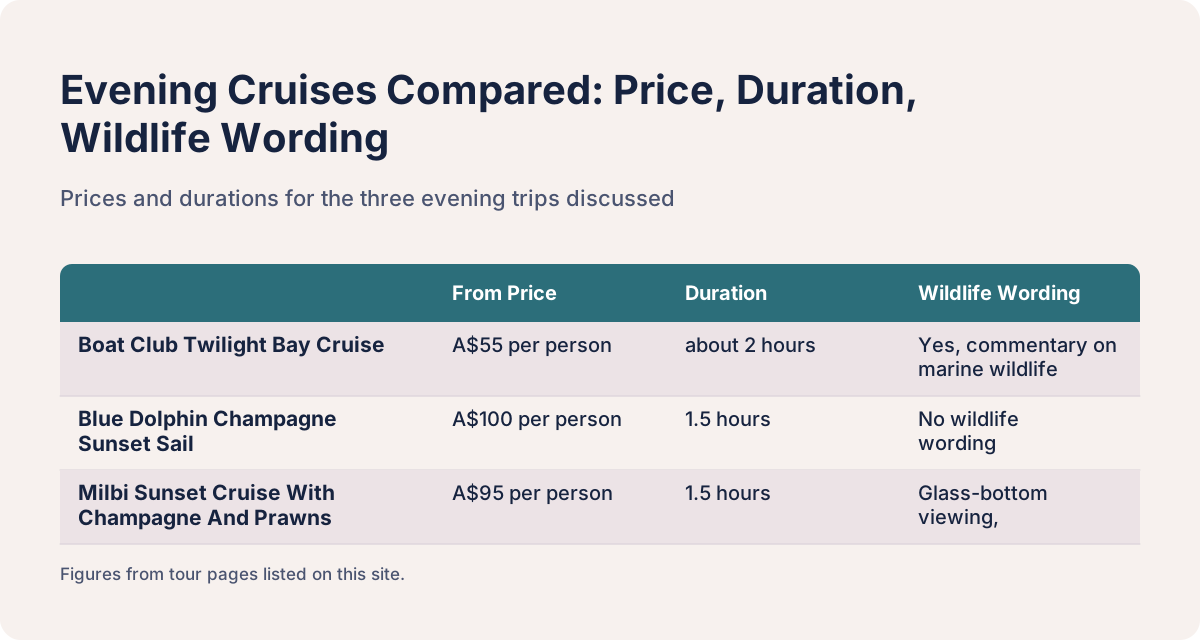
Only one evening trip names wildlife in its own description: the Boat Club Twilight Bay Cruise, about 2 hours from A$55 per person, which includes commentary on marine wildlife and hedged wording about local dolphins. The Great Sandy Marine Park lists whales, turtles, dugong and grey nurse Australia-wide park species, but no cruise promises a sighting, and Queensland approach rules keep boats at least 150 metres from a dolphin.
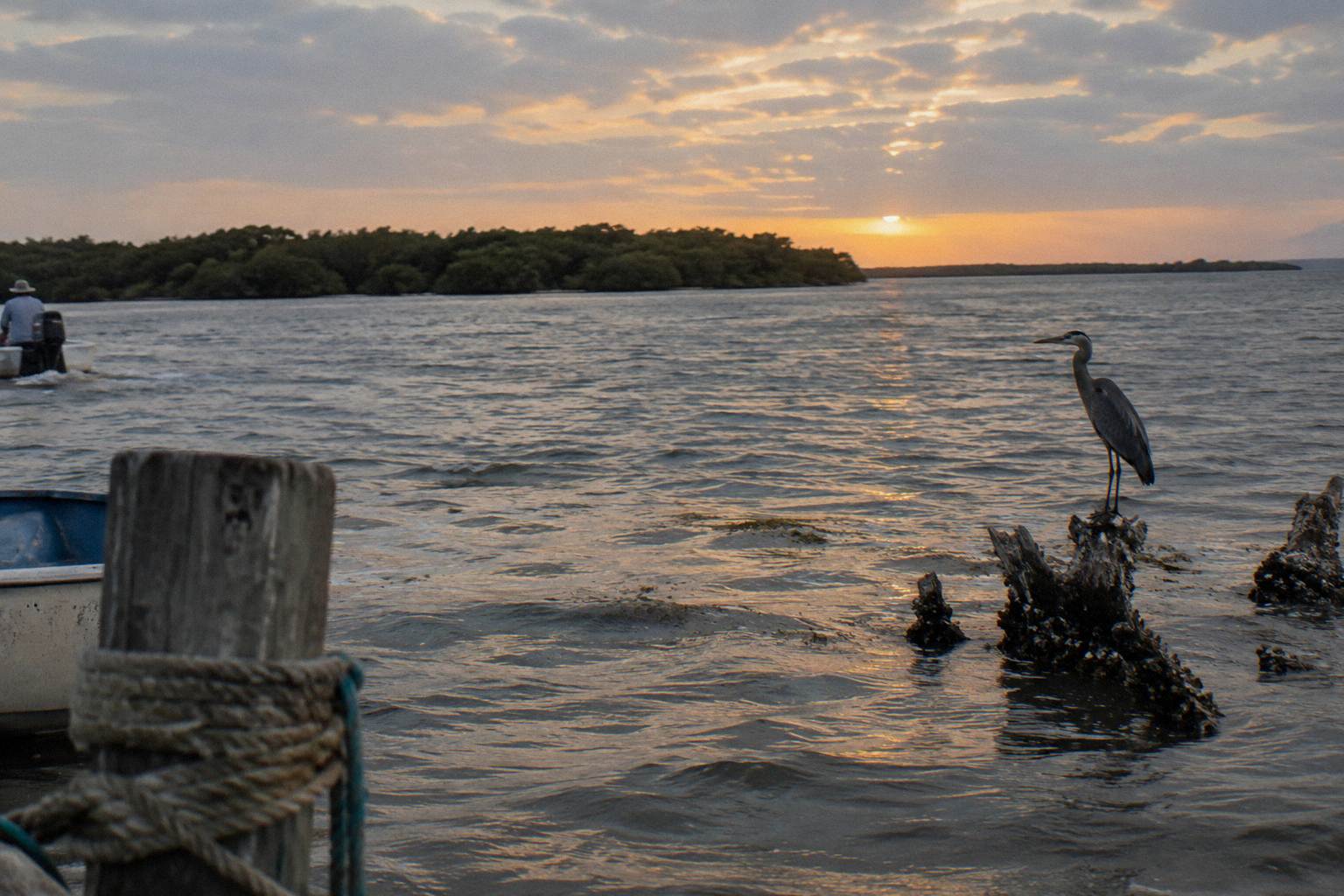
Evening light on Hervey Bay does something to the water. The glare drops away, the breeze usually eases with it, and the bay between Urangan and K'gari turns into a corridor of low golden light. It is the hour people picture when they book a late-afternoon boat, and it is also the hour when the question of animals comes up: will there be dolphins, are there turtles, what swims under the pier.
The direct answer sits in the operators' own words rather than in anyone's brochure optimism. The Boat Club page tells guests to keep their eyes peeled for local dolphins and other wildlife, and its Twilight Bay Cruise carries commentary on marine wildlife. The Great Sandy Marine Park, which wraps around every route these boats take, lists whales, turtles, dugong and grey nurse sharks among its wildlife. None of that is a promise of an encounter on any particular evening, and Queensland law keeps every commercial vessel well back from a dolphin or a whale regardless of what passengers hope to see. What follows is what each operator states, what the park lists, and how the approach rules work, so a wildlife-minded reader can pick the evening trip that fits.
Which Evening Cruise Actually Talks About Wildlife?
The Boat Club Twilight Bay Cruise is the evening trip that names wildlife in its own product description, telling guests to keep their eyes peeled for local dolphins and other wildlife. Commentary aboard the Amaroo covers marine wildlife and K'gari landmarks from three viewing decks, with the roughly 2-hour trip running from A$55 per person, boarding at the Hervey Bay Boat Club on Buccaneer Drive in Urangan, and rating 4.6 from 357 reviews.
That wording matters because it is the only evening product of the three where wildlife is part of the stated experience rather than a hoped-for bonus. The commentary covers marine wildlife generally and the K'gari landmarks on the horizon, which gives the trip a narrative spine even on a quiet night for animals. The operator's own phrasing is hedged on purpose: marine wildlife comes out to play, keep your eyes peeled. Those are invitations to watch, not guarantees of anything, and the operator does not name species, seasons or odds.
The other two evening trips take different angles. The Blue Dolphin Champagne Sunset Sail, a sailing vessel with a maximum of 24 guests, boards at Great Sandy Straits Marina for 1.5 hours from A$100 per person and rates 4.9 from 168 reviews; its emphasis is the sail itself, sparkling wine and finger food included, with no route given and no wildlife wording. The Milbi Sunset Cruise With Champagne And Prawns, 1.5 hours from A$95 per person with a rating of 4.8 from 48 reviews, builds its evening around fresh local king prawns, a grazing platter, Butchulla place names and a stop at Weenandin (Round Island), with glass-bottom viewing subject to tides and conditions. Its marine park permit is part of the booking,.
For a reader whose main interest is hearing about the bay's animals while the sun goes down, the choice is fairly plain. If commentary is the draw, the Boat Club Twilight Bay Cruise is the evening trip built around it. If watching the water quietly from a small sailing vessel appeals more, the Blue Dolphin sail covers the same bay with fewer people aboard. And if the question you are really asking is whether dolphins are guaranteed on any of these evenings, the companion piece on whether dolphins are guaranteed on an evening boat trip works through that question directly.
| Trip | From price | Duration | Wildlife in the operator's own wording |
|---|---|---|---|
| Boat Club Twilight Bay Cruise | A$55 per person | about 2 hours | Yes, commentary on marine wildlife, hedged dolphin wording |
| Blue Dolphin Champagne Sunset Sail | A$100 per person | 1.5 hours | No wildlife wording, emphasis on the sail and drinks |
| Milbi Sunset Cruise With Champagne And Prawns | A$95 per person | 1.5 hours | Glass-bottom viewing subject to tides and conditions, marine park permit |
A note on the amounts: all prices here are Australian dollars, and each is a from-price on the booking page that can move by date and group, so treat them as the entry point rather than a quote.
What The Boat Club Page Says, In Its Own Words
The Boat Club operator page uses two short hedged phrases about animals: keep your eyes peeled for our local dolphins and other wildlife, and marine wildlife comes out to play. Both are invitations to watch rather than claims of an encounter, and neither names a species beyond dolphins, a season, a time of day or a likelihood. That restraint is worth taking seriously when you set expectations for the evening.
Hedged wording of this kind is standard practice for operators working in a wild marine park, and it tells you two useful things. First, dolphins are the animal the operator expects guests to ask about, which is why they lead with them. Second, the operator is careful not to attach a number, a season or a probability to that expectation, which is the same discipline the Queensland approach rules impose on the water itself. A page that promised a dolphin on every trip would be selling something no skipper can control.
The route wording is hedged the same way. The Boat Club page says the Amaroo's scenic destinations may include Woody Island, Round Island, Pelican Bank and the historic Urangan Pier, and that the route and destination are subject to change without notice because of tides and weather. Every named stop is a maybe, not a schedule. The commentary is the constant: marine wildlife and K'gari landmarks are talked through on board, which is why the operator's own page is worth reading in full at the Boat Club sunset cruise page before you book.
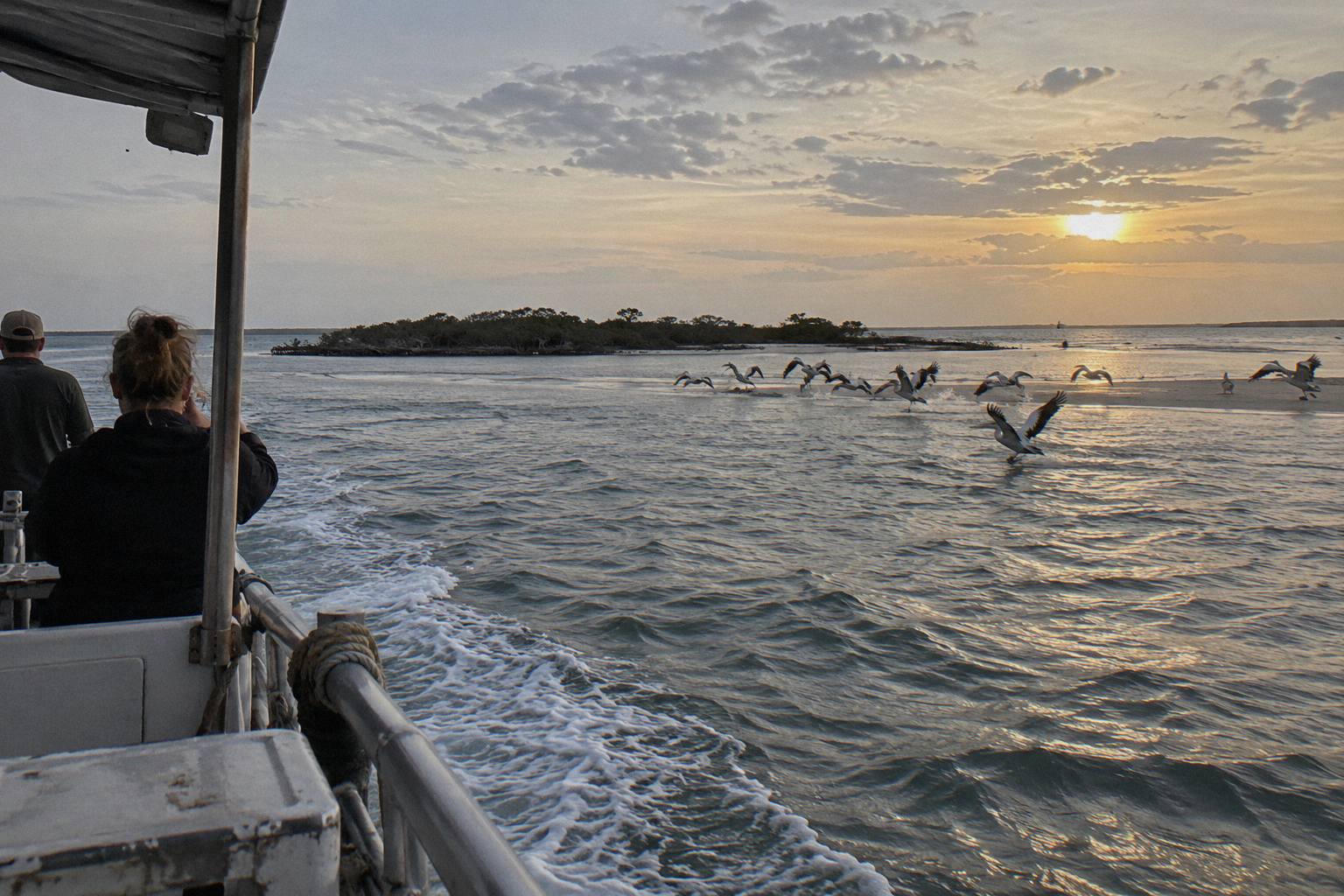
For guests packing for an evening of watching rather than just riding, the same operator page lists what to bring on the Twilight Bay Cruise: sunglasses, a hat, a warm jumper, a camera and binoculars, plus cash for the on-board canteen, where alcoholic and soft drinks and snacks such as chips are for sale next to the complimentary glass of bubbles on boarding. One child under 14 travels free per full-fare adult, and anyone under 18 needs a legal guardian over 18 with them. The deeper packing rundown, including what the climate numbers mean for a winter evening on the water, is in the guide to what to wear on a sunset boat trip.
If the twilight trip sounds like your evening, the three bookable options below cover the range: the wildlife-commentary cruise itself, a small-group sailing alternative, and the prawns-and-champagne trip that anchors its evening at Round Island.
What Lives In The Great Sandy Marine Park
The Great Sandy Marine Park's wildlife list from Queensland Parks includes whales, turtles, dugong and grey nurse sharks. That is a park-wide list covering the full stretch from Baffle Creek in the north to Double Island Point in the south, and it is not a statement about what any particular cruise will show you on any particular evening. A new zoning plan for the park commenced on 21 May 2024.
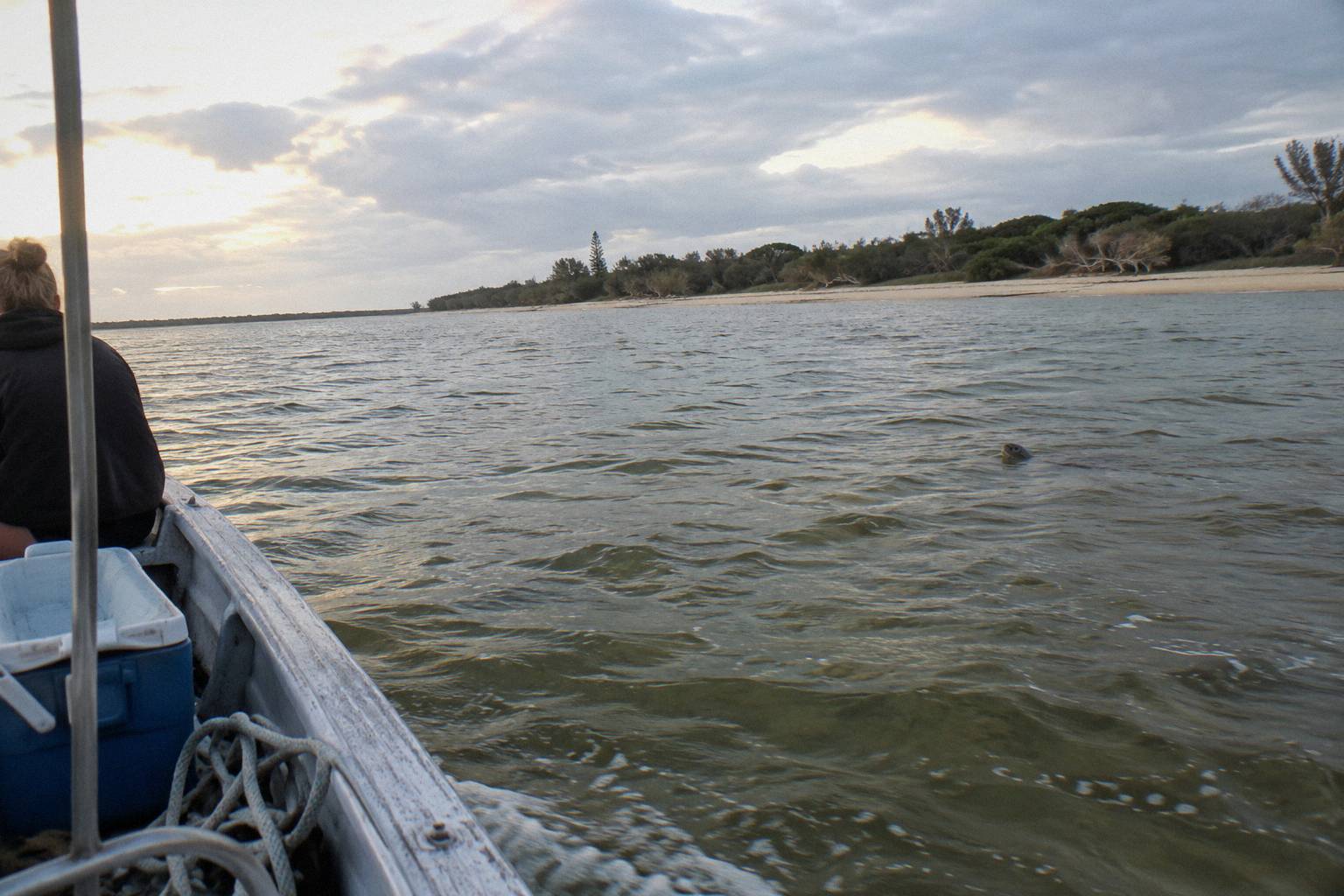
The distinction between a park list and a cruise promise is the heart of wildlife-minded planning here. The park's waters include Hervey Bay and the Great Sandy Strait, the same waters every evening boat out of Urangan travels, so the animals on the list are the animals that share the bay with the boats. But the list says nothing about where in the park each species spends its time, at what hour, or in what numbers. Turtles and dugong, for example, are strongly associated with the seagrass beds of the Great Sandy Strait, and the park's warnings page separately lists crocodiles and marine stingers as general park-wide cautions rather than Hervey Bay specifics.
Two of the evening trips fold the park into their paperwork. The Boat Club trip includes marine park fees, and the Milbi travels under a marine park permit held by Hervey Bay Eco Marine Tours, a family-owned business that says it learns from the Butchulla people and prints Butchulla names and meanings of landmarks on its booking page. Neither fee nor permit converts into a wildlife claim; they simply mean the boats operate inside the park's rules, which is where the approach distances in the next section come from.
| Park fact | Detail |
|---|---|
| Extent | Baffle Creek in the north to Double Island Point in the south |
| Includes | Hervey Bay and the Great Sandy Strait |
| Zoning | New zoning plan commenced 21 May 2024 |
| Wildlife listed by Queensland Parks | Whales, turtles, dugong, grey nurse sharks |
| General park warnings | Crocodiles and marine stingers |
| Evening trips with park fees or permit | Boat Club Twilight Bay Cruise, Milbi Sunset Cruise |
For the full picture of how the park sits around the evening routes, the guide to the Great Sandy Marine Park from the water at dusk maps the zones against the Woody Island, Round Island and Pelican Bank stops the operators name.
If a marine park permit and a stop at Weenandin (Round Island) with the Urangan Pier as backdrop sound like the evening you want, the Milbi is the trip built around exactly that.
How Close Can The Boat Go? Queensland's Approach Rules
Queensland rules set a caution zone at 300 metres from a whale and 150 metres from a dolphin, inside which a boat travels no faster than 6 knots. The no-approach zone is 100 metres around a whale and 300 metres directly ahead and behind it; for dolphins it is 50 metres and 150 metres. A maximum of three boats may be near an animal, and drones are banned within 100 metres.
These figures, from the Queensland Government's rules for watching marine mammals, are the reason no evening cruise can deliver an up-close dolphin encounter on demand. A skipper who spots dolphins ahead can slow to 6 knots and hold a respectful line, but closing in, circling or lingering inside the no-approach zone is illegal, and penalties apply. The rules exist because dolphins and whales are doing something with their evenings too, whether that is feeding, resting or travelling with calves, and disturbance has real costs for them.
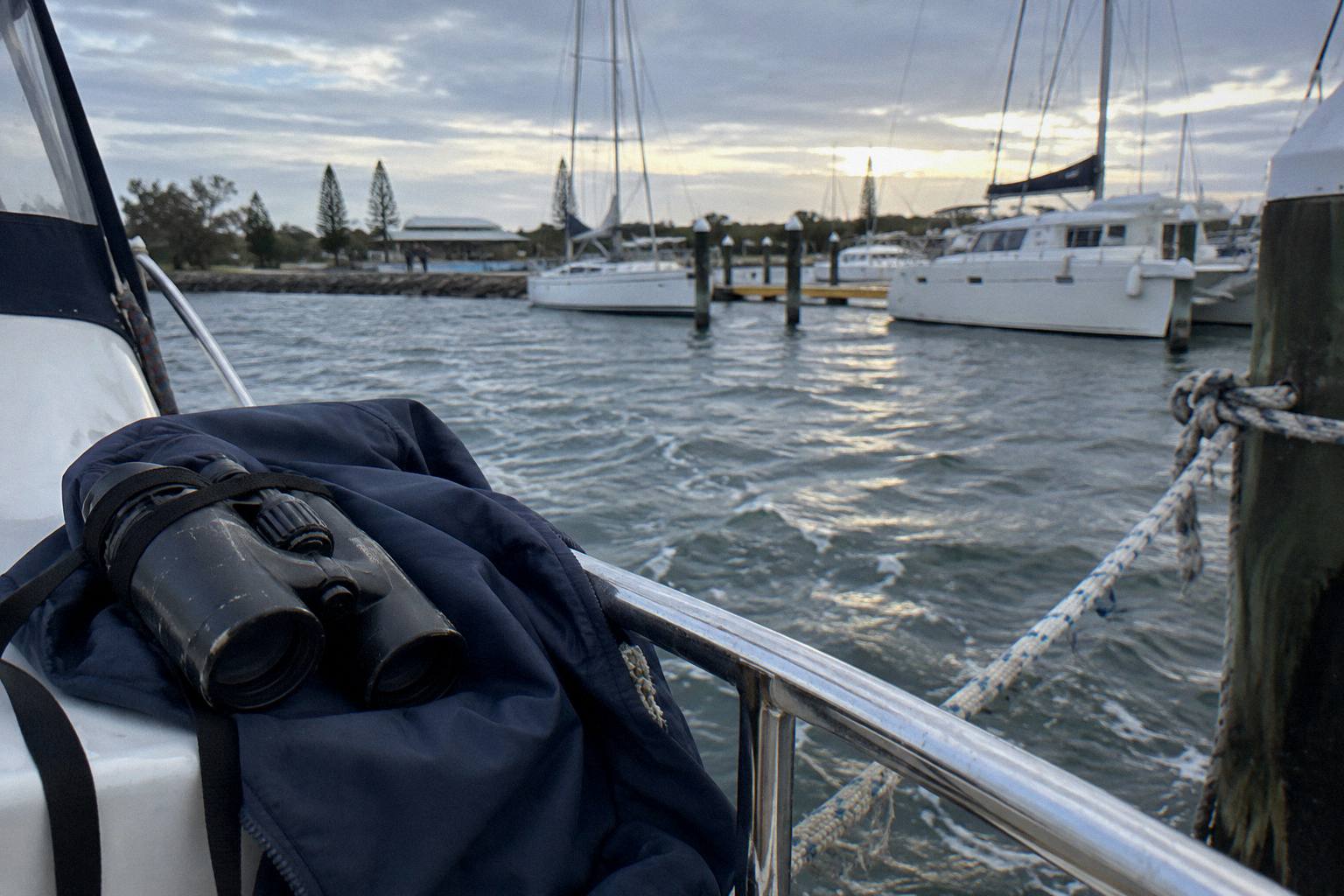
For passengers, the practical effect is that binoculars are genuinely useful, which is why the Boat Club packing list names them. A sighting at a legal distance is still a sighting: dolphins riding a bow wave at the edge of the caution zone, or a pod crossing ahead in low light, are the experiences the rules are designed to protect. The full wording, including the three-boat limit and the drone ban, is on the Queensland rules for watching marine mammals.
| Zone | Whale | Dolphin | Boat behaviour |
|---|---|---|---|
| Caution zone | 300 m | 150 m | No faster than 6 knots |
| No-approach zone, around | 100 m | 50 m | Do not enter |
| No-approach zone, ahead and behind | 300 m | 150 m | Do not enter |
| Vessel limit | Three boats near an animal | Same | Additional vessels stay clear |
| People in the water | Not within 100 m | Not within 50 m | Prohibited |
| Drones | Not within 100 m | Same | Prohibited, penalties apply |
On a small sailing vessel with at most 24 guests, a legal-distance sighting lands differently again: fewer people at the rail, quieter deck, and a sail that carries on regardless. The Blue Dolphin Champagne Sunset Sail is that format, from A$100 per person.
Whales, Evening Cruises, And What Overlaps
Humpbacks are in these waters from June to November, peaking July to October, and the region is one of the world's first designated Whale Heritage Areas. Whale watching here happens on the daytime cruises, not the evening trips. Whale season overlaps the sunset cruises from June to November, but the sunset cruises are not whale watches and nothing is promised.
That single conditional sentence is the whole relationship between whales and the evening water, and it is worth understanding why the split exists. The daytime whale-watch cruises are 4-hour trips run by operators whose entire format is built around finding and observing humpbacks at legal range: the Tasman Venture 4-Hour Whale Watch with hotel pickup, the Whalesong Half-Day Whale Watch With Meal boarding at Great Sandy Straits Marina, and the Boat Club Half-Day Whale Watching Cruise on the Amaroo. Tourism and Events Queensland notes the activity is concentrated off the western coast of K'gari, and whale tours depart from the marina at Urangan, per the state whale watching guide.
An evening cruise is a different product with a different clock. A 1.5 or 2 hour trip that boards ahead of sunset is shaped around the light, the shoreline and the food and drinks on board, not around a run to the whale grounds. Early in the season more adult whales rest and socialise, and in September and October more mothers and calves travel the bay, but none of that changes what an evening trip is for. The companion blog on whether whales can be seen on an evening boat in Hervey Bay covers the overlap in more detail.
Wildlife-minded readers with a whale priority should simply book the daytime product and treat the evening trip as a separate pleasure. If that is your plan, the whale-watch format with the deepest pool of guest feedback is the Tasman Venture trip, 4 hours from A$155 per person with a rating of 4.9 from 699 reviews. Everything else covered here is indexed on Hervey Bay Sunset Cruises.
Glass-Bottom Viewing, Round Island, And Watching From The Milbi
The Milbi Sunset Cruise offers the one evening format built around looking into the water rather than across it: glass-bottom boat viewing, subject to tides and conditions, on a 1.5 hour trip from A$95 per person that stops at Weenandin (Round Island) with the Urangan Pier as its backdrop. The trip includes fresh local king prawns, a grazing platter and a glass of champagne, beer or soft drink, with coffee, tea and water also poured.
Glass-bottom viewing is the closest any evening trip comes to a structured wildlife feature, and the operator's own caveat does the work of setting expectations: tides and conditions decide whether the viewing happens on your night. The Milbi is pram and baby friendly with a bathroom on board, is listed as wheelchair accessible, and takes children aged 4 to 12 on its fare structure. Bookings are essential per the operator, group bookings go by phone with minimum numbers, which matters for families deciding whether the evening works at all; the guide to evening boat accessibility for prams, mobility and older guests goes deeper on that front.
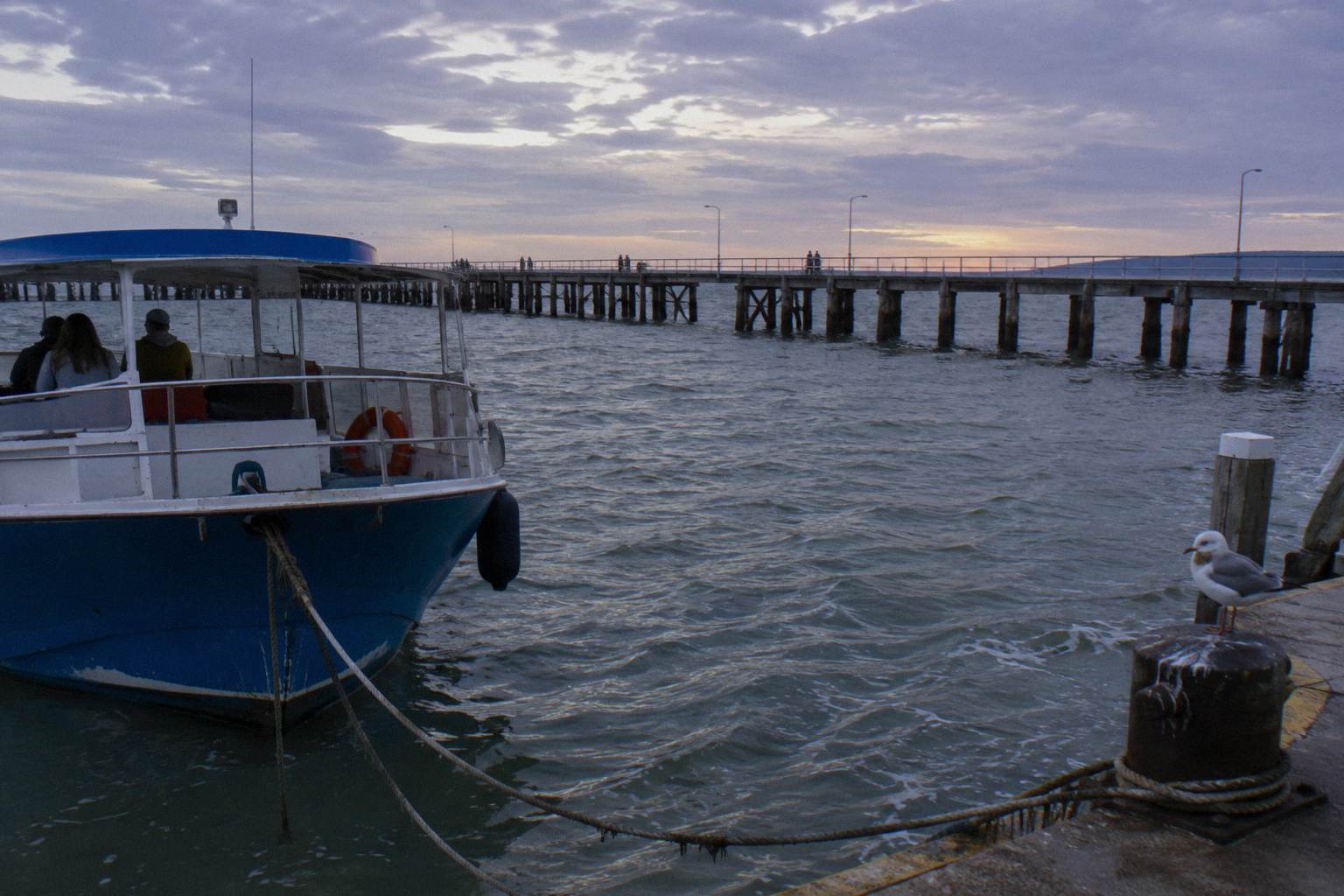
The cultural layer of the Milbi's evening is unusual among the trips here. The booking page carries Butchulla names and meanings of the landmarks you pass, and the business says it learns from the Butchulla people, whose country this water is. That framing gives the bay's geography a second set of names, and Weenandin, the Butchulla name carried on the page for Round Island, is the stop the evening is built around. It is place-lore rather than a wildlife tour, but the two overlap wherever the shoreline and its animals share the light.
For the full food picture across all the evening trips, from the Milbi's king prawns to the Blue Dolphin's finger food and the Boat Club's canteen, the guide to champagne, canapes and food on the water compares what is included with what is for sale.
Planning Around The Light: When Wildlife-Watching Evenings Work Best
Evening trips here run late in the day by design, boarding ahead of sunset, and the approximate computed sunset at Urangan swings from about 5:06pm in June to about 6:43pm in January. The Boat Club Twilight Bay Cruise departs between 3:30pm and 4:30pm depending on the time of year, and the Milbi departs at 4:30pm in winter and 5:00pm in summer. Booking pages show the exact time for your date.
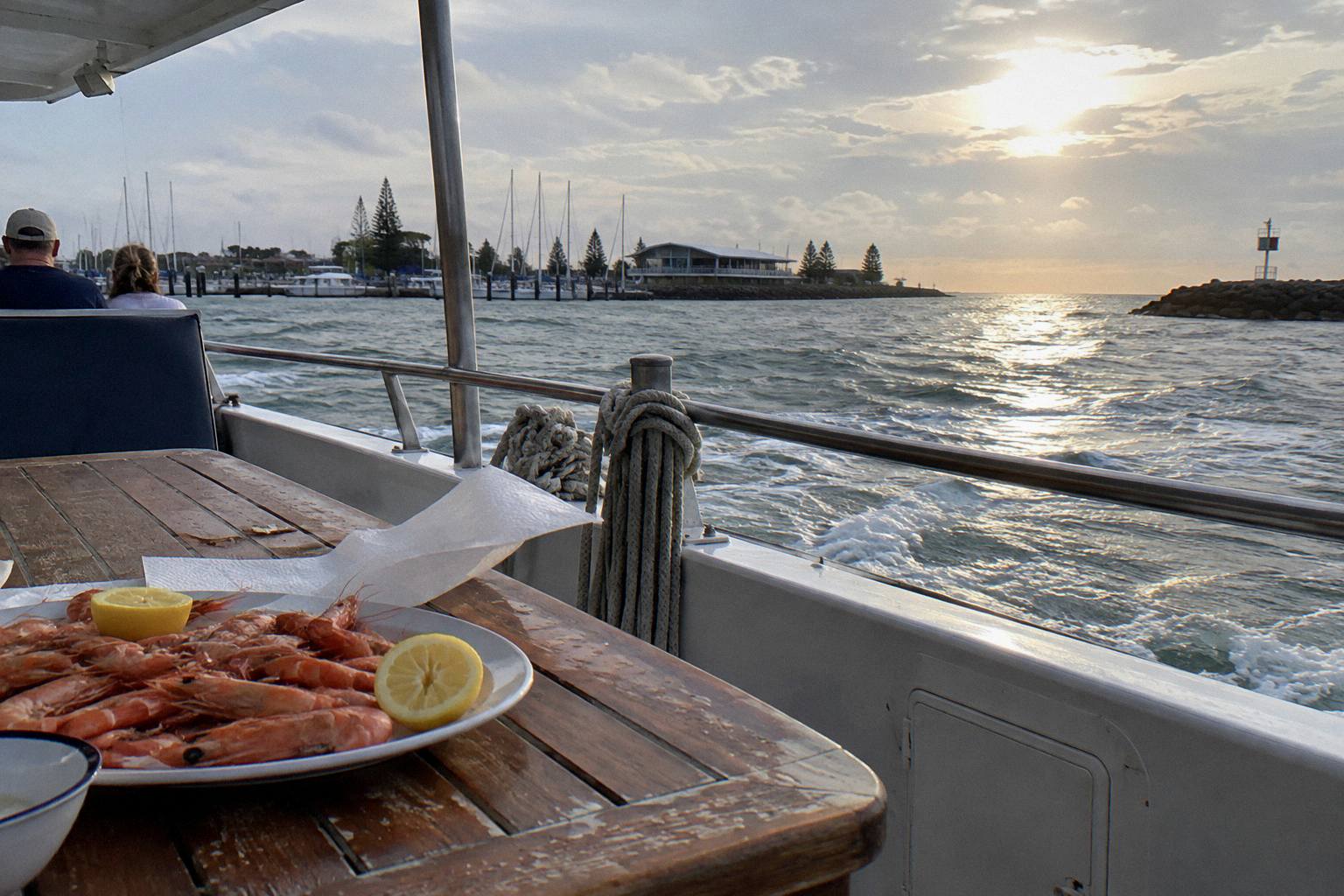
Those departure windows are the practical link between wildlife watching and the calendar. A June departure in the low 4:00pm hour means you are on the water with hours of light still ahead of the sunset; a summer departure closer to 5:00pm compresses the trip into the golden end of the day. Neither is better for animals in any documented way, but they feel entirely different as evenings, and the sunset table is the tool for choosing. The dedicated breakdown is in what time sunset falls and when boats board.
| Month | Approximate computed sunset at Urangan | Twilight Bay Cruise departure window |
|---|---|---|
| January | about 6:43pm | 3:30pm to 4:30pm depending on the time of year |
| March | about 6:06pm | 3:30pm to 4:30pm depending on the time of year |
| June | about 5:06pm | 3:30pm to 4:30pm depending on the time of year |
| September | about 5:41pm | 3:30pm to 4:30pm depending on the time of year |
| December | about 6:34pm | 3:30pm to 4:30pm depending on the time of year |
Weather is the other variable, and the operators handle it differently. The Boat Club says its route and destination can change without notice because of tides and weather; the Milbi's tours vary with weather, group size and the guide's judgement, and the glass-bottom viewing depends on tides and conditions. Neither page publishes a rain-or-wind cancellation policy, so ask the operator how weather calls are made when you book. Every trip offers free cancellation up to 24 hours before the start for a full refund, which is the safety net that makes an early booking low-risk. The month-by-month climate picture, including wind averages and rain days, is in the guide to rain, wind and cancellations on an evening cruise.
Five Mistakes Wildlife-Minded Guests Make With Evening Boats
The recurring mistakes are treating hedged operator wording as a promise, expecting whales on a sunset trip, assuming the park's species list applies to every bay corner at every hour, packing for a warm afternoon when the evening climate data says otherwise, and skipping binoculars on the one trip whose commentary is built around watching. Each one is avoidable with a single decision made before booking rather than on the deck.
The first mistake is the biggest. Keep your eyes peeled is an instruction, not a forecast, and a guest who books expecting a dolphin performance will read a quiet night as a failure of the trip rather than a fact of the bay. The second mistake costs more: booking an evening cruise as a whale watch when the whale product is the 4-hour daytime trip. The third, applying the park list wholesale, leads people to expect dugong off the Urangan jetty; dugong are on the park-wide list, and sightings are never promised.
The fourth mistake is thermal. Mean minimum temperatures at Hervey Bay Airport run from about 22.0 degrees in January down to about 10.1 degrees in July, and a winter evening on the water feels like the July number, not the afternoon's maximum. The Boat Club packing list names a warm jumper for a reason. The fifth, forgetting binoculars and cash, quietly degrades the two best parts of the twilight trip: legal-distance watching and the canteen. For families, one extra planning note belongs here: one child under 14 travels free per full-fare adult on the Twilight Bay Cruise, under-18s need a guardian over 18, and the wider kids picture is in the guide to taking kids on an evening cruise.
The Twilight Bay Cruise remains the evening pick for wildlife commentary, and the free-cancellation window up to 24 hours before the start means an early booking carries little risk while your date still has space.
Choosing between the three evening formats comes down to what kind of watcher you are. The sailing vessel with at most 24 guests suits quiet observation, the Milbi suits readers who want the water interpreted through Butchulla place names and a glass-bottom window, and the Amaroo suits guests who want the animals talked through over two hours with a bar on board.
Common Questions About Evening Wildlife On The Bay
Are Dolphins Guaranteed On A Hervey Bay Evening Cruise?
No. The Boat Club page uses hedged wording, keep your eyes peeled for local dolphins and other wildlife, and no operator here promises a sighting, a species or a time of day. Dolphins share the bay with the boats, and Queensland approach rules require vessels to stay outside a 150 metre caution zone and a 50 metre no-approach zone around them.
Which Evening Cruise Has Wildlife Commentary?
The Boat Club Twilight Bay Cruise, about 2 hours from A$55 per person, includes commentary on marine wildlife and K'gari landmarks aboard the Amaroo. The Blue Dolphin sail and the Milbi Sunset Cruise do not list wildlife commentary among their inclusions.
Can You See Turtles On A Sunset Cruise In Hervey Bay?
Turtles appear on the Great Sandy Marine Park's wildlife list alongside whales, dugong and grey nurse sharks, but that list is park-wide and sightings are never promised.
Can You See Whales On An Evening Cruise?
Whale season overlaps the evening trips from June to November, but the evening cruises are not whale watches and nothing is promised. Whale watching happens on the 4-hour daytime cruises, when humpbacks are present from June to November, peaking July to October.
How Close Does The Boat Get To Dolphins?
Queensland rules set a caution zone of 150 metres around a dolphin, inside which boats travel no faster than 6 knots, and a no-approach zone of 50 metres around the animal and 150 metres ahead and behind. Penalties apply, and drones are banned within 100 metres.
What Should I Bring For Watching Wildlife At Dusk?
For the Boat Club Twilight Bay Cruise the operator lists sunglasses, a hat, a warm jumper, a camera and binoculars, plus cash for the on-board canteen. For the other trips, ask the operator when booking.