
Can You See Whales On A Sunset Cruise In Hervey Bay?
Whale watching in Hervey Bay happens on the daytime cruises, not the evening ones. Here is how the season overlaps the sunset departures, and how to plan a trip that does both.
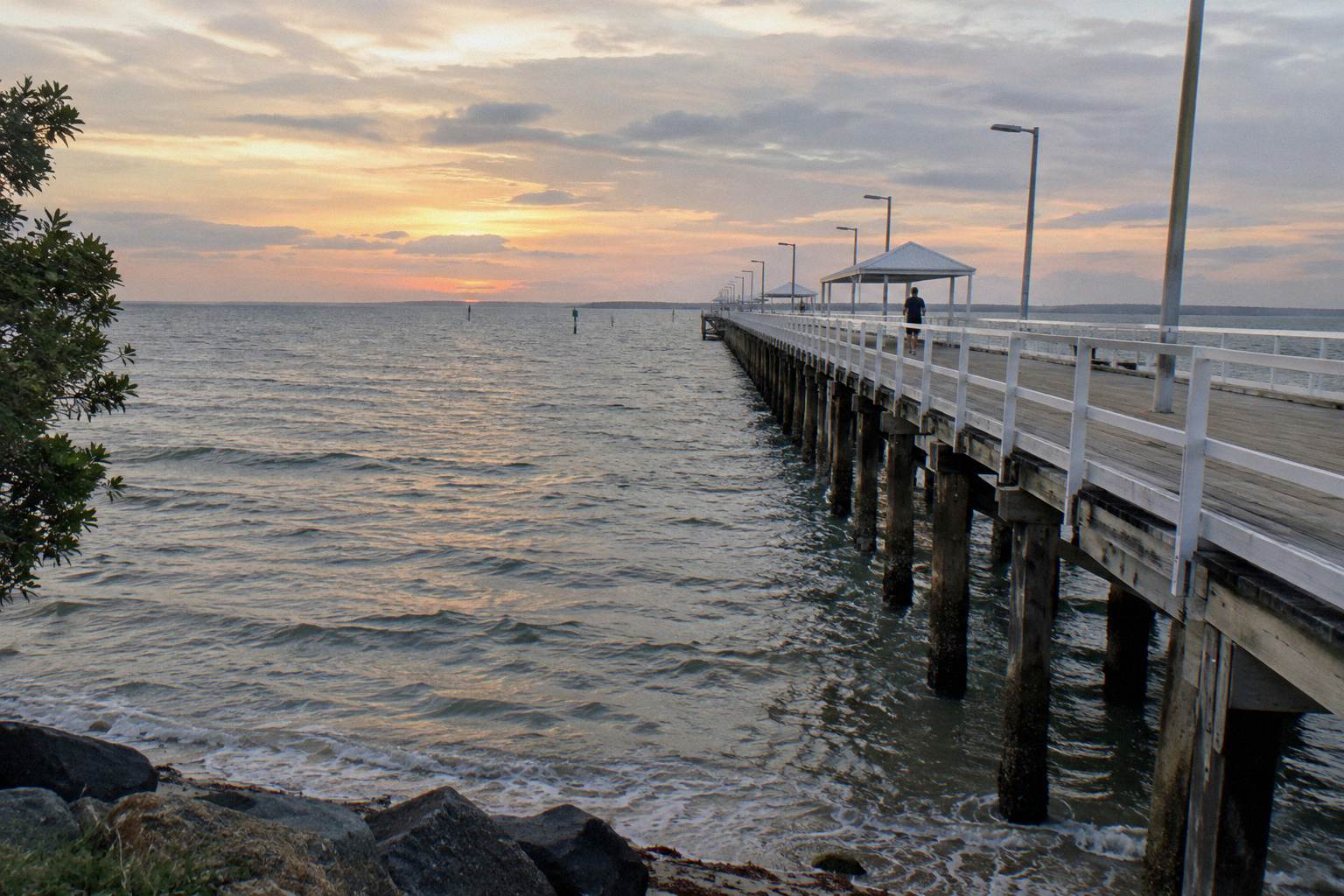
No, whales are not a promised part of sunset cruises in Hervey Bay. Humpbacks visit these waters from June to November, peaking July to October, and Tourism and Events Queensland says more than 8,000 whales use the area each year, but dedicated whale watching happens on four-hour daytime cruises. Sunset trips are twilight bay cruises and champagne sails focused on the light, islands and shoreline, with nothing promised.
That distinction matters more here than in most coastal towns. Hervey Bay is one of the places in the world where whale watching is the reason many people visit at all. The bay is one of the world's first designated Whale Heritage Areas, and the whale tours depart from the marina at Urangan, with activity concentrated off the western coast of K'gari. So the question every whale-season visitor asks is a fair one: if the whales are out there somewhere in the bay, will the evening boat find them?
The plain answer is that no evening product here is sold as a whale watch, and none should be read as one. The evening cruises run one and a half to two hours, close to shore, around islands and the Urangan Pier. The whale-watch cruises run four hours and head for the waters off K'gari where the whales congregate. Those are different trips with different routes, and the shorter evening format is not a cut-price version of the longer daytime one. If whales are the reason you booked, the four-hour cruises are the ones to book.
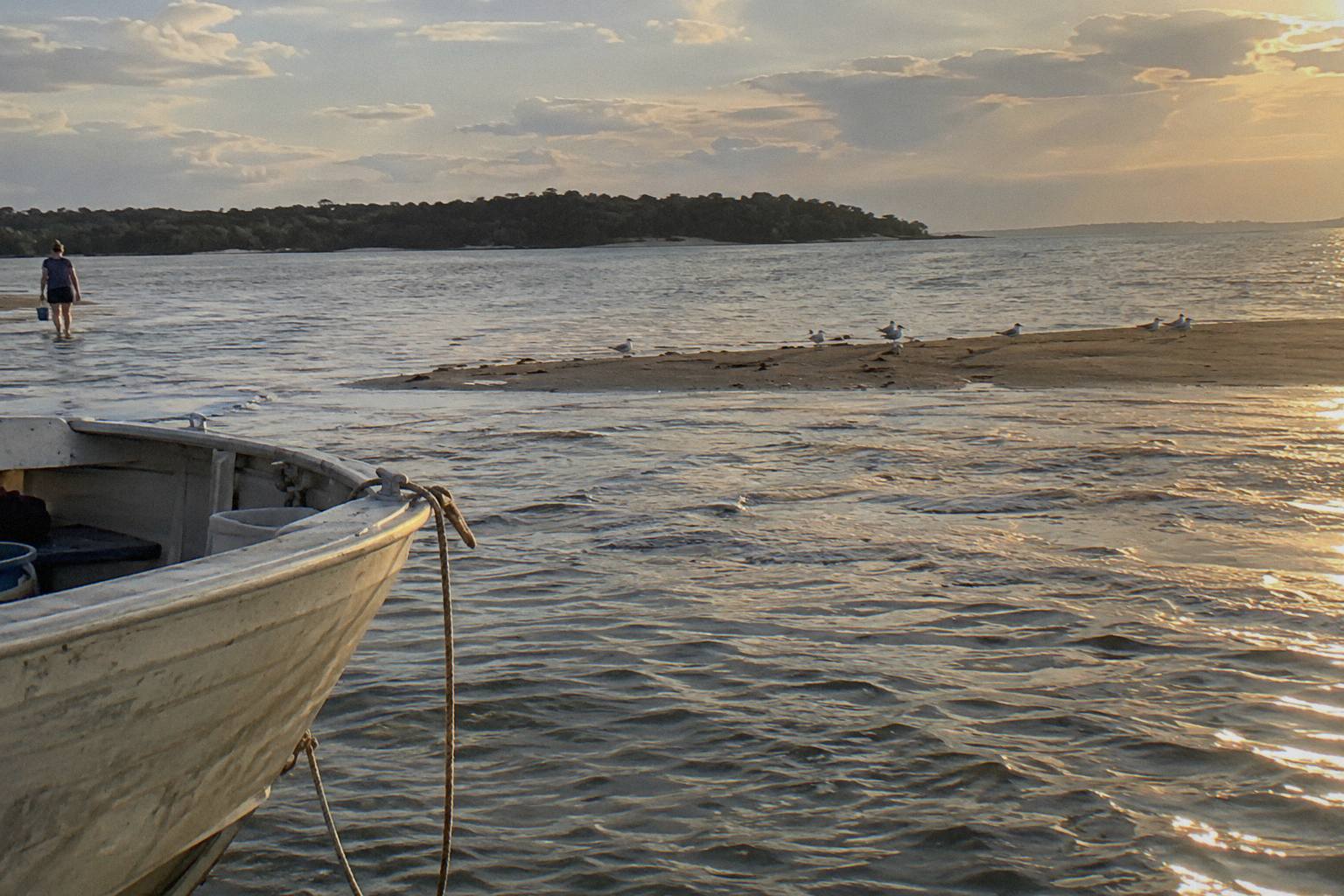
There is also a practical middle path that many whale-season visitors take: a morning or afternoon on a dedicated whale-watch cruise, then an evening on the water for the light. The three whale-watch operators all run morning or afternoon options, and the booking calendar shows the departures for your date. Our Hervey Bay Sunset Cruises coverage is organised around exactly that split, because it matches how the boats actually run.
If you are weighing both kinds of trip, these are the three worth comparing first.
When The Whales Are Actually In The Bay
Humpbacks are here June to November, peaking July to October, in the words of Tourism and Events Queensland. Early in the season more adult whales rest and socialise in the bay; in September and October more mothers and calves appear. The season overlaps the evening cruises from June to November, but the evening cruises are not whale watches and nothing is promised on them. The four-hour daytime cruises are the trips that go looking.
The shape of the season is worth understanding before you pick dates. The bay is a resting place on the migration, not a corridor the whales pass through at speed, which is why the region's reputation is built on close, slow encounters from dedicated vessels rather than glimpses from a passing ferry. Early season trips tend to find adults resting and socialising, while the later months bring mothers with calves, and the character of a trip changes with that mix. The state tourism body's whale watching page for Hervey Bay spells out the June to November window and the July to October peak.
Neither the tourism wording nor any operator wording attaches a whale to an evening departure. Any sighting promise you might have seen elsewhere belongs to marketing copy, not to anything a Hervey Bay operator states about an evening cruise. If a trip does not describe itself as a whale watch, treat whales as a matter of luck rather than a feature you paid for.
Planning around the season rather than against it also changes what the evening water feels like. A July evening and a November evening are different experiences: sunset sits near its earliest in late June, about 5:06pm by solar calculation for Urangan, and drifts to about 6:13pm by mid November. The whale season starts in the shortest-daylight part of the year and ends in the longest, so an evening cruise in the peak months boards and sails closer to mid afternoon light than to dusk.
The Daytime Whale-Watch Cruises Compared
All three whale-watch cruises run four hours, and each pairs the crossing with something practical: Tasman Venture includes hotel pickup and runs twice daily, Whalesong includes a meal and boards at Great Sandy Straits Marina, and the Boat Club cruise sails on Amaroo with parking included. Ratings sit between 4.8 and 4.9, from 232 to 699 reviews. Prices start from A$120 to A$160 per person, in Australian dollars.
Those are the numbers. The differences between them are mostly logistics and food, and which one suits you depends on where you are staying and whether you want a meal folded into the fare.
| Cruise | Duration | Rating and reviews | From price | What is folded in |
|---|---|---|---|---|
| Tasman Venture 4-Hour Whale Watch | 4 hours | 4.9 from 699 reviews | A$155 per person | Hotel pickup and drop-off at select accommodation, twice daily, morning or afternoon tea with an antipasti platter |
| Whalesong Half-Day Whale Watch With Meal | 4 hours | 4.8 from 232 reviews | A$160 per person | Morning or afternoon tea plus lunch or dinner depending on the option, boards at Great Sandy Straits Marina |
| Boat Club Half-Day Whale Watching Cruise | 4 hours | 4.8 from 412 reviews | A$120 per person | Parking included, morning or afternoon tea and biscuits, sails on the Amaroo |
The Tasman Venture is the one for visitors staying in accommodation without a car, since pickup and drop-off at select Hervey Bay accommodation is part of the booking. The Whalesong catamaran suits anyone who wants the meal decided in advance: filtered water, tea, herbal tea, coffee and hot chocolate come with the fare, a full bar sits on board for more, and the lunch or dinner option means the four hours do not run on an empty stomach. The Boat Club cruise is the value end of the set and the only one that names parking as an inclusion, which matters at the Boat Club jetty in peak season.
All three hold free cancellation up to 24 hours before the start for a full refund, and all three show their departure times on the booking calendar. If you are tying a whale watch to an evening cruise on the same day, check that the whale watch you want has a morning option on your date, and leave enough space to get to the evening boarding point. Our guide to getting to Urangan, parking and check-in covers the boarding points and the check-in windows, including the Boat Club's boarding time of 15 minutes before departure.
One more thing worth knowing before you book: the best time of day for whales has no settled answer. The operators offer both morning and afternoon options, and the booking calendar shows the departures, so choose the slot that fits your evening plans rather than hunting for a golden hour that nobody can promise.
Why The Evening Trips Are Not Whale Watches
No evening trip in the bay is sold as a whale watch. These shorter departures, generally one and a half to two hours and close to shore, focus on the fading light and the shoreline instead. The Boat Club Twilight Bay Cruise runs about two hours with commentary on marine wildlife and K'gari landmarks, while the Milbi and Blue Dolphin options are shorter again at 1.5 hours each.
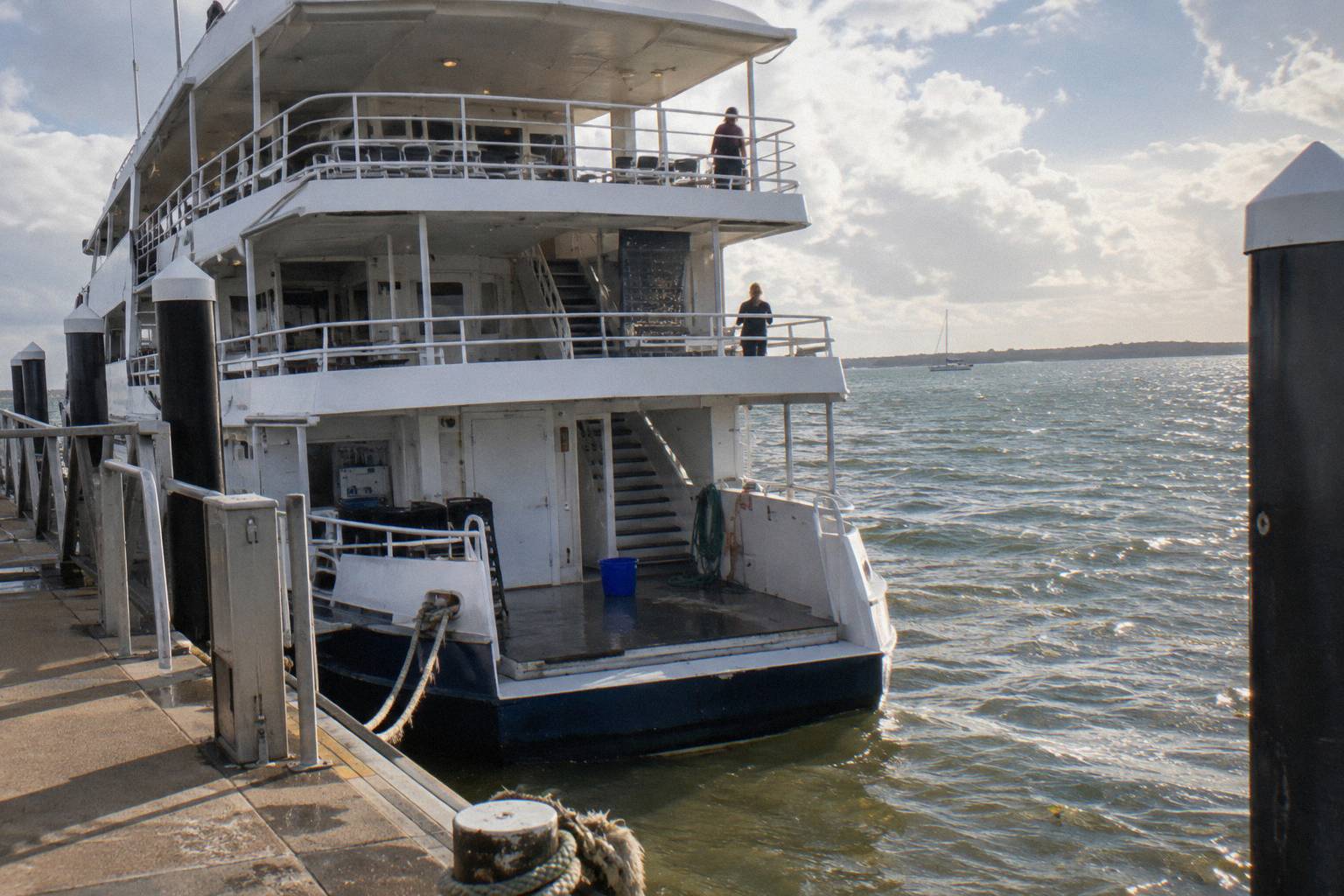
The Amaroo is a large stable powered vessel with three viewing decks and a covered top deck with 360 degree views, toilets and a bar on board, and the operator's own description of the twilight route is hedged by design: scenic destinations may include Woody Island, Round Island, Pelican Bank and the historic Urangan Pier, and the route can change without notice because of tides and weather. On wildlife, the operator's wording is equally careful, keep your eyes peeled for local dolphins and other wildlife, which is an invitation to look, not a promise of a sighting. The operator's twilight cruise page is the source for all of that.
The other evening boats are smaller and quieter again. The Blue Dolphin Champagne Sunset Sail takes at most 24 guests on a sailing vessel, with sparkling wine, finger food and a complimentary beer, wine or soft drink, from A$100 per person; it needs at least four guests to run, and if the minimum is not met the booking page offers a full refund or a move to another vessel. The Milbi Sunset Cruise, from A$95 per person, carries fresh local king prawns, a grazing platter and a glass of champagne, beer or soft drink, and its route wording names a stop at Weenandin, Round Island, with Urangan Pier as the backdrop.
| Evening cruise | Duration | Boarding point | Food and drink included | From price |
|---|---|---|---|---|
| Boat Club Twilight Bay Cruise | About 2 hours | Hervey Bay Boat Club, Buccaneer Drive, Urangan | A small plate of nibbles and one complimentary glass of bubbles; canteen on board | A$55 per person |
| Blue Dolphin Champagne Sunset Sail | 1.5 hours | Great Sandy Straits Marina, Urangan | Finger food, sparkling wine and a complimentary beer, wine or soft drink | A$100 per person |
| Milbi Sunset Cruise | 1.5 hours | Fisherman's Wharf Marina, Jetty Rd, Urangan | King prawns, a grazing platter and a glass of champagne, beer or soft drink | A$95 per person |
None of that is a whale product, and the gap is structural rather than marketing. A whale watch needs the time to reach the concentration area off the western coast of K'gari and back, which is why every dedicated whale cruise here is a four-hour commitment. An evening cruise in the last two hours of daylight stays in the bay, among the islands and the pier, because that is what fits the format and the light. If you want both the whales and the dusk, the answer is two bookings, not one hopeful one.
How Close The Boats Are Allowed To Get
Queensland rules set a caution zone at 300 m from a whale, where boats travel no faster than 6 knots, and a no-approach zone at 100 m around a whale and 300 m ahead and behind. For dolphins the distances are 150 m and 50 m. A three-boat limit applies, no person may be in the water within 100 m of a whale, drones are banned within 100 m, and penalties apply.
These limits, set out on the Queensland Government's marine mammal watching rules page, are the reason a whale encounter from a compliant boat is a watching experience rather than a chase. They apply to every vessel in these waters, which includes the evening cruises if a whale should happen to appear near one, and they are part of why Hervey Bay's whale reputation is built on resting whales in calm conditions rather than close pursuit.
| Situation | Whale | Dolphin |
|---|---|---|
| Caution zone, maximum 6 knots | 300 m | 150 m |
| No-approach zone around the animal | 100 m | 50 m |
| No-approach zone ahead and behind | 300 m | 150 m |
| Person in the water prohibited within | 100 m | 50 m |
| Drones prohibited within | 100 m | not given |
For a visitor, two of those numbers matter most. The three-boat limit means that even at the height of the season, a gathering of vessels around one whale is capped, and the 6 knot rule inside the caution zone means the final approach is slow. If you are photographing, set your expectations to a whale at a respectful distance in good light, not a fill-the-frame breach. Drone owners should note the 100 m ban applies even from the shore near a whale.
The Great Sandy Marine Park itself, which extends from Baffle Creek in the north to Double Island Point in the south and includes Hervey Bay and the Great Sandy Strait, lists whales, turtles, dugong and grey nurse sharks among its wildlife. That is a park-wide list, not a cruise promise, and the Boat Club and Milbi bookings include marine park fees or a permit. Our longer piece on the marine park from the water at dusk goes into what that protected status means for an evening trip.
Planning A Day That Does Both
The workable pattern is a morning or afternoon four-hour whale watch, then an evening cruise on a different boat, with the gap between them used for the pier and dinner. Sunset in Urangan is about 5:06pm in mid June and about 6:34pm in mid December by solar calculation, and the Boat Club twilight cruise departs between 3:30pm and 4:30pm depending on the time of year, so the two bookings rarely collide.
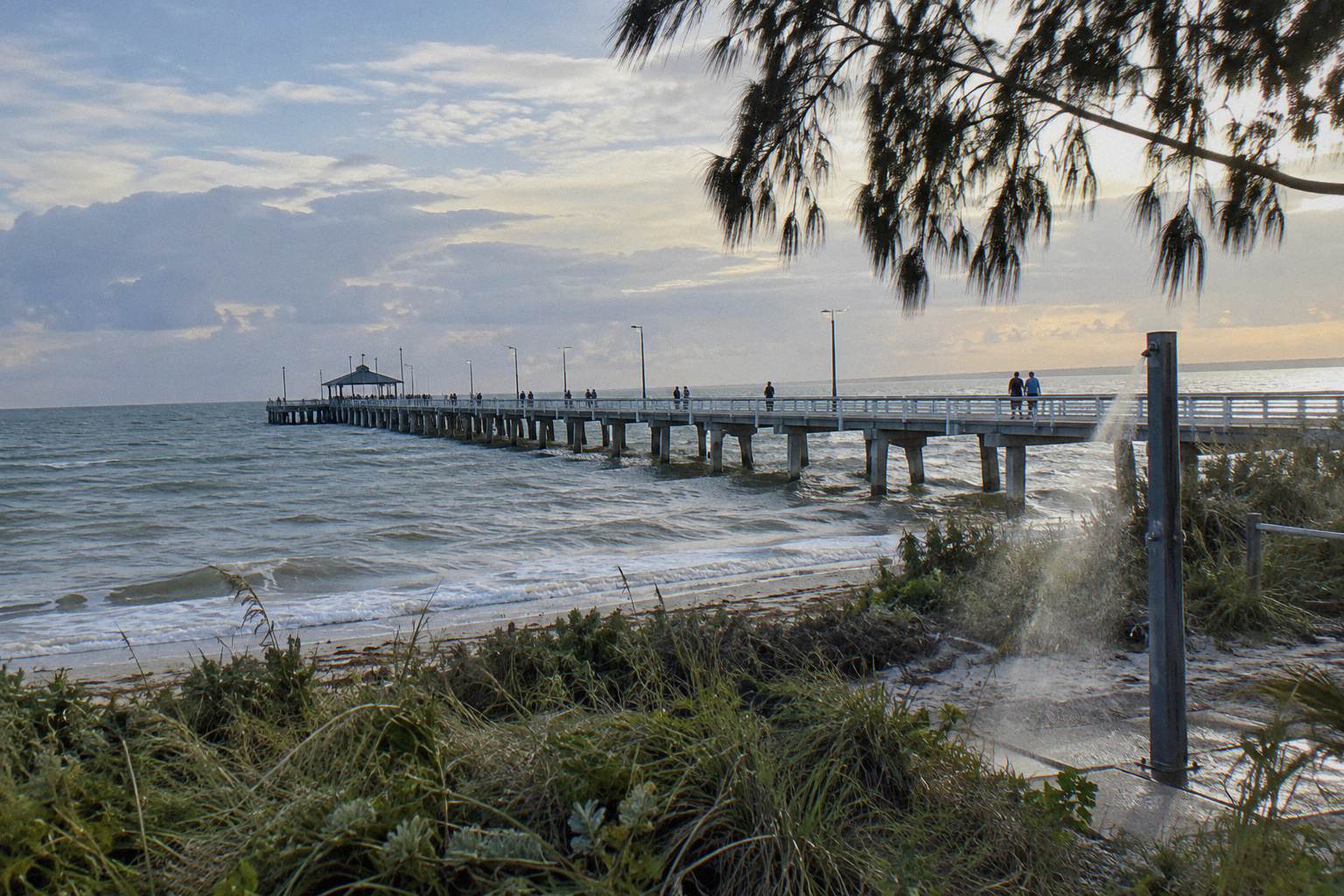
The double-booking day is a Hervey Bay classic for a reason. A morning whale watch returns early enough for a late lunch, the Urangan Pier, 868 metres long and reopened on 1 July 2025 after a 1.43 million dollar rehabilitation by the Fraser Coast Regional Council, fills the afternoon, and the evening boarding lands you back on the water for the light. Because the whale cruises run morning or afternoon options, a late riser can flip the order and still fit both.
Budget the day from the six from-prices. The whale watches start from A$120, A$155 and A$160 per person and the evening cruises from A$55, A$95 and A$100 per person, all in Australian dollars, with the booking page price for your date being the one that counts. Families get a break on the twilight cruise: one child under 14 travels free per paying adult, conditional on a full-fare adult, and persons under 18 must be accompanied by a legal guardian over 18. Our guide on taking kids on an evening cruise sets out the age rules trip by trip.
Weather is the one thing worth asking about directly. Boat Club states its route and destination may change without notice because of tides and weather, Milbi says tours vary with weather, group size and the guide's judgement, and every one of the six trips carries free cancellation up to 24 hours before the start for a full refund. Ask the operator how weather calls are made if your whale-watch morning and your evening cruise fall on the same day, since a call on one does not automatically move the other. The deeper planning detail, including what to wear when the evening temperature drops, is in our piece on what to wear on a sunset boat trip.
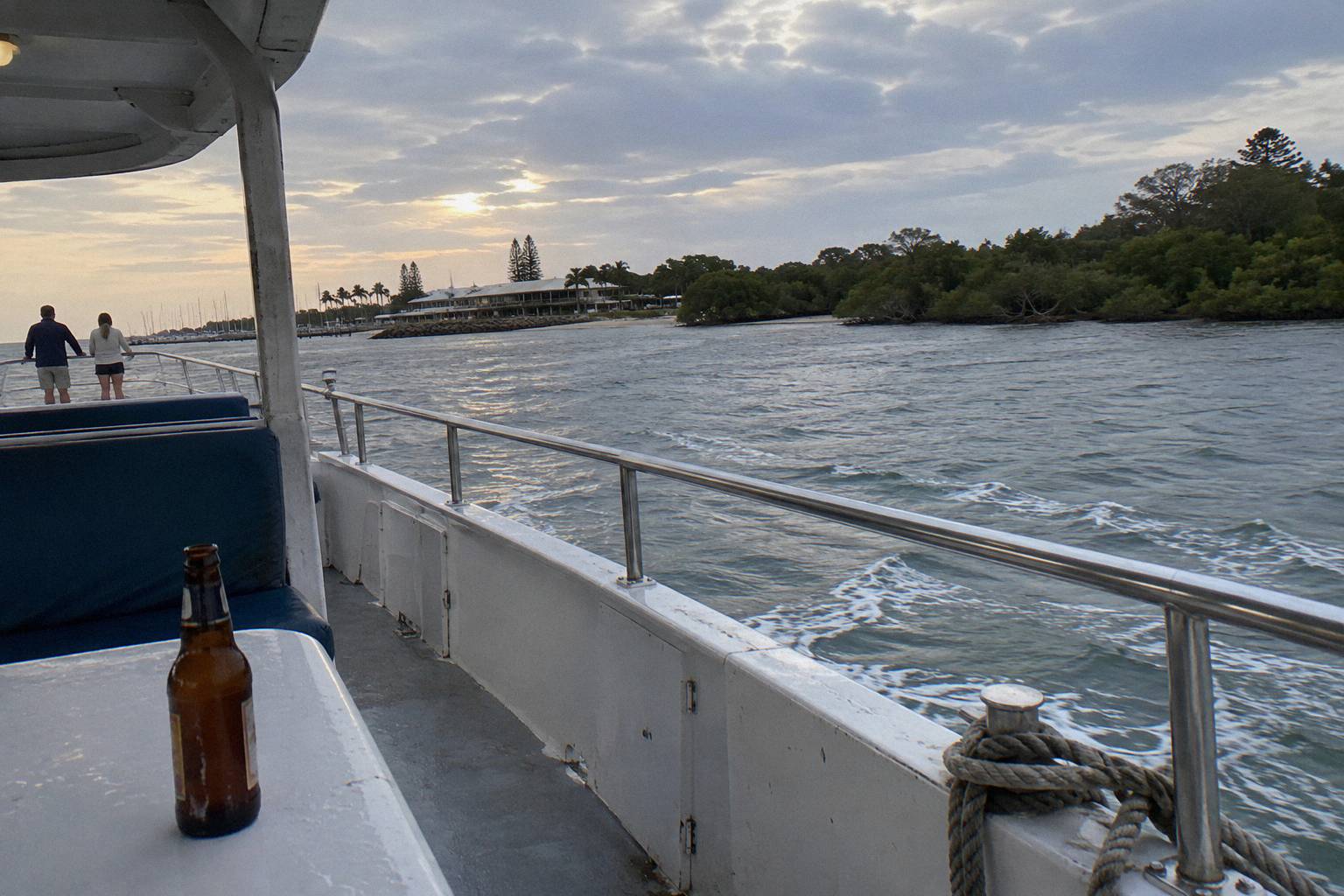
Evening temperatures deserve one line of their own. Bureau of Meteorology averages from Hervey Bay Airport put the mean minimum at 22.0 degrees in January and 10.1 degrees in July, so the same dusk cruise is a short-sleeve trip in summer and a jumper trip in the peak whale months. The Boat Club page for its twilight cruise lists sunglasses, a hat, a warm jumper, a camera and binoculars, plus cash for the on-board canteen.
Whichever pair of trips you settle on, the split is the same: book the four-hour daytime cruise for the whales, book the evening cruise for the bay at dusk, and hold both lightly, because every one of them carries the 24 hour free-cancellation terms. These are the three that pair best on a single visit.
Common Questions About Whales And Evening Boat Trips
Can You See Whales On A Sunset Cruise In Hervey Bay?
Not as a promised part of the trip. Whales are in the bay from June to November, peaking July to October, but the whale watches here are the four-hour daytime cruises. Whale season overlaps the sunset cruises from June to November, but the sunset cruises are not whale watches and nothing is promised on them.
When Is The Best Time To See Whales In Hervey Bay?
Tourism and Events Queensland puts humpbacks in the bay June to November, peaking July to October. Early in the season more adults rest and socialise; in September and October more mothers and calves appear. The best time of day has no settled answer: the operators offer morning and afternoon options and the booking calendar shows the departures.
Which Cruise Should I Book If Whales Are The Main Reason For My Trip?
A four-hour daytime whale watch: Tasman Venture with hotel pickup, Whalesong with a meal, or the Boat Club cruise with parking included. All three run four hours and head for the waters off the western coast of K'gari where the whales congregate. Ratings run 4.8 to 4.9 across 232 to 699 reviews.
Do The Evening Cruises See Dolphins Or Other Wildlife?
The Boat Club page invites guests to keep their eyes peeled for local dolphins and other wildlife, and the twilight cruise includes commentary on marine wildlife and K'gari landmarks. That is hedged operator wording, not a promise: no species, frequency or sighting is guaranteed on any evening trip.
How Close Do The Boats Get To A Whale?
Queensland rules set a 300 m caution zone where boats travel no faster than 6 knots, a 100 m no-approach zone around a whale, 300 m ahead and behind, a three-boat limit, a ban on people in the water within 100 m of a whale, and a 100 m drone limit. Penalties apply.
Can I Do A Whale Watch And An Evening Cruise On The Same Day?
Yes, and it is a common pattern. Take a morning whale watch, use the afternoon for the Urangan Pier and dinner, then board an evening cruise. The twilight cruise departs between 3:30pm and 4:30pm depending on the time of year, so check the booking calendar times for your date before locking both in.