
When Is The Best Time To See Whales In Hervey Bay?
Humpbacks are in Hervey Bay from June to November, peaking July to October. A month-by-month breakdown of the whale season, the daytime cruise options and how the season overlaps the evening boats.
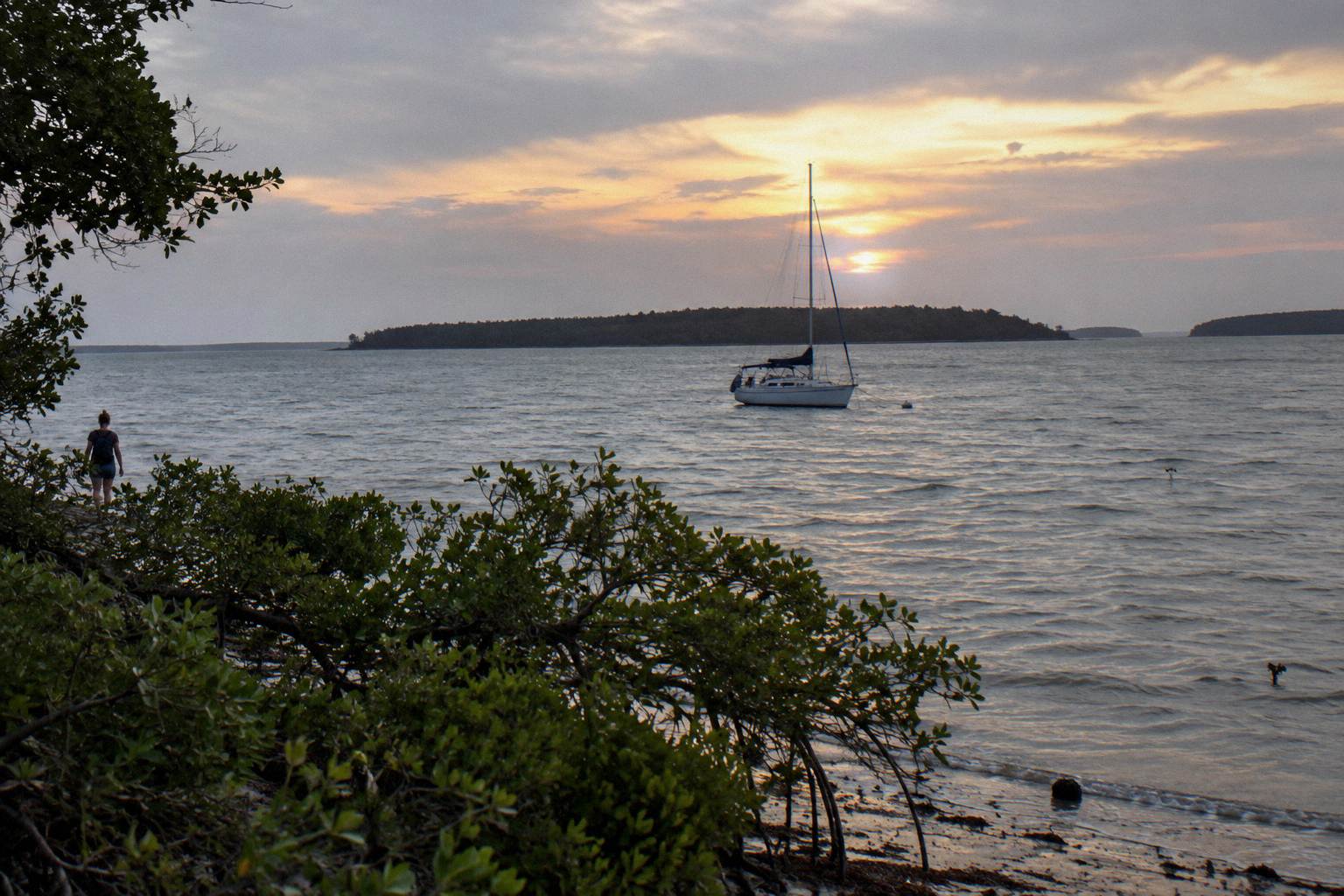
Humpback whales are in Hervey Bay from June to November, and the busiest stretch of the season runs July to October. More than 8,000 whales use these waters each year, according to Tourism and Events Queensland, and the bay is one of the world's first designated Whale Heritage Areas. The watching happens on daytime cruises of about four hours that depart from the marina at Urangan; the evening boats are a different product, and no whale is promised on one.
| Quick fact | Detail |
|---|---|
| Whale species | Humpback whales |
| Season | June to November |
| Peak months | July to October |
| Mothers and calves | Most common September and October |
| Annual whale numbers | More than 8,000 |
| Whale Heritage Area status | One of the world's first |
| Watching happens on | Daytime cruises of about 4 hours from the Urangan marina |
| Whale activity area | Concentrated off the western coast of K'gari |
The best window is July to October, inside a season that runs June to November. Early in the season more adult whales rest and socialise in the bay; in September and October the mix shifts and more mothers travel with calves. Tourism and Events Queensland describes the season exactly that way, and no month is promised by anyone: whales are wild animals and every trip is a chance, never a certainty.
The season's shape follows the humpback migration along the east coast of Australia. The whales move north through winter and back south through spring, and Hervey Bay sits on the southern leg where the animals pause. That pause is what makes the bay unusual as a watching ground: the whales are not simply passing in a straight line, they stop and rest, particularly in the sheltered water between the mainland and K'gari. A whale that is resting behaves differently from a whale that is travelling, and the long stretches of calm, shallow bay water are the reason the area is a designated Whale Heritage Area.
The timing question matters most for people booking months ahead. A July trip and an October trip are both inside the peak, but they offer different scenes: July brings the adult resting and socialising behaviour, while September and October bring the mothers and calves that linger in the bay before the final run south. Families with young children often prefer the later window for exactly that reason, and photographers often do too, since a calf close to its mother at the surface is a slower, more predictable subject than a breaching adult.
There is no month to avoid on whale grounds alone, only months outside the season. December through May falls outside the June to November window, and a traveller in those months who wants whales should plan around a different activity. For anyone already planning an evening on the water, the companion piece on which way the sun sets from Urangan covers the viewing direction, and the season's shoulder months happen to carry some of the best sunsets of the year because of cloud patterns. Prices for the whale-watch trips, in Australian dollars, run from A$155 for the Tasman Venture trip up to A$160 for the Whalesong trip with a meal included.
What Does Each Month Of The Season Look Like?
June opens the season as the first humpbacks arrive, and the build is gradual rather than sudden. July and August carry the densest traffic of adult whales resting and socialising. September and October are the calf months, with mothers and youngsters most often seen, and November thins out as the population moves south. Every one of those patterns comes from Tourism and Events Queensland's season description, and none of them is a sighting promise for a particular date.
The month-by-month table below reads as a planning guide, not a forecast. Weather plays its part as well: Bureau of Meteorology averages for Hervey Bay Airport show July as the driest of the peak months with a mean of 42.1 mm of rain, while September is drier still at 33.4 mm, and those two months combine strong whale numbers with the lowest rainfall and lighter winds of the season. Mean 3pm wind speeds bottom out in June and July at 15.6 to 16.2 km/h, which matters for comfort on a four-hour trip.
| Month | Season pattern | Notes for planning |
|---|---|---|
| June | Season opens, first arrivals | Early-season adults; mean max 22.2 °C |
| July | Peak, adults resting and socialising | Driest peak month, 42.1 mm mean rain |
| August | Peak continues | Winds still light at 18.0 km/h mean 3pm |
| September | Peak, more mothers with calves | Driest month of the season, 33.4 mm |
| October | Peak, mothers and calves | Warming, mean max 26.7 °C |
| November | Season tails off | Later sunsets, about 6:13pm mid-month |
The two ends of the season reward different travellers. A June or early July trip costs the same as an August one but carries more uncertainty, and a late November trip can still find whales, just fewer of them. Anyone set on the calf season should aim squarely at September and October, when Tourism and Events Queensland says the mother-and-calf pairs dominate, and be prepared that those months also carry more rain than August on the long-term averages, 79.8 mm in November against 49.7 mm in August.
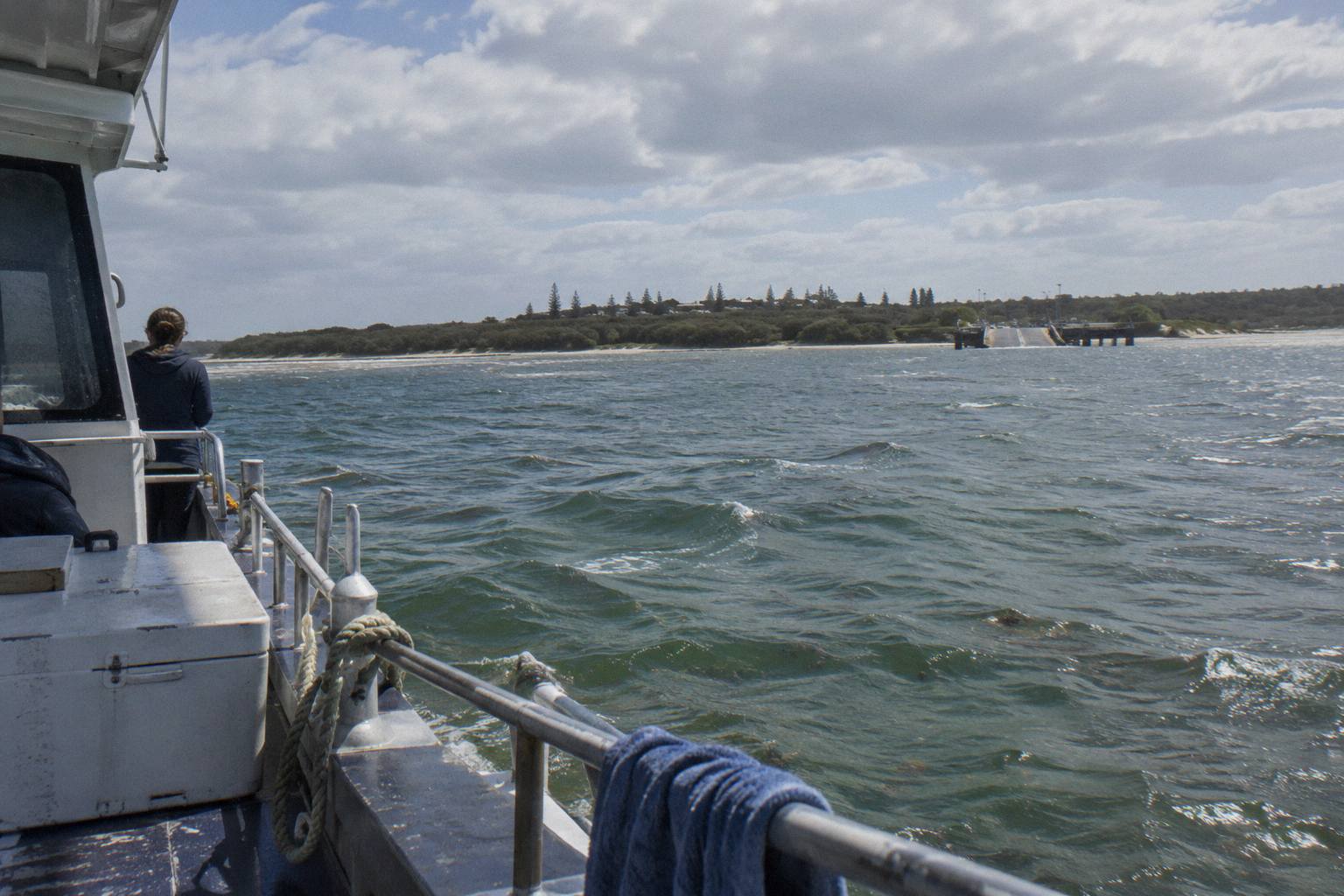
The Tasman Venture 4-Hour Whale Watch is the featured daytime trip for season readers: four hours, rated 4.9 from 699 reviews, from A$155 per person, with pickup and drop-off at select Hervey Bay accommodation and departures twice daily. It is the trip to check first when the calendar lands in the July to October window, and the booking calendar shows the departure times for your date.
Morning Or Afternoon: Does The Time Of Day Matter?
There is no verified answer to whether morning or afternoon is better for whales. The operators run both: the Tasman Venture trip goes out twice daily, and the others offer morning or afternoon options, with the booking calendar showing what is available for your date. Any claim that whales are more active at one end of the day would be invention, so treat the choice as a matter of light, weather and your own schedule rather than whale behaviour.
What can be said plainly is practical. A morning departure leaves the rest of the day free, and an afternoon departure avoids an early start, which matters on holiday. The check-in times are known: the Boat Club cruises board 15 minutes before departure, while the Milbi evening cruise checks in 15 minutes before. None of the whale-watch operators publishes a fixed clock time beyond the calendar, because the schedule shifts with the season and the day.
The choice of boat matters at least as much as the hour. The three daytime whale-watch cruises each bring something different: the Tasman Venture is a catamaran with hotel pickup, the Whalesong trip is a catamaran with a meal option and boards at Great Sandy Straits Marina, and the Boat Club trip runs on the Amaroo, a large stable powered vessel with three viewing decks, a covered top deck with 360 degree views, toilets and a bar on board, with parking included.
| Whale-watch cruise | Duration | Rating | From price | Boarding or pickup |
|---|---|---|---|---|
| Tasman Venture 4-Hour Whale Watch | 4 hours | 4.9 from 699 reviews | A$155 | Select Hervey Bay accommodation |
| Whalesong Half-Day Whale Watch With Meal | 4 hours | 4.8 from 232 reviews | A$160 | Great Sandy Straits Marina |
| Boat Club Half-Day Whale Watching Cruise | 4 hours | 4.8 from 412 reviews | A$120 | Hervey Bay Boat Club |
All prices are per person in Australian dollars and change by date and group, so treat them as the booking page price for your date. The Whalesong trip stands out for including morning or afternoon tea plus lunch or dinner depending on the option chosen, alongside filtered water, tea, herbal tea, coffee and hot chocolate, with a full bar for anything more. The Boat Club half-day includes morning or afternoon tea and biscuits and runs on the same vessel as the popular twilight cruise, which makes an easy same-operator day if you fancy an evening on the water after a day among whales.
Where Are The Whales Concentrated?
Tourism and Events Queensland is specific about the geography: whale tours depart from the marina at Urangan and the activity is concentrated off the western coast of K'gari. That means the boats head east across the bay toward the island's western shoreline, into the sheltered water where the whales pause on their southern migration. The Great Sandy Marine Park, which spans from Baffle Creek to Double Island Point, covers the whole of that water.
The concentration off K'gari's western coast is the reason Hervey Bay works as a watching ground at all. The island breaks the ocean swell and creates a long, protected corridor, and the whales use it as a resting area rather than a highway. A four-hour trip gives the operators room to reach that corridor, spend time with whatever groups are about, and still get back inside the half-day window, which is why every whale-watch cruise from Urangan runs to roughly the same duration.
K'gari itself is seen from the water only on these trips. No landing, tour or four-wheel-drive fact is part of a whale-watch cruise, and none is offered here; the island is the backdrop, and on many days a spectacular one. For readers curious about how the island reads at the end of the day, the piece on K'gari at sunset from the bay covers the evening angle. The marine park that contains all of this adopted a new zoning plan that commenced 21 May 2024, and its park-wide wildlife list includes whales, turtles, dugong and grey nurse sharks, a list of what lives there rather than a promise of what any one cruise will show.
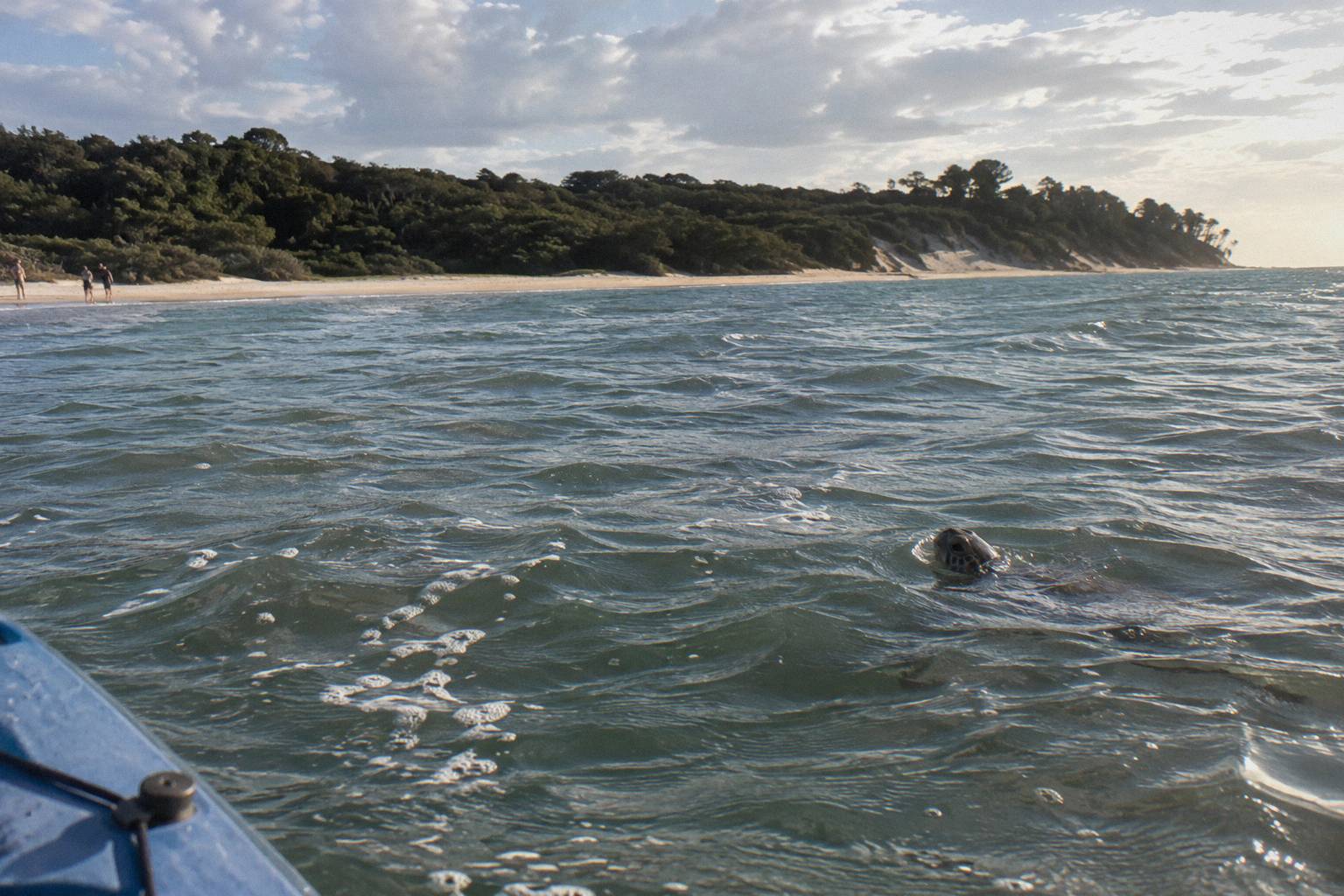
The practical takeaway for a visitor is distance and direction. Everything leaves from Urangan, on the western side of the bay, and everything works the same water to the east. Choosing between cruises is therefore about vessel, inclusions and price, not about one boat reaching a different patch of ocean. If a whale is in the corridor, every operator in the fleet has access to it, and the Tourism and Events Queensland whale-watching page describes the same concentration of activity off K'gari's western coast.
How Close Do The Boats Get? Queensland's Approach Rules
Queensland law, not the operators, sets how close boats may go. Within 300 m of a whale, a caution zone applies where boats travel no faster than 6 knots, and a no-approach zone sits 100 m around a whale and 300 m ahead of and behind it. A three-boat limit also applies, and penalties follow breaches of these rules.
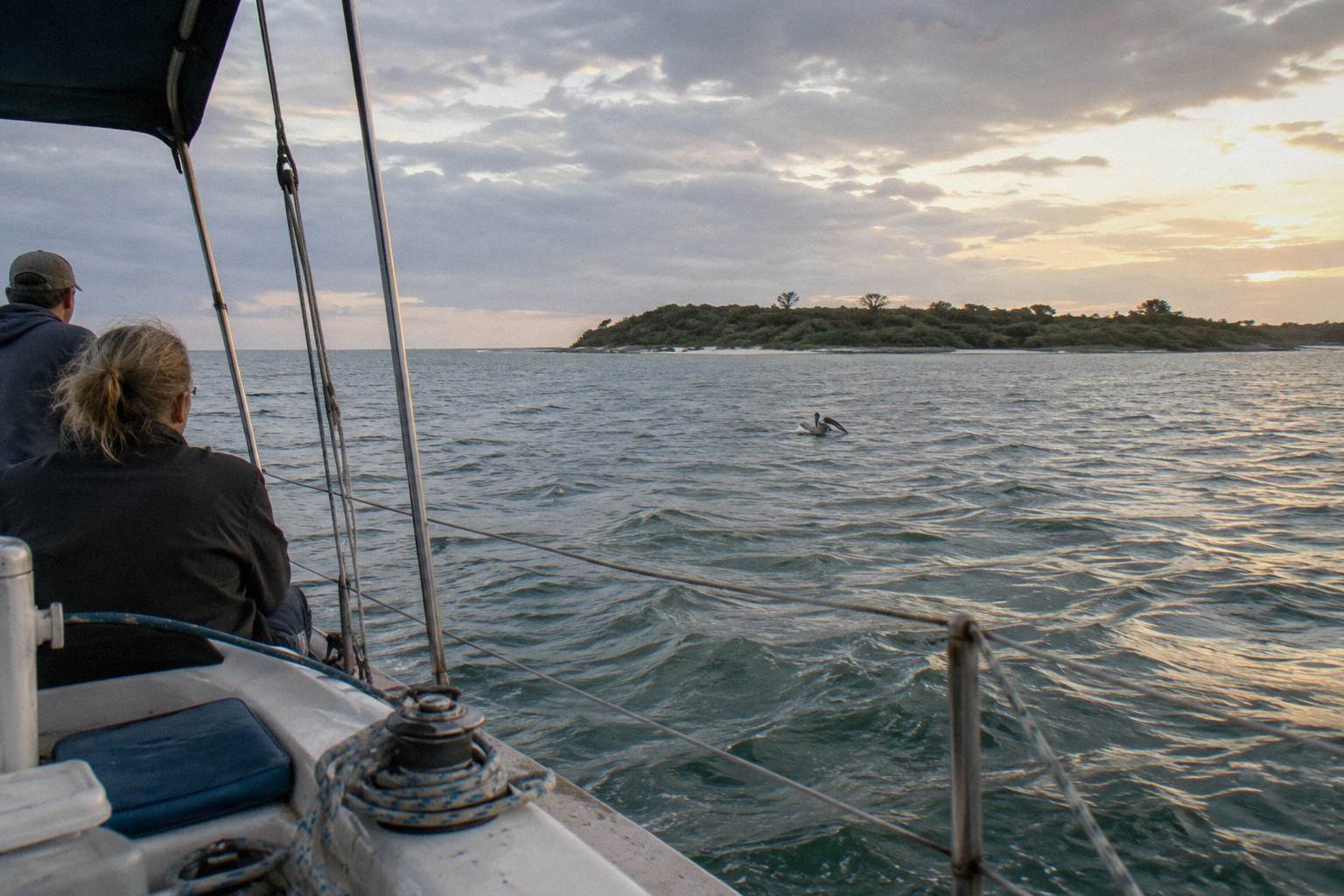
These rules, published on the Queensland Government's marine-mammal watching page and updated in March 2026, shape what a trip actually looks like. The boats do not chase whales; they position themselves lawfully and let the whales decide the encounter. That is why the language around any whale trip leans on behaviour rather than guarantees: no operator can promise a wild animal, and the approach rules would not let them manufacture an encounter even if they could.
| Rule | Distance or limit |
|---|---|
| Caution zone, whale | 300 m, no faster than 6 knots |
| Caution zone, dolphin | 150 m, no faster than 6 knots |
| No-approach zone, whale | 100 m around, 300 m ahead and behind |
| No-approach zone, dolphin | 50 m around, 150 m ahead and behind |
| Vessel limit | Three boats near an animal |
| People in the water | Not within 100 m of a whale, 50 m of a dolphin |
| Drones | Not within 100 m |
For a passenger, the rules translate into patience. A resting pod in the calf months will often approach a stationary vessel on its own terms, which is legal and is the kind of encounter Hervey Bay is known for, but the boat cannot close the gap itself. The full rules on the Queensland Government site are worth a read before a trip, if only to understand why a skipper holds position rather than pushing in.
What About Whales On An Evening Cruise?
Whale season runs June to November and overlaps the sunset cruises, but evening trips are not whale watches and sightings are never promised. The twilight boats run short routes of an hour and a half to two hours near Urangan, while whale watching happens on four-hour daytime trips. Want whales? Book daytime. Want the sunset? Book evening; a few days in town during peak lets you do both.
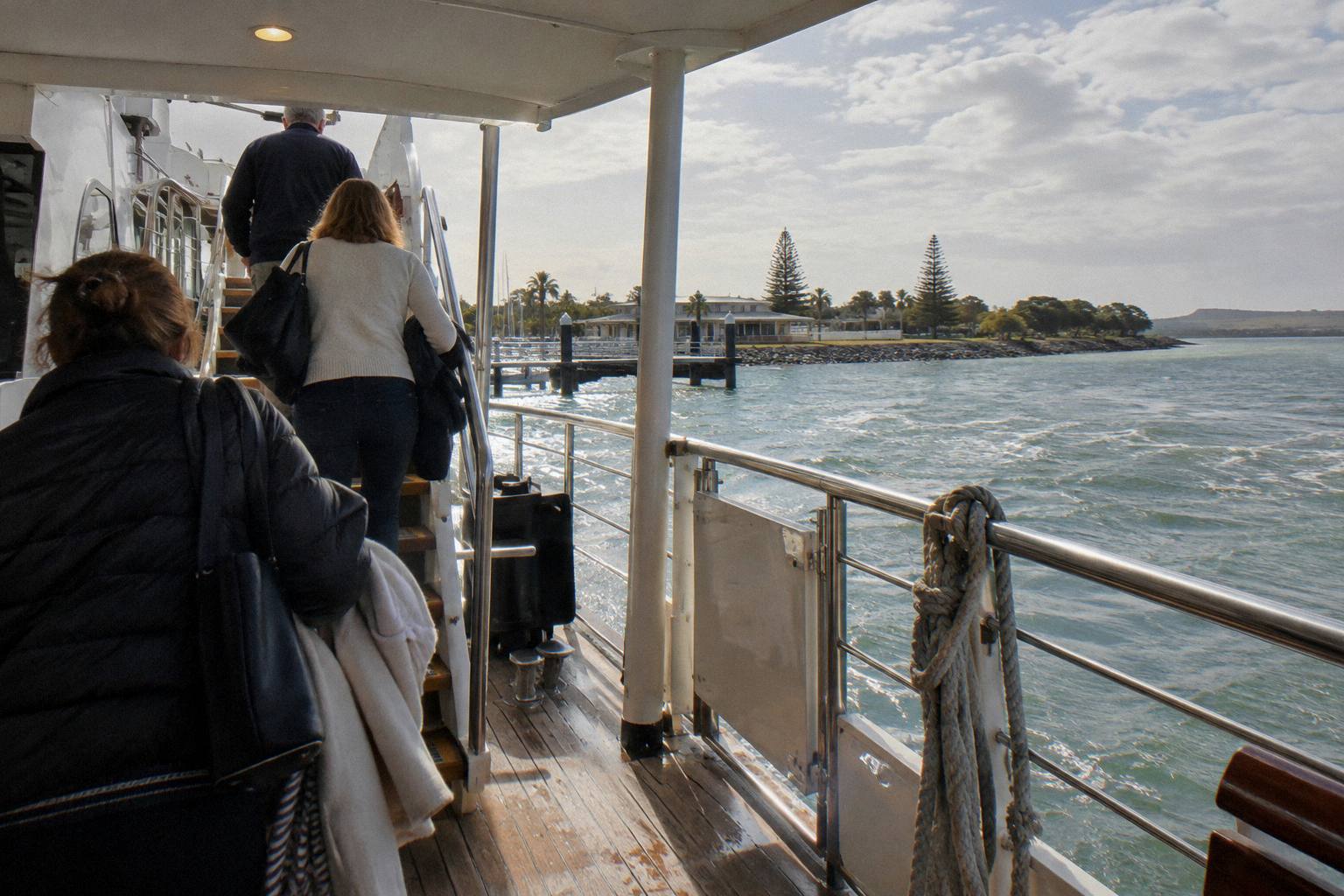
The evening boats have their own appeal entirely separate from whales. The Milbi Sunset Cruise With Champagne And Prawns runs an hour and a half from Fisherman's Wharf Marina with fresh local king prawns, a grazing platter and a glass of champagne, beer or soft drink included, rated 4.8 from 48 reviews, from A$95 per person, and it stops at Weenandin (Round Island) with Butchulla place names carried on board. The Boat Club Twilight Bay Cruise on the Amaroo runs about two hours from the Hervey Bay Boat Club with one complimentary glass of bubbles on boarding, rated 4.6 from 357 reviews, from A$55 per person, with one free child under 14 per paying adult.
Both evening trips give time to watch for dolphins and other evening wildlife, which is a different question from whales and one the evening water answers better. Readers weighing the two kinds of trip against each other will find the comparison of whale, day, lunch and evening cruises useful, since it lays out duration, price and food side by side. The short version: the daytime whale trips are four-hour expeditions with pickup and food, and the evening trips are short, catered twilight runs where the sky is the main event.
Mistakes People Make Planning A Whale Season Trip
The biggest mistake is treating whale season as one uniform block: June is not September, and booking the season's edges while expecting October's calf encounters ends in disappointment. Other common errors include assuming the evening boat covers whales when it does not, and squeezing the trip into a single peak day with no flexibility, since operators make route calls on the day and none publish a rain-or-refund weather policy.
A few practical notes follow from the verified facts. Bookings matter: the Milbi operator states bookings are essential, and the free cancellation terms on every trip run to 24 hours before the start for a full refund, which gives a natural planning buffer. Weather calls are the operator's to make; ask the operator how weather calls are made when you book, because no rain policy was published by any of them. The Boat Club states plainly that its route and destination are subject to change without notice because of tides and weather.
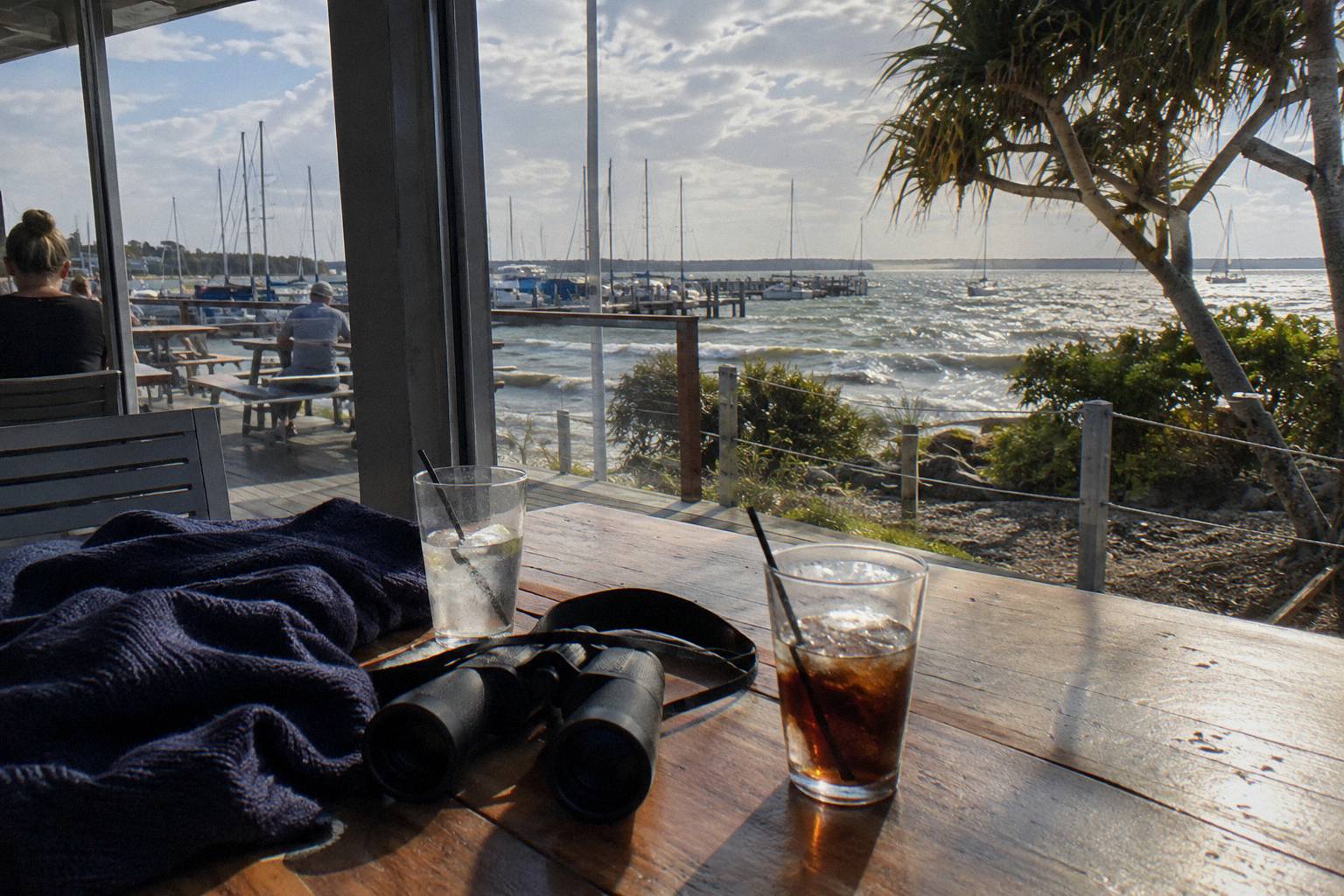
Packing is simple and the Boat Club's own list for its cruises is a sound template for any of them: sunglasses, a hat, a warm jumper, a camera and binoculars, and cash if you want the on-board canteen. The climate averages argue for that jumper even in the calf months: the September mean minimum at Hervey Bay Airport is 14.1 °C and October's is 17.1 °C, and the mean 3pm wind in October is 19.8 km/h, which takes the edge off a windward deck. Four hours on the water in a breeze feels nothing like four hours ashore.
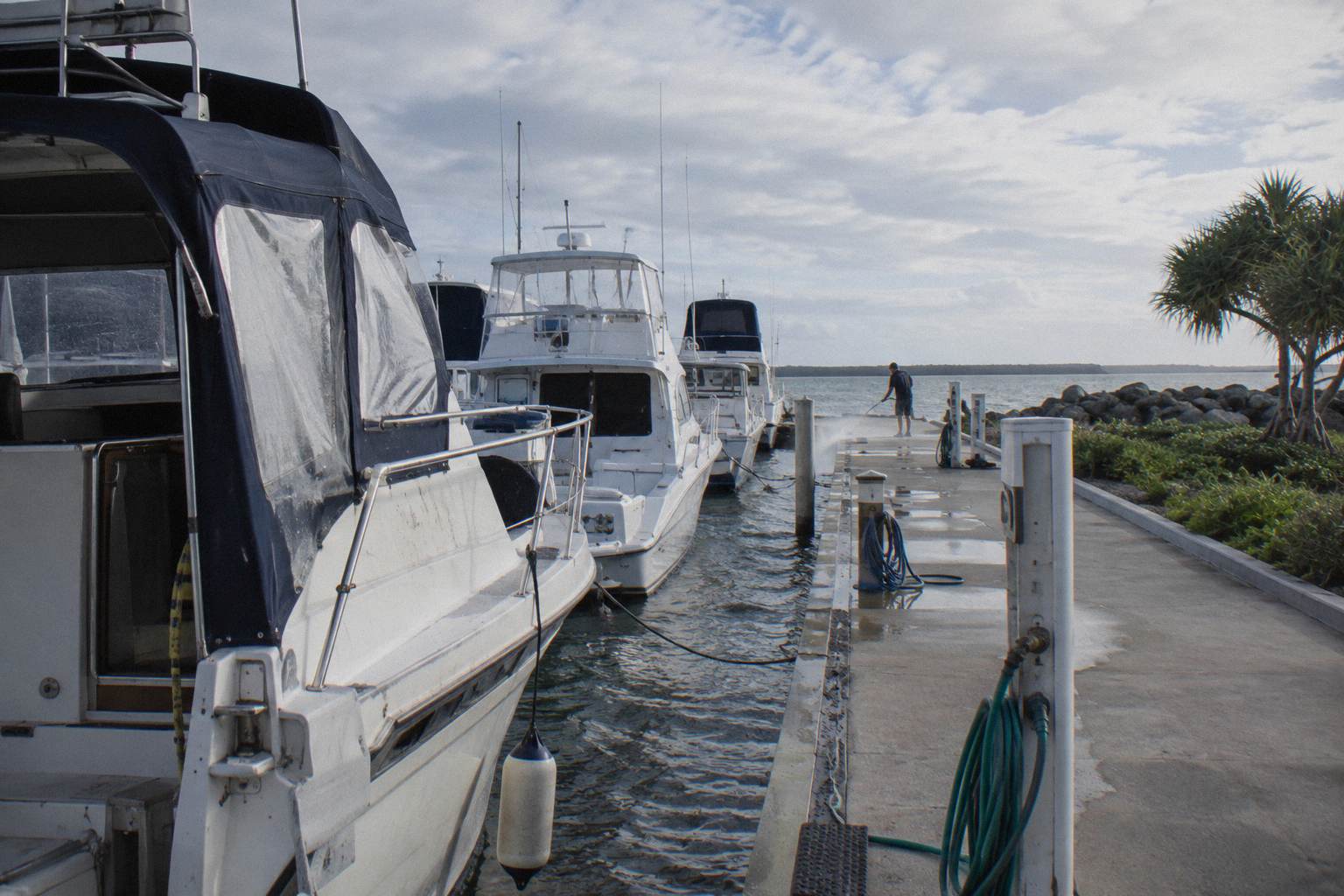
The last mistake is arriving at the wrong wharf. Each trip boards at its own point: the Tasman Venture picks up at select accommodation and sails from the Hervey Bay marina, the Whalesong trip boards at Great Sandy Straits Marina on Buccaneer Drive, and the Boat Club trips board at the Hervey Bay Boat Club itself. Boarding windows differ too, so the boarding details on Hervey Bay Sunset Cruises are worth confirming against your booking before the morning of departure. More on the same theme is in the guide to getting to Urangan, parking and check-in.
Common Questions About Whale Season In Hervey Bay
When Is The Best Time To See Whales In Hervey Bay?
July to October is the peak, inside a season that runs June to November. Early in the season more adult whales rest and socialise, while September and October bring more mothers and calves. Tourism and Events Queensland describes the season in exactly those terms, and no month carries a sighting promise.
Can You See Whales On A Sunset Cruise?
Whale season overlaps the sunset cruises from June to November, but the sunset cruises are not whale watches and nothing is promised. Whale watching happens on the daytime cruises of about four hours that depart from the Urangan marina.
How Many Whales Visit Hervey Bay Each Year?
More than 8,000 whales use these waters each year, according to Tourism and Events Queensland, and the activity is concentrated off the western coast of K'gari.
Is Morning Or Afternoon Better For Whale Watching?
There is no verified answer. The operators run morning or afternoon options, Tasman Venture goes out twice daily, and the booking calendar shows the departures for your date. Choose by light, weather and schedule rather than whale behaviour.
How Close Can A Boat Get To A Whale?
Queensland rules set a caution zone within 300 m of a whale, where boats travel no faster than 6 knots, and a no-approach zone of 100 m around a whale and 300 m ahead and behind. There is a three-boat limit, and penalties apply to breaches.
Is Hervey Bay A Whale Heritage Area?
Yes, it is one of the world's first designated Whale Heritage Areas.