
Which Way Does The Sun Set From Urangan?
The direction of the sunset over Hervey Bay, what time it happens each month, and how the evening cruise routes treat the light, with the Urangan Pier as the anchor.
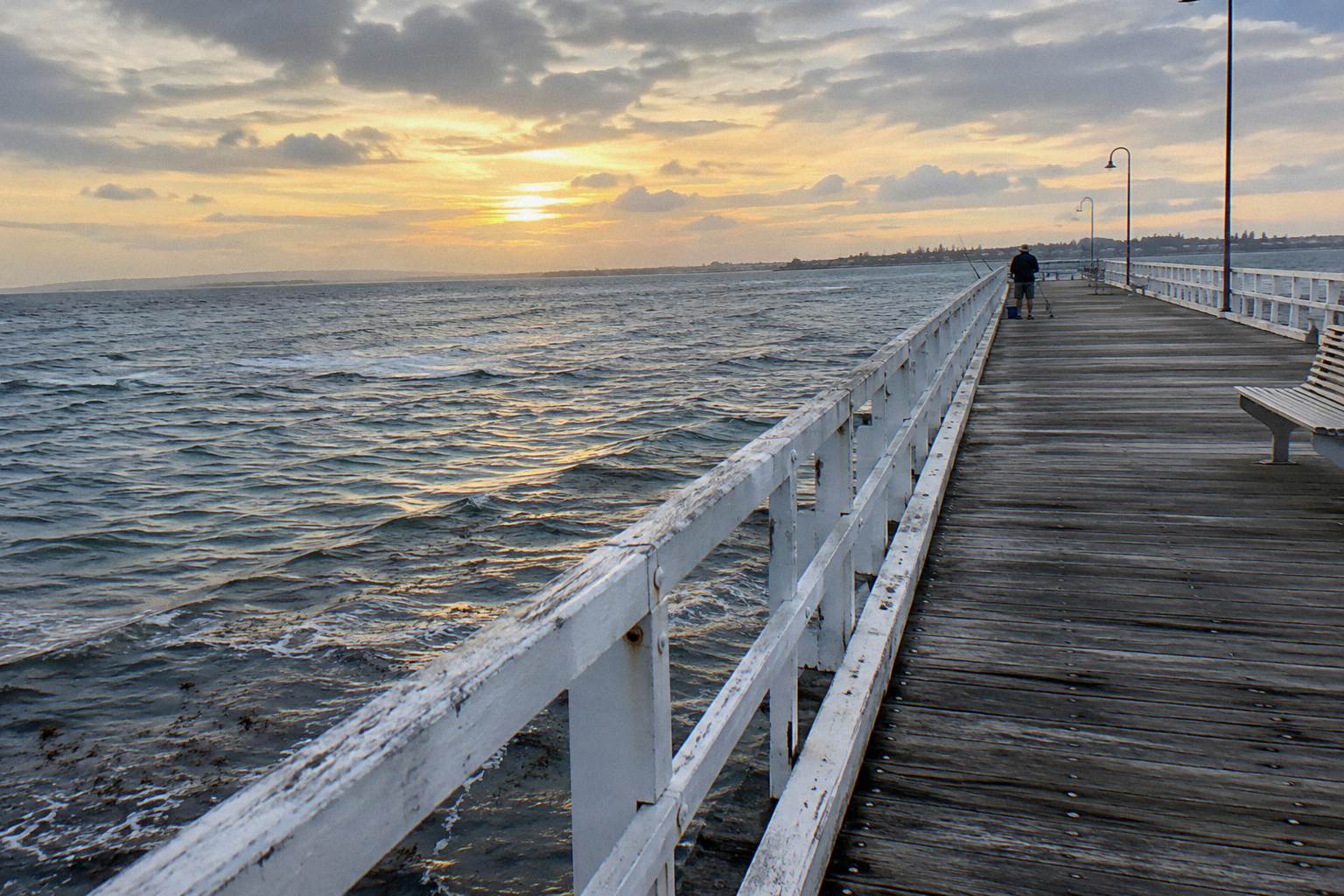
The sun goes down over the water from Urangan, and the evening cruises that leave the marina, the wharf and the Boat Club jetty are built around that single fact. What changes is the clock. A computed solar table for Urangan puts sunset at about 6:43pm in the middle of January and about 5:06pm in the middle of June, a spread of nearly an hour and a half across the year. No compass bearing for the sunset from any particular seat on any particular boat is a settled fact: the operators choose the route, and the route changes with the tides and the weather. What can be pinned down precisely is when the light goes, what each operator says about where the boat points, and how to use both to pick your side of the deck.
The sun sets over the water to the seaward side of Hervey Bay when you are at Urangan. A solar calculation for Urangan puts sunset about 6:43pm in mid January, about 5:06pm in mid June, and between those extremes through the rest of the year.
The practical question behind the question is usually a seat question. Families boarding the Amaroo at the Hervey Bay Boat Club, couples stepping onto the sailing vessel at Great Sandy Straits Marina, everyone wants the side of the boat that faces the light without squinting into it for two hours. The plain answer is that the answer moves with the boat. The Boat Club says its scenic destinations may include Woody Island, Round Island, Pelican Bank and the historic Urangan Pier, and that the route and destination are subject to change without notice because of tides and weather. The Milbi makes a stop at Weenandin, Round Island, with the Urangan Pier as the backdrop. A boat that circles or turns through its route gives every side of the deck a turn at the glow.
That is also why the evening fleet works as well as it does. You are not parked facing one compass point; you are moving through a bay with the Great Sandy Strait on one side and K'gari sitting on the horizon, seen from the water only. The three evening trips each treat the light differently, from the A$55 twilight run with a free glass of bubbles on boarding to the sailing vessel with a maximum of 24 guests and the prawn-and-champagne run out of Fisherman's Wharf.
The three trips above cover the spread of ways to be on the water at the right hour: the two-hour Boat Club run with its nibbles and canteen, the 1.5-hour sail with sparkling wine and finger food, and the Milbi with king prawns and a grazing platter. Free cancellation up to 24 hours before the start applies to all of them, and start times are chosen on the booking calendar for your date.
What Time Does The Sun Go Down Each Month?
A solar algorithm calculated for Urangan, in Australian Eastern Standard Time with no daylight saving, puts sunset on the 15th of each month between about 5:06pm in June and about 6:43pm in January. These are approximate calculations, not official times and not boat times. Every evening cruise boards ahead of the sun going down, and the booking calendar for your date carries the departure time that matches the season.
The month you travel changes the whole shape of an evening on the bay. A June departure chases a sun that drops before 5:30pm, cool air, mean minimum 11.8 degrees at Hervey Bay Airport, and the shortest daylight of the year at 10.6 hours. A January departure has 13.5 hours of daylight to play with, a mean maximum of 30.3 degrees, and a sunset pushing towards 7pm. The table below is the computed month-by-month picture.
| Month | Approximate sunset on the 15th | Daylight hours (approx.) |
|---|---|---|
| January | about 6:43pm | 13.5 |
| February | about 6:31pm | 13.0 |
| March | about 6:06pm | 12.3 |
| April | about 5:34pm | 11.5 |
| May | about 5:12pm | 10.9 |
| June | about 5:06pm | 10.6 |
| July | about 5:15pm | 10.7 |
| August | about 5:29pm | 11.2 |
| September | about 5:41pm | 11.9 |
| October | about 5:53pm | 12.6 |
| November | about 6:13pm | 13.3 |
| December | about 6:34pm | 13.7 |
The two evening operators with published departure windows show how the boats track the table. The Boat Club Twilight Bay Cruise departs between 3:30pm and 4:30pm depending on the time of year, a full afternoon-to-dusk arc on the vessel Amaroo. The Milbi departs at 4:30pm in winter and 5:00pm in summer per the operator's own page, which in June means boarding while the sun is already low. The Blue Dolphin sail publishes no clock time: it is a late-afternoon departure that boards ahead of sunset, and the booking calendar shows the time for your date.
Weather context comes from the Bureau of Meteorology's Hervey Bay Airport station, about 5 km from the boats, with readings from 1999. Mean 3pm wind runs from about 15.6 km/h in June to about 22.1 km/h in January and March, and the driest evenings are September's, with a mean of 33.4 mm across the month and about four rain days. The full climate picture, including what to wear for each month, sits in the guide to what to wear on a sunset boat trip.
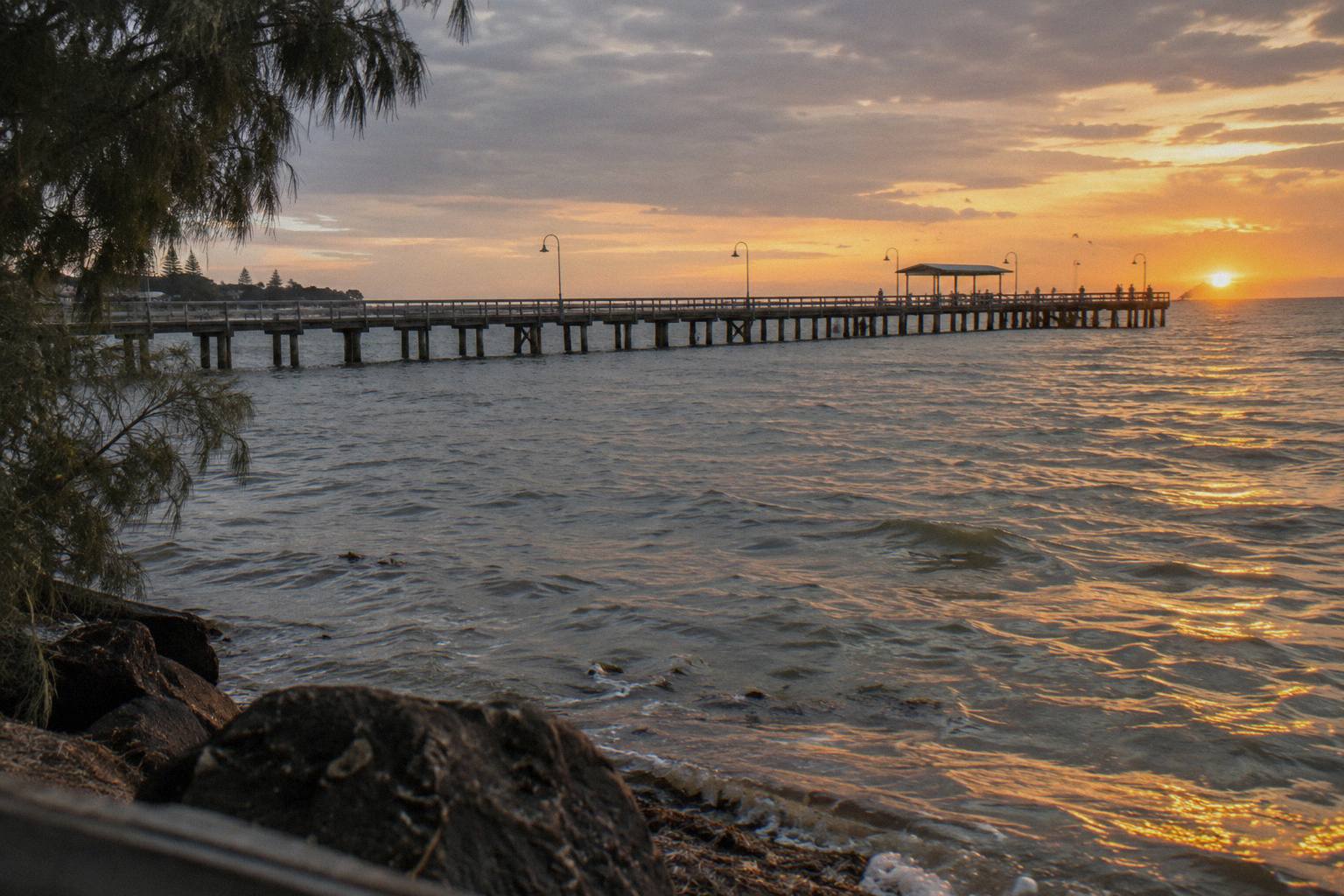
If your whole evening is built around being on the water for that drop, the twilight run is the one calibrated to it, and you can check the seats and the calendar in one pass.
Do The Evening Cruises Follow A Fixed Route?
No evening cruise out of Urangan follows a fixed route. The Boat Club states that its scenic destinations may include Woody Island, Round Island, Pelican Bank and the historic Urangan Pier, and that the route and destination can change without notice because of tides and weather. The Milbi's stop at Weenandin, Round Island, is the closest thing to a fixed point, with the Urangan Pier as the backdrop.
The hedged wording matters more than it looks. A route that may include four different landmarks is a route the skipper steers by the conditions of the day, not a tram line. For anyone hoping to sit on the sunset side of the boat, that flexibility is good news twice over: the boat turns through its circuit, and the skipper is free to hold the vessel where the light is best. The table below gathers what each operator actually says about where the evening trips go.
| Trip | Route wording from the operator | Fixed point |
|---|---|---|
| Boat Club Twilight Bay Cruise | scenic destinations may include Woody Island, Round Island, Pelican Bank and the historic Urangan Pier; route subject to change without notice | None stated |
| Milbi Sunset Cruise | a stop at Weenandin, Round Island, with the Urangan Pier as the backdrop; Butchulla names and meanings of landmarks on the booking page | Weenandin, Round Island |
| Blue Dolphin Champagne Sunset Sail | sails from Great Sandy Straits Marina with low passenger numbers; no route given | None stated |
The Milbi's stop deserves its own sentence. Weenandin is the Butchulla name for Round Island, and the Milbi's booking page carries Butchulla names and meanings for the landmarks on the water. The business, Hervey Bay Eco Marine Tours, is family-owned and says it learns from the Butchulla people. The glass-bottom viewing on board is subject to tides and conditions, the same force that shapes every route in the bay. For a fuller picture of the marine park all three boats move through, from Baffle Creek in the north to Double Island Point in the south, see the guide to the Great Sandy Marine Park from the water at dusk.
The Boat Club page also notes that the Amaroo's commentary covers marine wildlife and K'gari landmarks, and the operator's own hedged invitation to keep your eyes peeled for local dolphins and other wildlife is exactly that, an invitation, never a promise. No species, frequency or time of day is stated for any sighting on any evening cruise.
Why The Route Changes With Tides And Weather
Tides and weather are the two forces the operators name when they explain why an evening route is never guaranteed. The Boat Club says the route and destination are subject to change without notice because of tides and weather; the Milbi says tours vary with weather, group size and the guide's judgement, and that glass-bottom viewing depends on tides and conditions. Neither operator publishes a wind or rain cancellation threshold: ask how weather calls are made.
Hervey Bay sits inside the Great Sandy Strait, a body of water where the tide runs through passages between islands and banks. Woody Island, Round Island and Pelican Bank, the three named scenic points in the Boat Club wording, are all shallow-water features, the kind of place a skipper can work at one tide and not another. A sunset that sits behind Woody Island on a spring tide may sit over open water on the neap. That is not a defect of the trip; it is how a working bay operates, and the operators say so plainly on their own pages. More of these guides are collected on Hervey Bay Sunset Cruises.
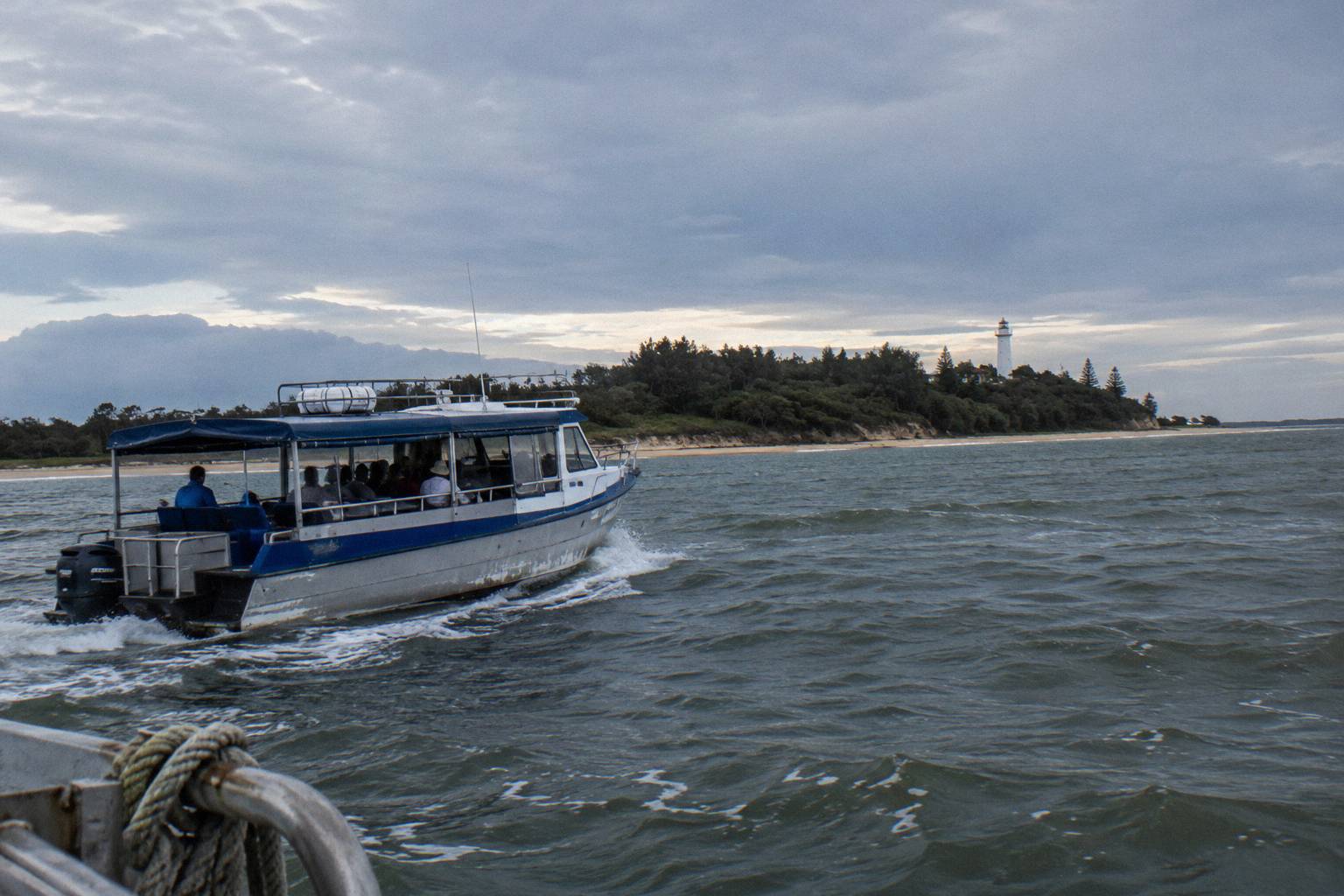
The wind numbers from the Bureau of Meteorology give the seasonal shape. Mean 3pm wind at Hervey Bay Airport sits at its lowest in June, about 15.6 km/h, and its highest in January and March, about 22.1 km/h each. None of that says anything about sea state on a given evening; it only says the summer months carry more average breeze than the winter ones. For what happens to your booking when the forecast turns, the guide to rain, wind and cancellations on an evening cruise covers the free-cancellation window and what to ask before you sail.
What the flexibility means for the sunset itself is simple. A boat that can change route can put the deck where the light is, and on a bay this wide the light lands somewhere different every night of the year. The fixed thing is the clock, which is why the month-by-month table earlier is the part worth memorising and the compass question is the part worth letting go.
Urangan Pier And The Backdrop From The Water
The Urangan Pier, 868 metres long and more than a century old, is the fixed landmark on the evening water, and the Milbi uses it as the backdrop for its stop at Weenandin, Round Island. Built to export sugar, coal and timber, the pier reopened by 1 July 2025 after a 1.43 million dollar rehabilitation that added new railings, kerbs and heritage features and repainted the structure.
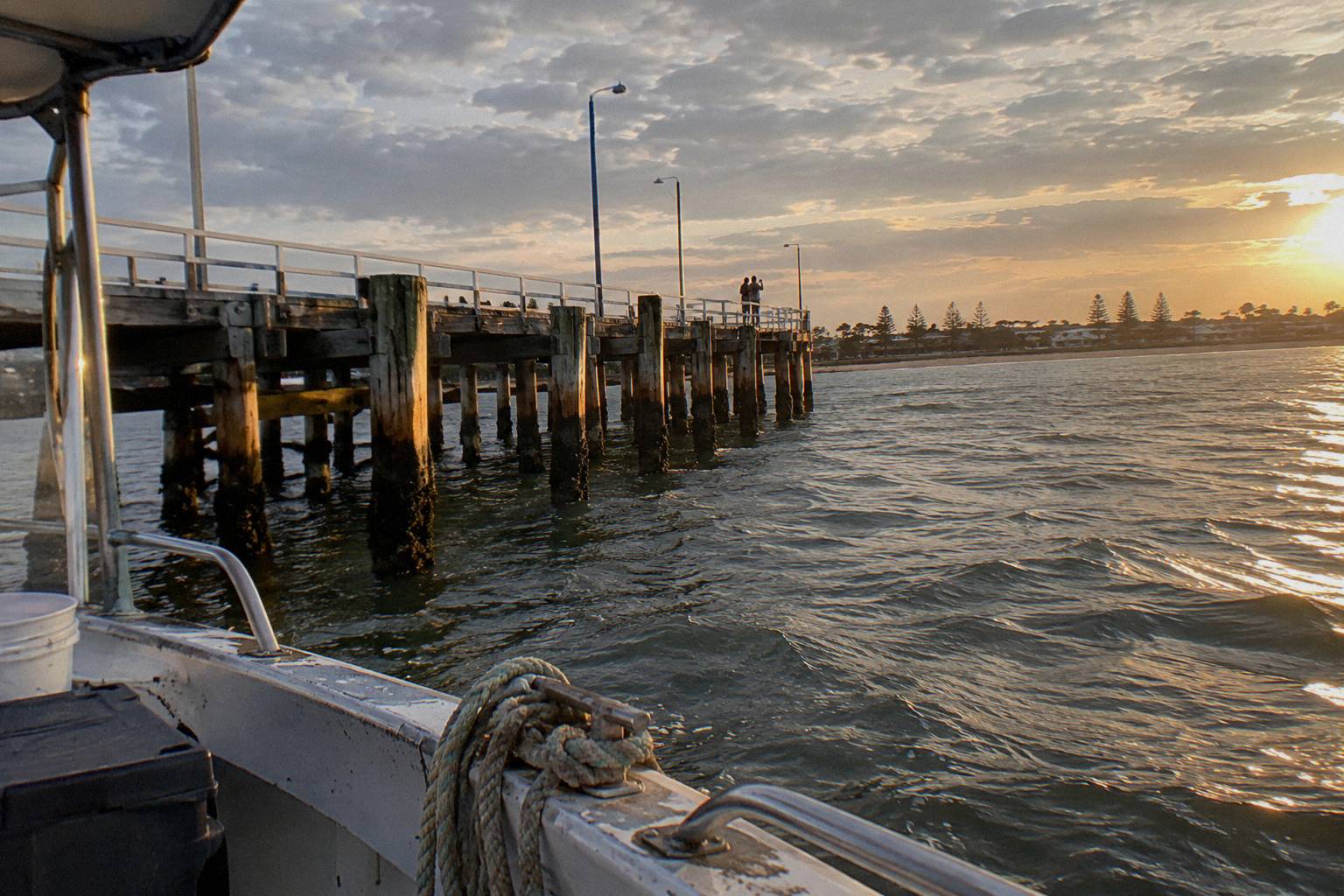
From the deck of an evening boat, the pier reads as a black line across the glow, and the Boat Club's route wording names it among the scenic destinations the trip may include. Fraser Coast Regional Council, whose words carry the pier facts, notes it is enjoyed for fishing, walking and sightseeing, which is why the jetty is often crowded with people watching the same drop the boats are floating in. There is a whole comparison to be made between watching from the pier and watching from the water, and the pier-or-water guide for sunset makes it properly.
The pier also anchors the boarding geography. Great Sandy Straits Marina, at 17 Buccaneer Drive, is the sailing vessel's departure point, a marina of 176 berths described as the home of the Hervey Bay whale watching fleet, sitting inside Urangan Harbour at the northern edge of the Great Sandy Strait. The Milbi leaves from Fisherman's Wharf Marina on Jetty Road, next to the public boat ramp. The Amaroo boards at the Hervey Bay Boat Club on Buccaneer Drive. All three are in Urangan, and the getting-to-urangan guide on marinas, parking and check-in covers the arrival details for each.
The Blue Dolphin Champagne Sunset Sail is the trip most shaped by that geography: a sailing vessel with a maximum of 24 guests, sparkling wine, complimentary beer, wine or soft drink, finger food included, and a courtesy bus as part of the booking, with no pickup point given, so ask the operator. It rates 4.9 from 168 reviews, from A$100 per person in Australian dollars, and it needs at least four guests to run; if the minimum is not met, the booking page offers a full refund or a move to another vessel.
Which Month Gives The Best Evening Light?
No month is verified as the best for light, and none is claimed here. What the numbers show is a trade: midwinter gives the earliest and shortest evenings, sunset about 5:06pm in June with 10.6 hours of daylight, while midsummer gives the longest and latest, about 6:43pm in January with 13.5 hours. Rainfall means run highest in March at 151.8 mm and lowest in September at 33.4 mm.
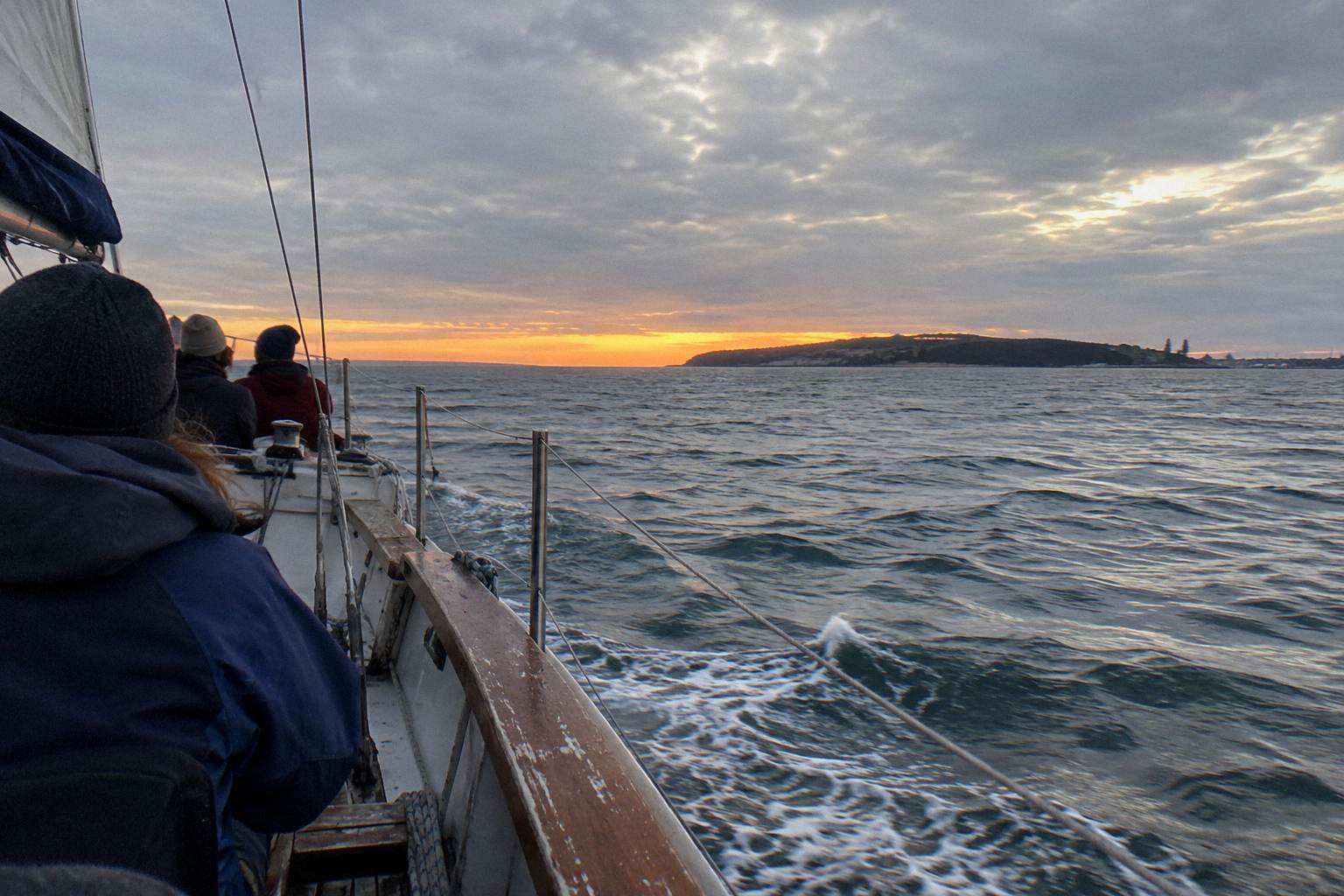
The choice between those profiles is a personal one, and it pairs with real constraints. A June or July evening means mean minimums of 11.8 and 10.1 degrees at Hervey Bay Airport, a warm jumper, and a sun that drops while the Milbi's 4:30pm winter departure is already well into its run. A January evening means a mean maximum of 30.3 degrees, 8.4 rain days of a millimetre or more, and a sunset late enough that the whole trip happens in the cooler part of the day. The Boat Club's own packing list for its twilight cruise, sunglasses, a hat, a warm jumper, a camera, binoculars and cash for the canteen, is written for exactly this range of evenings.
| Season profile | Months | Approximate sunset window | Evening character |
|---|---|---|---|
| Midsummer | Dec to Feb | about 6:31pm to 6:43pm | Long daylight, warmest air, highest mean wind |
| Shoulder | Mar to May | about 5:12pm to 6:06pm | Cooling air, earliest changes week to week |
| Midwinter | Jun to Aug | about 5:06pm to 5:29pm | Earliest sunsets, coolest air, lowest mean wind |
| Spring build | Sep to Nov | about 5:41pm to 6:13pm | Driest means, lengthening days |
One more thread belongs here, stated once and carefully: whale season overlaps the sunset cruises from June to November, but the sunset cruises are not whale watches and nothing is promised. Humpbacks are in these waters June to November, peaking July to October, but whale watching happens on the daytime four-hour cruises, not on the evening water. The blog on whether whales can be seen on a sunset cruise covers the distinction in full.
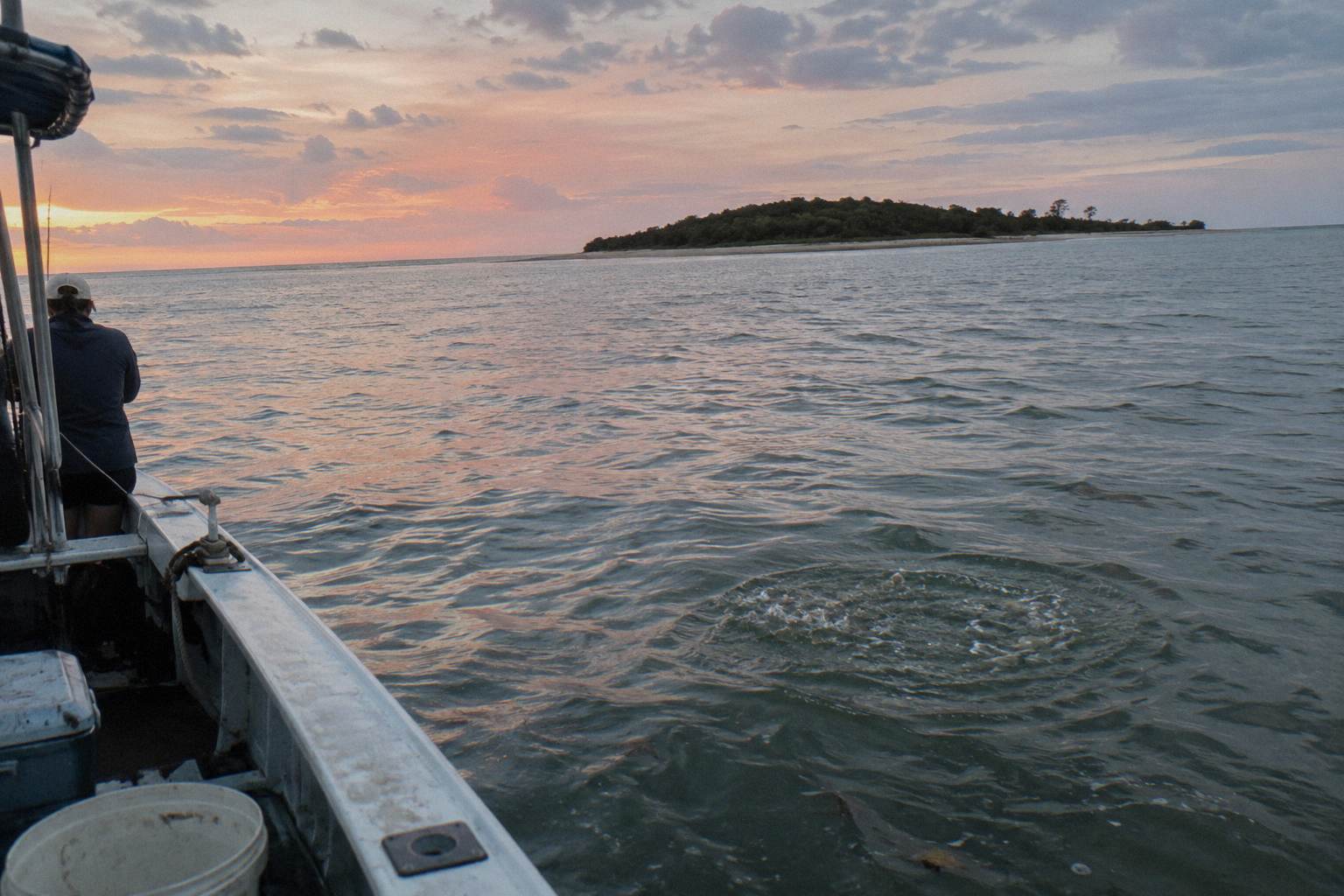
The Milbi is the trip most tied to the seasonal clock among the evening fleet: a 4:30pm winter departure and a 5:00pm summer departure, prawns and a grazing platter, a glass of champagne, beer or soft drink, and a 4.8 rating from 48 reviews, from A$95 per person. Bookings are essential per the operator, and group bookings go by phone with minimum numbers.
Common Mistakes When Picking A Side Of The Boat
The recurring mistakes are chasing a compass point instead of the route, ignoring the month, treating a named destination as guaranteed, and locking in a seat before the tide has had its say. The fix for all four is the same: read the operator's route wording, check the computed sunset table for your month, and expect the skipper to steer the deck towards the light rather than the light towards the deck.
The first mistake is asking for a compass answer at all. Every route in the bay is hedged: may include, subject to change, varies with tides and weather. A boat that circles Round Island gives both sides of the deck the backdrop in turn. The second mistake is booking a 4pm-adjacent departure in June expecting a 7pm sunset; the table is the antidote. The third is treating Pelican Bank or Woody Island as a promise rather than a possibility. The fourth is worrying about it at all on the Amaroo, a large stable powered vessel with three viewing decks and a covered top deck with 360 degree views, toilets and a bar on board, built so that no single seat owns the horizon.
The fifth mistake is forgetting the people you are travelling with when you choose the trip rather than the seat. One child under 14 travels free per paying adult on the Boat Club Twilight Bay Cruise, conditional on a full-fare adult, and under-18s need a legal guardian over 18 with them. The Milbi is pram and baby friendly with a bathroom on board and no baby-changing facilities. The kids-on-an-evening-cruise guide, corrected, the guide to kids on an evening cruise works through the age rules trip by trip.
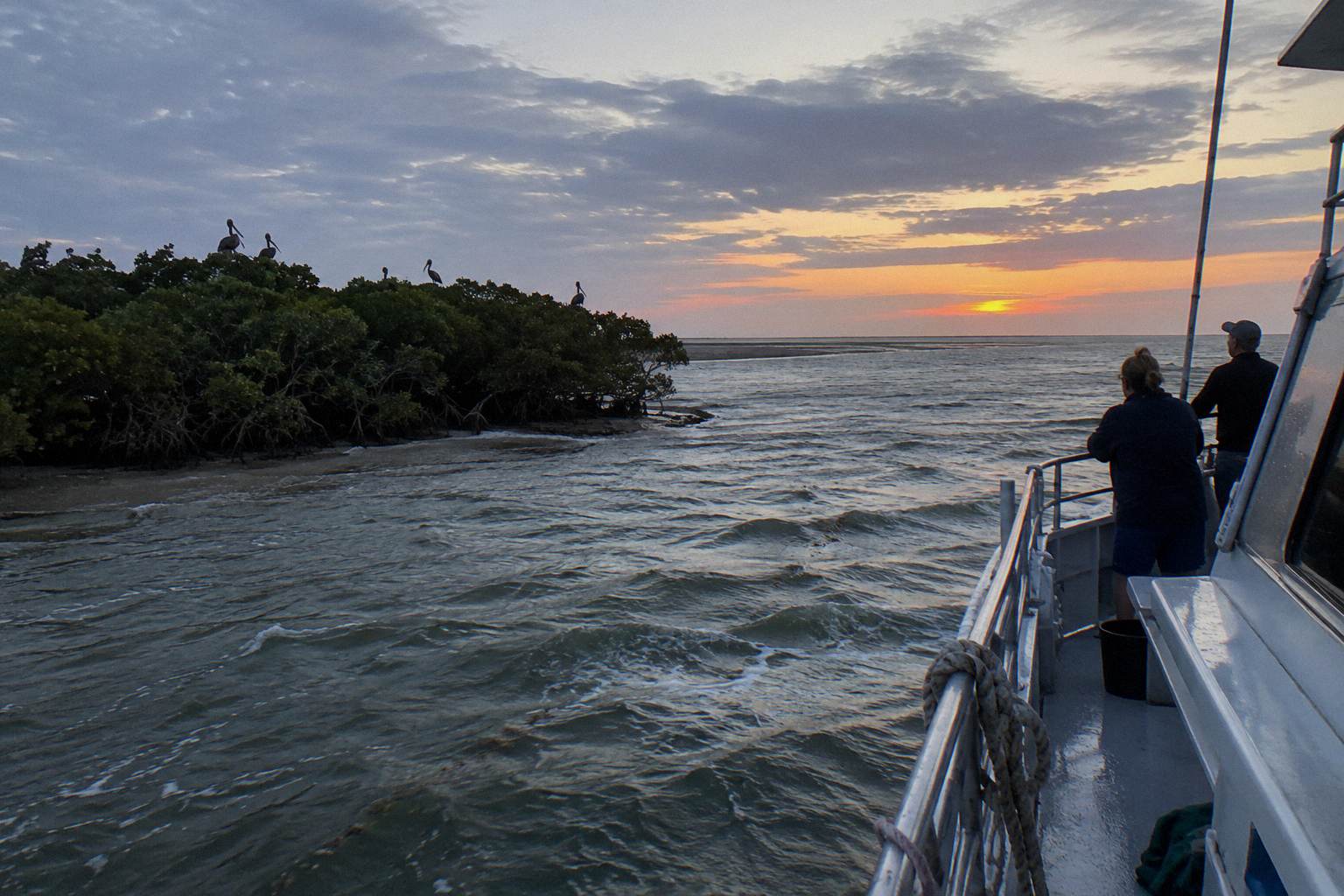
There is also a timing discipline worth keeping: the Boat Club boards 15 minutes before departure, and the Milbi check-in is 15 minutes before departure. Miss the window on a June evening and the sun beats you to the water.
All three evening trips carry the same booking terms: free cancellation up to 24 hours before the start for a full refund, with start times chosen on the booking calendar for your date. Whichever side of the boat you take, that window is the part of the plan you control completely.
Common Questions About Sunset Direction From Urangan
Which Way Does The Sun Set From Urangan?
Over the water on the seaward side of the bay. A computed solar table for Urangan puts sunset between about 5:06pm in mid June and about 6:43pm in mid January, Australian Eastern Standard Time. The route the boat takes decides what sits in front of the glow, and the routes change with tides and weather.
Does The Sun Set Behind The Urangan Pier From The Water?
The Milbi Sunset Cruise uses the Urangan Pier as the backdrop for its stop at Weenandin, Round Island, and the Boat Club names the historic pier among the scenic destinations its route may include. The pier is 868 metres long and reopened by 1 July 2025 after a 1.43 million dollar rehabilitation.
Which Side Of The Boat Should I Sit On?
Whichever side faces the water when the boat holds its position, and since every evening route changes with tides and weather, both sides usually get a turn. On the Amaroo the question matters least: it has three viewing decks and a covered top deck with 360 degree views.
What Time Do The Evening Cruises Leave?
The Boat Club Twilight Bay Cruise departs between 3:30pm and 4:30pm depending on the time of year. The Milbi departs at 4:30pm in winter and 5:00pm in summer. The Blue Dolphin sail publishes no clock time; start times are chosen on the booking calendar for your date.
Do The Cruises Still Run If The Weather Changes?
The Boat Club says its route and destination can change without notice because of tides and weather, and the Milbi says tours vary with weather, group size and the guide's judgement. Ask the operator how weather calls are made. All six trips offer free cancellation up to 24 hours before the start for a full refund.
Can I See Whales On An Evening Cruise?
Whale season overlaps the sunset cruises from June to November, but the sunset cruises are not whale watches and nothing is promised. Whale watching happens on the daytime four-hour cruises, when humpbacks are in these waters June to November, peaking July to October.