
Which Month Suits A Sunset Cruise In Hervey Bay?
Month-by-month sunset times, temperatures, rain days and wind for Hervey Bay evening cruises, so you can pick your own best month with real numbers.
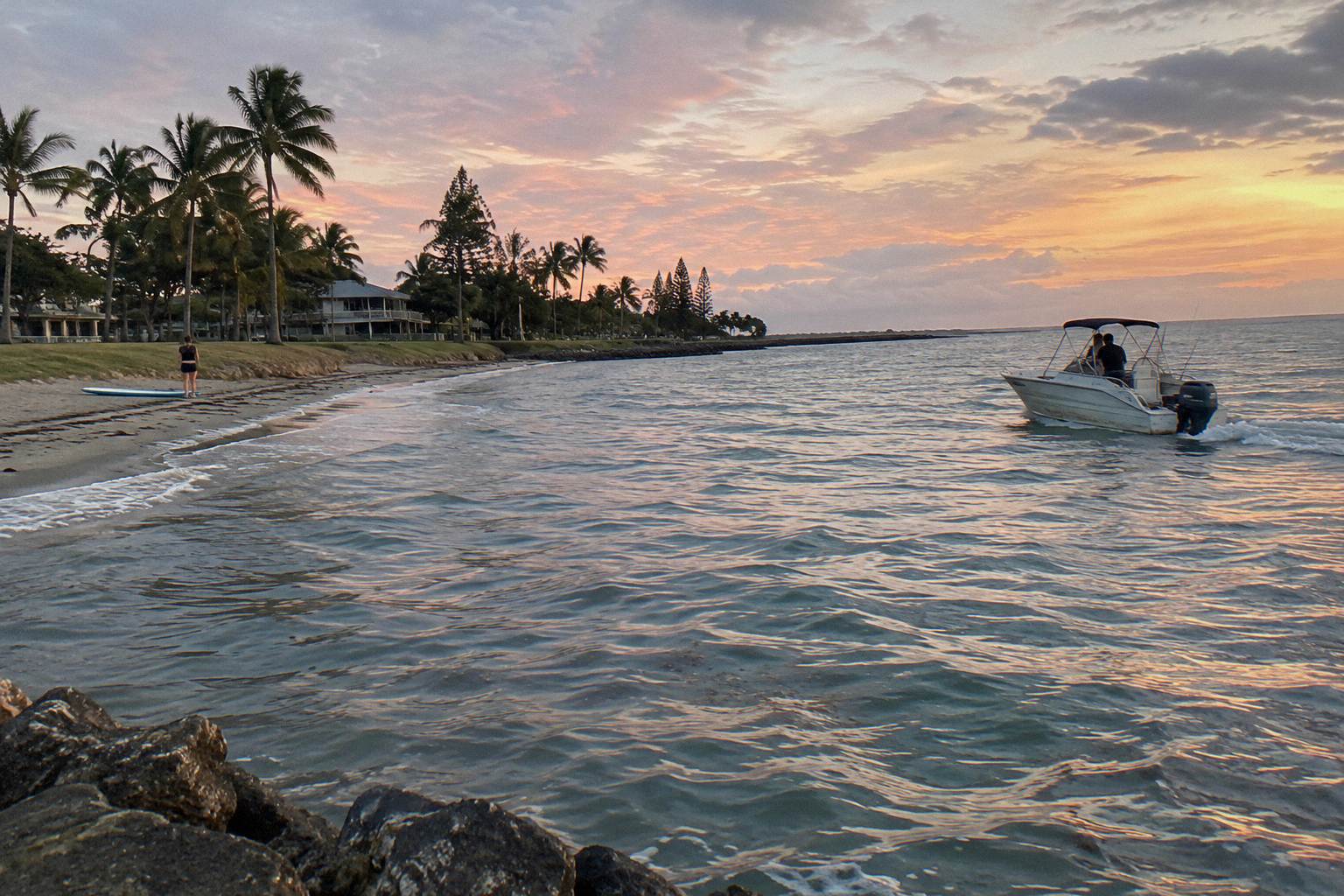
No single month is the best, because the evening cruises run across the seasons. What the numbers show is a wide spread: approximate sunset over Urangan swings from about 5:06pm in June to about 6:43pm in January, mean daily maximums run from 21.8 °C in July to 30.3 °C in January, and rain days of 1mm or more range from 4.0 in September to 11.1 in March.
The sunset times below are a calculation, computed by a solar algorithm for Urangan on the 15th of each month in Australian Eastern Standard Time, with no daylight saving in Queensland. They are approximate, never official and never a boat time: the departure time for your own trip is the one shown on the booking calendar for your date. Treat them as a planning guide to how early or late the sky will perform.
The climate figures come from the Bureau of Meteorology's averages for Hervey Bay Airport, station 040405, about 5 km from Urangan, with readings from 1999. That station data is the closest long-run record to the water the boats sail on, and it is the source for every temperature, rainfall and wind number that follows.
| Month | Approximate sunset | Mean max | Mean min | Rain days (1mm+) | Mean 3pm wind |
|---|---|---|---|---|---|
| January | about 6:43pm | 30.3 °C | 22.0 °C | 8.4 | 22.1 km/h |
| February | about 6:31pm | 30.2 °C | 22.0 °C | 9.1 | 21.5 km/h |
| March | about 6:06pm | 29.2 °C | 20.8 °C | 11.1 | 22.1 km/h |
| April | about 5:34pm | 27.1 °C | 17.9 °C | 9.4 | 20.2 km/h |
| May | about 5:12pm | 24.4 °C | 14.4 °C | 9.8 | 17.0 km/h |
| June | about 5:06pm | 22.2 °C | 11.8 °C | 7.8 | 15.6 km/h |
| July | about 5:15pm | 21.8 °C | 10.1 °C | 5.5 | 16.2 km/h |
| August | about 5:29pm | 22.9 °C | 10.7 °C | 4.1 | 18.0 km/h |
| September | about 5:41pm | 25.0 °C | 14.1 °C | 4.0 | 19.2 km/h |
| October | about 5:53pm | 26.7 °C | 17.1 °C | 5.7 | 19.8 km/h |
| November | about 6:13pm | 28.2 °C | 19.2 °C | 6.8 | 21.1 km/h |
| December | about 6:34pm | 29.5 °C | 21.1 °C | 7.9 | 21.2 km/h |
Three patterns jump out of that table. Winter and spring, July through October, are the driest stretch on the rain-day count and carry the lightest mean 3pm winds, 15.6 to 19.8 km/h. Summer buys you a later sky, with sunset close to 6:30pm or later in December and January, but pairs it with the warmest nights and the highest rain-day counts outside March. March itself is the wettest month on the record, 151.8mm mean rainfall across 11.1 rain days, which is worth knowing before you lock a date.
The three evening trips on the water each carry a different shape of evening. The Blue Dolphin Champagne Sunset Sail is a 1.5 hour sailing-vessel trip with sparkling wine and finger food included, from A$100 per person in Australian dollars, boarding at Great Sandy Straits Marina and taking at most 24 guests. The Milbi Sunset Cruise With Champagne And Prawns pairs champagne and king prawns with a stop at Weenandin (Round Island), from A$95 per person. The Boat Club Twilight Bay Cruise is the long one at about 2 hours, from A$55 per person with one complimentary glass of bubbles on boarding.
What The Weather Actually Does Month By Month
Summer evenings are warm and relatively windy, winter evenings are cool, dry and calm, and spring sits between the two with the lowest rain-day counts of the year. January and February average a 22.0 °C minimum, while July averages 10.1 °C, a gap of nearly twelve degrees. Mean 3pm wind runs 21 to 22 km/h across the summer months against 15.6 to 18.0 km/h from June to August.
Start with the heat. January and February both average a 30.3 °C and 30.2 °C maximum with an overnight minimum of 22.0 °C, so a January evening on the water is a warm one and the hour before boarding is warmer still. December sits just behind at 29.5 °C and 21.1 °C. If you would rather watch the sky with a cool edge in the air, the winter months deliver that: July's mean maximum is 21.8 °C and its mean minimum is 10.1 °C, the lowest pair on the record. A warm jumper earns its place in the bag from May through September, when mean minimums run 10.1 °C to 14.4 °C.
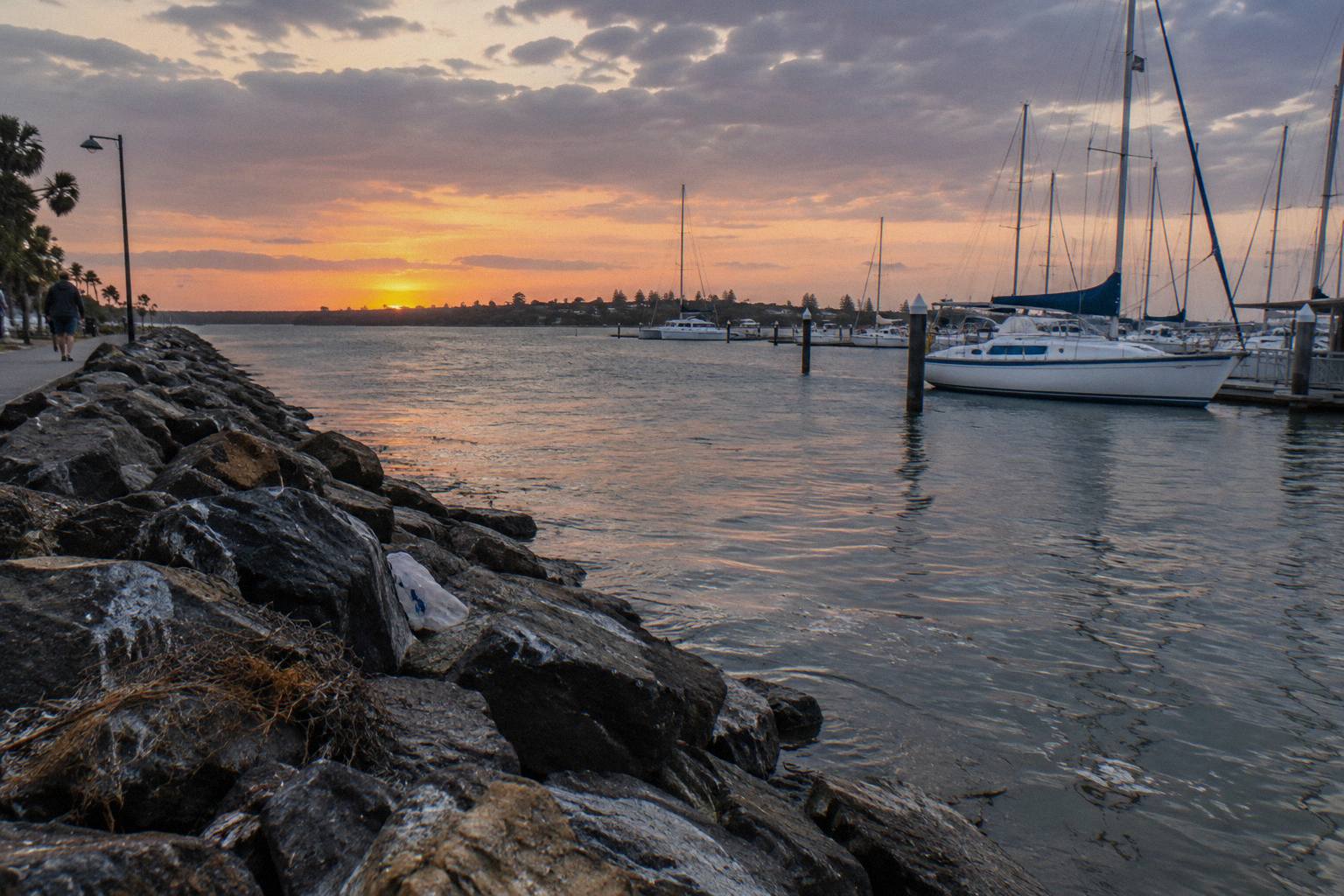
Rain is the second lever. The mean monthly rainfall numbers tell one story, 151.8mm in March against 33.4mm in September, and the rain-day counts sharpen it. September has the fewest rain days of 1mm or more at 4.0, August is close behind at 4.1, and July sits at 5.5. The wet stretch runs from January through May, every one of those months at 8.4 rain days or more, with March the peak. A rain day in the averages is not a rained-off cruise, but if you are booking a single evening far ahead, the odds favour the middle of the year.
Wind matters more on a boat than on land, and the mean 3pm wind figures, drawn from readings between 1999 and 2010, favour winter too. June is the calmest at 15.6 km/h, July 16.2, May 17.0 and August 18.0. The summer half of the year runs noticeably breezier, 21.1 to 22.1 km/h from November through March. These are long-run means, not a forecast: ask the operator how weather calls are made for your date, since routes and destinations change with tides and weather.
One planning point that belongs with the climate numbers: what to pack tracks the month closely. The Boat Club's own page for its Twilight Bay Cruise suggests sunglasses, a hat, a warm jumper, a camera and binoculars, plus cash for the on-board canteen. The jumper advice is summer-optional and winter-obvious, given those minimums. Our piece on what to wear on a sunset boat trip breaks the wardrobe down by season rather than by month, and the Bureau of Meteorology's Hervey Bay Airport climate averages sit behind every figure in the table above.
The Milbi Sunset Cruise is the trip that leans hardest on conditions in one specific way: its glass-bottom viewing is subject to tides and conditions, and the operator says tours vary with weather, group size and the guide's judgement. That is a reason to care about the calm-winter months if the glass bottom is the part of the evening you are most looking forward to.
Which Months Give You The Longest Daylight?
Daylight length swings from 10.6 hours in June to 13.7 hours in December, a spread of over three hours across the year. What that changes is the feel of the whole day around your cruise: a June sailing leaves you with a short, early-evening trip and a long night afterwards, while a December one is the last act of a very long day. The cruise itself stays the same length either way.
The computed daylight figures for Urangan run 13.5 hours in January, 13.0 in February, 12.3 in March, 11.5 in April, 10.9 in May, 10.6 in June, 10.7 in July, 11.2 in August, 11.9 in September, 12.6 in October, 13.3 in November and 13.7 in December. Queensland keeps Australian Eastern Standard Time all year with no daylight saving, so the clock never jumps and the sunset drift is purely astronomical. That also means the months either side of June solstice have both the earliest sunsets, about 5:06pm, and the shortest days to fill beforehand.
| Month | Daylight hours | Approximate sunset |
|---|---|---|
| January | 13.5 | about 6:43pm |
| February | 13.0 | about 6:31pm |
| March | 12.3 | about 6:06pm |
| April | 11.5 | about 5:34pm |
| May | 10.9 | about 5:12pm |
| June | 10.6 | about 5:06pm |
| July | 10.7 | about 5:15pm |
| August | 11.2 | about 5:29pm |
| September | 11.9 | about 5:41pm |
| October | 12.6 | about 5:53pm |
| November | 13.3 | about 6:13pm |
| December | 13.7 | about 6:34pm |
The practical read is about the rest of your day. A late-afternoon departure in November or December sits at the end of thirteen-plus hours of daylight, so a morning activity, an afternoon wander and an evening on the water stack naturally. In June the same departure comes early in the evening, leaving more of the night free after you step back onto the dock. Neither is better; they are different shapes of day, and if a very early sunset appeals, our sunset and boarding time guide works through how boarding times chase the sunset across the year.
Does Whale Season Change The Answer?
Whale season runs June to November, peaking July to October, and the whales are the daytime story. But the evening cruises are not whale watches: whale watching happens on the daytime half-day cruises. Whale season overlaps the evening trips from June to November, yet the sunset cruises are not whale watches and nothing is promised. If whales are the reason for the trip, book a daytime cruise in peak season.
Tourism and Events Queensland's wording is that humpbacks are here June to November, peaking July to October, with more adults resting and socialising early in the season and more mothers and calves in September and October. Hervey Bay is one of the world's first designated Whale Heritage Areas, and the watching activity is concentrated off the western coast of K'gari, with tours departing from the marina at Urangan.
| Period | Whale season status | Evening cruise angle |
|---|---|---|
| January to May | Outside whale season | Evenings chosen purely on weather and sunset time |
| June to August | Season under way, building to peak | Sunset sail still a separate product from whale watching |
| September to October | Peak, more mothers and calves | Best months for the daytime 4-hour whale cruises |
| November | Season tailing off | Late sunset returns, about 6:13pm |
The daytime options are 4-hour trips: the Tasman Venture 4-Hour Whale Watch from A$155 per person with hotel pickup, 4.9 from 699 reviews; the Whalesong Half-Day Whale Watch With Meal from A$160 per person including lunch or dinner depending on the option, 4.8 from 232 reviews; and the Boat Club Half-Day Whale Watching Cruise from A$120 per person on the Amaroo, 4.8 from 412 reviews. Those are the trips that watch whales. An evening cruise in the same months is its own experience, with the sky as the main event.
Queensland's approach rules shape what any boat may do around a whale: a caution zone at 300m where vessels go no faster than 6 knots, a no-approach zone 100m around a whale and 300m ahead and behind, a three-boat limit, no people in the water within 100m of a whale, and no drones within 100m. Penalties apply. The full rules are on the Queensland Government's marine mammal watching page, and Tourism and Events Queensland covers the season timing for Hervey Bay in more depth. If your question is really about the best hour rather than the best month, our piece on the best time of day to see whales takes that one on its own terms.
What Times Do The Cruises Actually Depart?
The Boat Club Twilight Bay Cruise departs between 3:30pm and 4:30pm depending on the time of year, and the Milbi departs at 4:30pm in winter and 5:00pm in summer, both times from the operators' own pages. The Blue Dolphin sail has no published departure time: the booking calendar shows it for your date. Every trip boards ahead of sunset, which is the whole point of the timing.
Those departure windows are the bridge between the month table and your actual evening. In June, with sunset about 5:06pm, a 3:30pm-style Boat Club departure leaves a long golden run before the sun goes down on a two-hour trip. In December, with sunset about 6:34pm, the same trip gets a later start and a warmer sky. The Boat Club boards 15 minutes before departure; the Milbi check-in is 15 minutes before departure. Build that margin into your arrival, whatever the month.
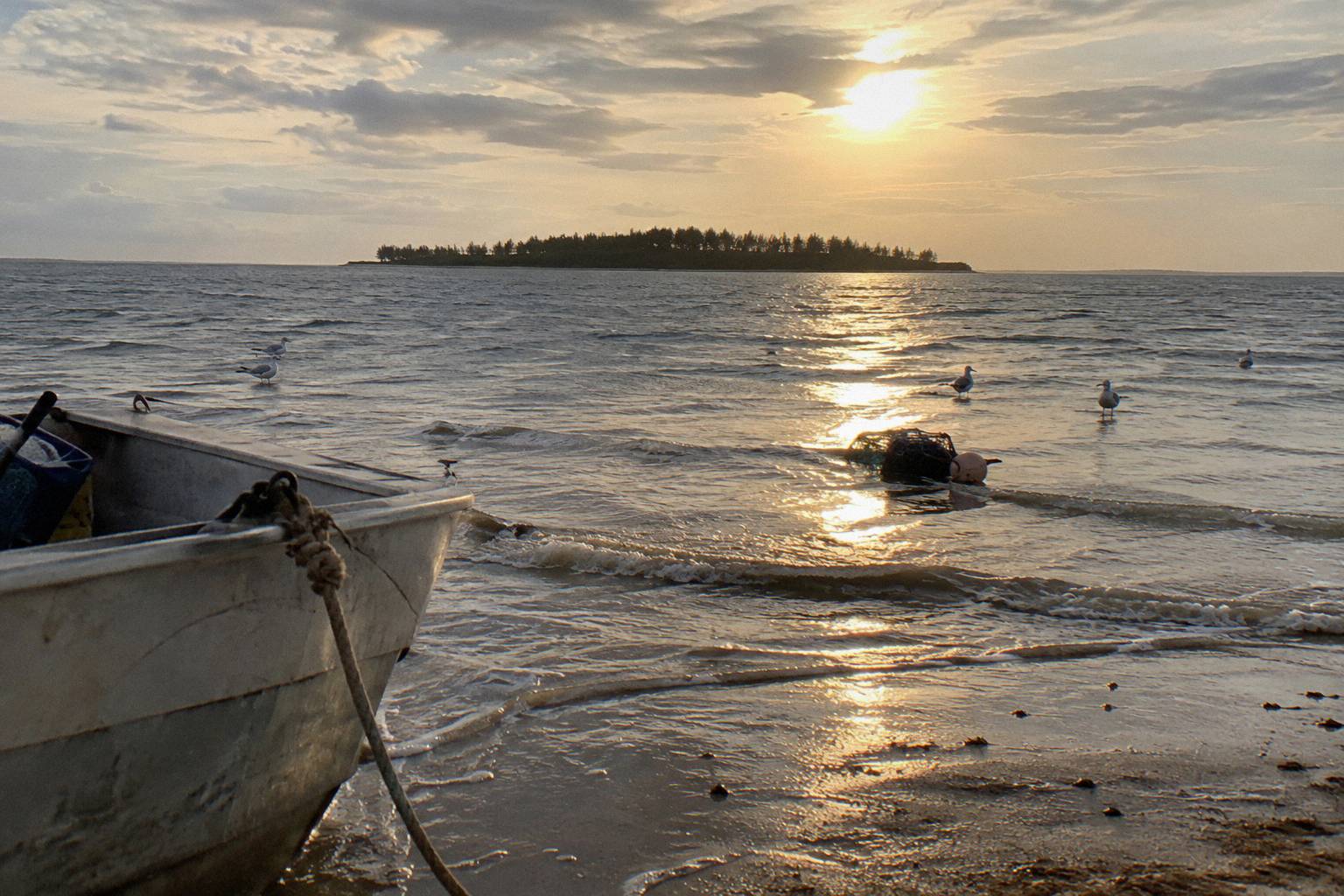
Where you board also shapes the evening. The Blue Dolphin sail and the Whalesong whale cruise both use Great Sandy Straits Marina at 17 Buccaneer Drive, Urangan, a marina of 176 berths that calls itself home of the Hervey Bay whale watching fleet. The Boat Club trips leave from the Hervey Bay Boat Club on the same road. The Milbi leaves from Fisherman's Wharf Marina on Jetty Rd, next to the public boat ramp, with no hotel pickup, so plan your own way there. None of these points is more than a short hop apart, but check-in windows differ, so the month you pick matters less than the clock you keep. Our getting to Urangan guide covers the ground detail.
Cancellation terms are the same across every trip: free cancellation up to 24 hours before the start for a full refund. That is generous enough to book early for the month you want and adjust later if a forecast turns. If weather is your worry, how rain and wind affect evening cruises goes deeper than the monthly averages can.
Common Mistakes When Picking A Month
The recurring mistakes are chasing a late sunset in the wettest months, assuming whale season upgrades an evening cruise, and booking a June date without planning for a 10.1 °C minimum. Another is reading a mean rain day as a forecast, and a third is forgetting that departure windows shift by an hour across the year, so a 6pm dinner reservation can collide with a trip that departs at 4:30pm.
The first mistake is the most common. December and January give you the latest skies, about 6:34pm and 6:43pm, but they also sit among the warmer, wetter, breezier months, with 7.9 and 8.4 rain days respectively and mean 3pm winds above 21 km/h. The winter and early-spring months trade an early sunset for the driest, calmest averages on the record. Neither choice is wrong; the mistake is weighing only one of the two columns.
The second mistake is expecting whales from the evening water. The sunset trips are not whale watches, and no operator promises a sighting on them. If the whales are the draw, the daytime 4-hour cruises are the product that does that, and their season, June to November, gives you a window where you can do both in one day: a whale cruise in the morning, an evening on the water afterwards. That double-day is easiest in the peak months of July to October.
The third mistake is underdressing for winter or overpacking for summer. A July evening averages a 10.1 °C minimum, and the Boat Club's own packing advice names a warm jumper for a reason. February's 22.0 °C minimum is a different problem entirely. Match the bag to the month column, not to the word Queensland.
The last one is logistical: the Boat Club's departure window, between 3:30pm and 4:30pm across the year, means your evening plans after the trip depend on the season. A June sailing that departs around the early end hands you back most of your night; a December one finishes close to 7:30pm. Check the time on the booking calendar for your date before you book anything with a fixed start afterwards. As one guest review mentions, the timing of the return can catch planners out.
The evening choices on Hervey Bay Sunset Cruises all share the same free-cancellation window, 24 hours before start for a full refund, so a month picked early can still be a month changed. The Blue Dolphin sail also needs at least four guests to run and takes up to 24; if the minimum is not met, the booking page offers a full refund or a move to another vessel. Book the month you want early, then watch the forecast.
Common Questions About Picking A Month For An Evening Sail
Which Month Suits A Sunset Cruise In Hervey Bay?
No month is the best as a fact. July to October bring the fewest rain days, the calmest mean 3pm winds and a 5:15pm to 5:53pm sunset range, while December and January give the latest skies, about 6:34pm and 6:43pm, with warmer, wetter, breezier averages. Pick by which column matters most to you.
What Time Is Sunset In Hervey Bay In Winter?
The computed approximate sunset for Urangan is about 5:06pm in June, about 5:15pm in July and about 5:29pm in August. These are Australian Eastern Standard Time calculations, never official and never boat times.
Can You See Whales On An Evening Cruise?
Whale season overlaps the evening cruises from June to November, but the sunset cruises are not whale watches and nothing is promised. Whale watching happens on the daytime 4-hour cruises, with the season peaking July to October.
Which Is The Wettest Month In Hervey Bay?
March, on the Hervey Bay Airport record: a 151.8mm mean rainfall across 11.1 rain days of 1mm or more. September is the driest on the rain-day count at 4.0, with 33.4mm mean rainfall.
Do The Cruise Departure Times Change With The Seasons?
Yes. The Boat Club Twilight Bay Cruise departs between 3:30pm and 4:30pm depending on the time of year, and the Milbi departs at 4:30pm in winter and 5:00pm in summer. For any specific date, the booking calendar shows the departure time.
Is It Cold On A Winter Evening Cruise?
July averages a 10.1 °C minimum and June 11.8 °C at Hervey Bay Airport, so a warm jumper is warranted. The Boat Club's own packing advice for its Twilight Bay Cruise includes a warm jumper alongside sunglasses, a hat, a camera and binoculars.