
How Should You Dress For A Whale Watching Cruise At Dusk?
Layering, wind and climate guidance for a late afternoon or dusk boat trip out of Urangan, with month by month temperatures and what to pack.
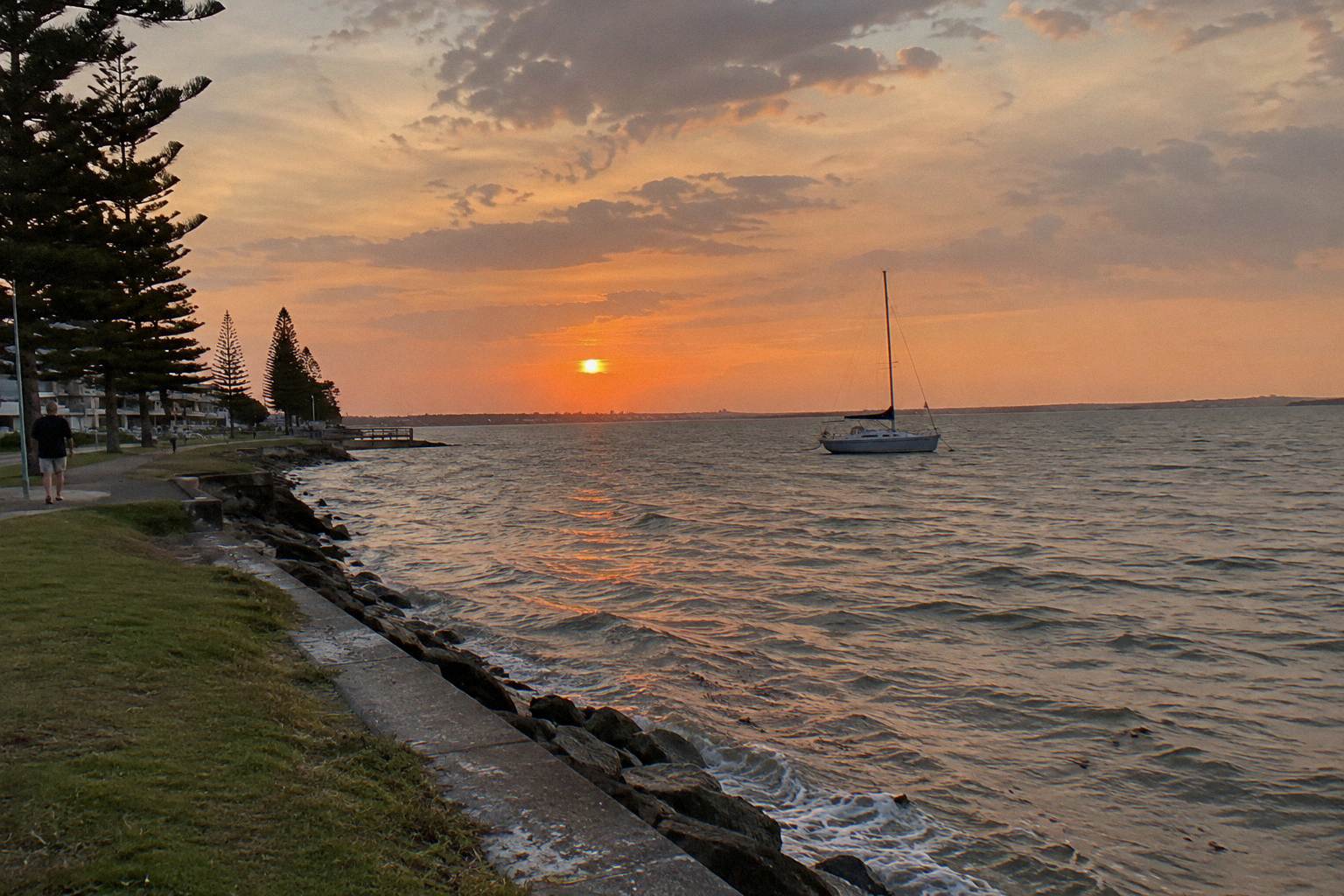
Dress in layers you can peel off as dusk settles, anchored by a warm jumper, and add sunglasses, a hat, and something that blocks wind. The Boat Club Adventure Cruises page for its twilight whale-watch trips lists exactly these items, and Herve Bay Airport climate records, with mean minimums from 10.1 degrees in July to 22.0 in January, back the jumper advice.
One clarification before the wardrobe. The whale-watch cruises run in the daytime and the evening cruises are separate. Whale watching out of Urangan is done on 4 hour daytime half-day trips, morning or afternoon options, and the evening boats are a different set of departures entirely. The Whale Heritage facts that draw people here are real: Tourism and Events Queensland says humpbacks are here June to November, peaking July to October, and that more than 8,000 whales use these waters each year. But the dressing question at dusk belongs mostly to the twilight and sunset boats, and to the late-afternoon whale-watch departures that return as the light drops. The advice below covers both, because the physical situation is the same: open water, fading sun, moving boat.
Whale season overlaps the sunset cruises from June to November, but the sunset cruises are not whale watches and nothing is promised. What is promised is weather, in the sense that it will be there waiting for you, and the difference between a good evening on the bay and a shivering one is usually one missing layer.
For the whale-watch boats the under 18 rule matters for families planning outfits for a group: on the Boat Club trips, persons under 18 must be accompanied by a legal guardian over 18. That guardian will want the jumper too.
What Does The Weather Actually Do At Dusk In Hervey Bay?
At dusk in Hervey Bay, the temperature slides toward its daily minimum while the wind keeps blowing across open decks. Bureau of Meteorology readings from Hervey Bay Airport, a station about 5 km from Urangan with data from 1999, show mean maximums between 21.8 and 30.3 degrees and mean minimums between 10.1 and 22.0 degrees depending on month, so a dusk boat departure sits in that cooling slide, with wind on top.
The month matters more than most visitors expect. A July evening averages a minimum of 10.1 degrees, and with 16.2 km/h of mean 3pm wind across the deck that reads colder than a still 10 degrees on land. A February evening averages 22.0 degrees but carries the year's strongest mean 3pm wind at 21.5 km/h, plus 136.5 mm of mean monthly rainfall over 9.1 rain days of 1 mm or more, so the layer that matters in summer is light and possibly waterproof rather than warm.
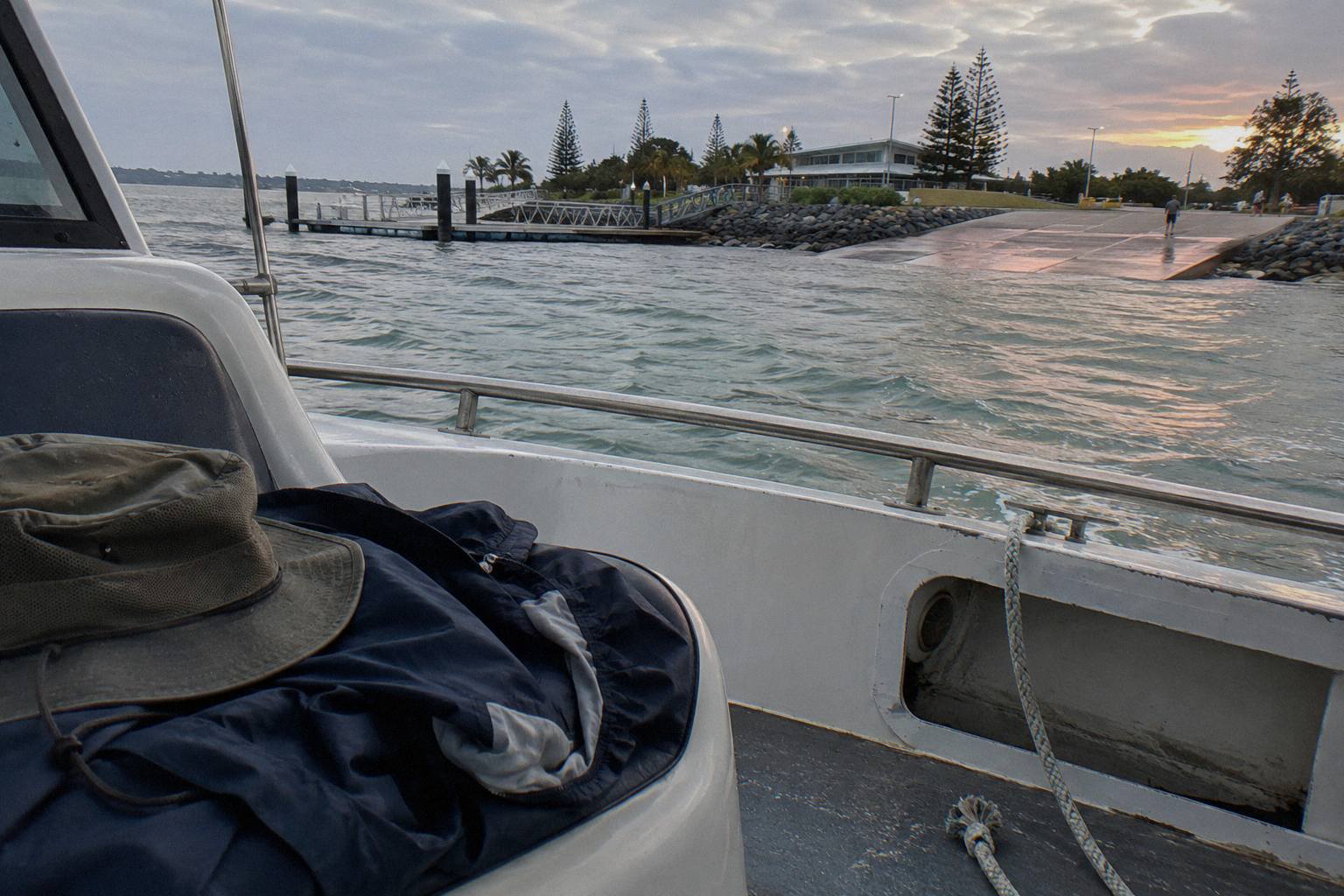
Here is the full monthly picture from the Bureau of Meteorology averages for Hervey Bay Airport, with mean maximum, mean minimum, mean rainfall, rain days of 1 mm or more, and the mean 3pm wind, the wind readings drawn from 1999 to 2010:
| Month | Mean max C | Mean min C | Mean rain mm | Rain days 1 mm+ | Mean 3pm wind km/h |
|---|---|---|---|---|---|
| January | 30.3 | 22.0 | 121.6 | 8.4 | 22.1 |
| February | 30.2 | 22.0 | 136.5 | 9.1 | 21.5 |
| March | 29.2 | 20.8 | 151.8 | 11.1 | 22.1 |
| April | 27.1 | 17.9 | 67.0 | 9.4 | 20.2 |
| May | 24.4 | 14.4 | 97.0 | 9.8 | 17.0 |
| June | 22.2 | 11.8 | 67.4 | 7.8 | 15.6 |
| July | 21.8 | 10.1 | 42.1 | 5.5 | 16.2 |
| August | 22.9 | 10.7 | 49.7 | 4.1 | 18.0 |
| September | 25.0 | 14.1 | 33.4 | 4.0 | 19.2 |
| October | 26.7 | 17.1 | 84.9 | 5.7 | 19.8 |
| November | 28.2 | 19.2 | 79.8 | 6.8 | 21.1 |
| December | 29.5 | 21.1 | 137.2 | 7.9 | 21.2 |
Read the table as a packing tool, not a forecast. The gap between the max and min columns is what a late afternoon crossing covers, and it is widest in the shoulder months: April, May and October each span close to ten degrees between maximum and minimum. Those are the months where a single outfit chosen for boarding time is wrong by disembarking time.
Sunset itself moves a long way across the year, which shifts what "dusk" even means for your layering window. A solar calculation for Urangan, approximate and not an official time, puts sunset on the 15th of each month at about 6:43pm in January, about 5:06pm in June, about 5:15pm in July and about 6:34pm in December. If your trip ends near sunset in June you step off the boat in full dark, and the July mean minimum of 10.1 degrees is waiting.
Is a twilight trip worth the layering effort? That question has a longer answer, and the sunset cruise worth-it breakdown works through it with the same price and duration facts.
What Layers Work For A Late Afternoon On The Water?
A base layer you are comfortable being photographed in, a warm mid layer you can put on, and an outer layer that stops wind: three layers, each doing one job. The Boat Club operator page names the mid layer outright, a warm jumper, and adds sunglasses, a hat, a camera and binoculars to the bring list for its twilight cruise, with cash for the on-board canteen. Sunglasses matter on a west-facing evening boat as much as at midday.
The base layer is the easy one and the one people get wrong by overthinking. Anything you would wear to a waterfront dinner works, because that is roughly the situation: standing, seated, occasionally walking to a rail. The mid layer is the piece that earns its space in your day bag. Between a 21.8 degree July mean maximum and a 10.1 degree July mean minimum, the jumper goes on for most of a July evening boat and stays on.
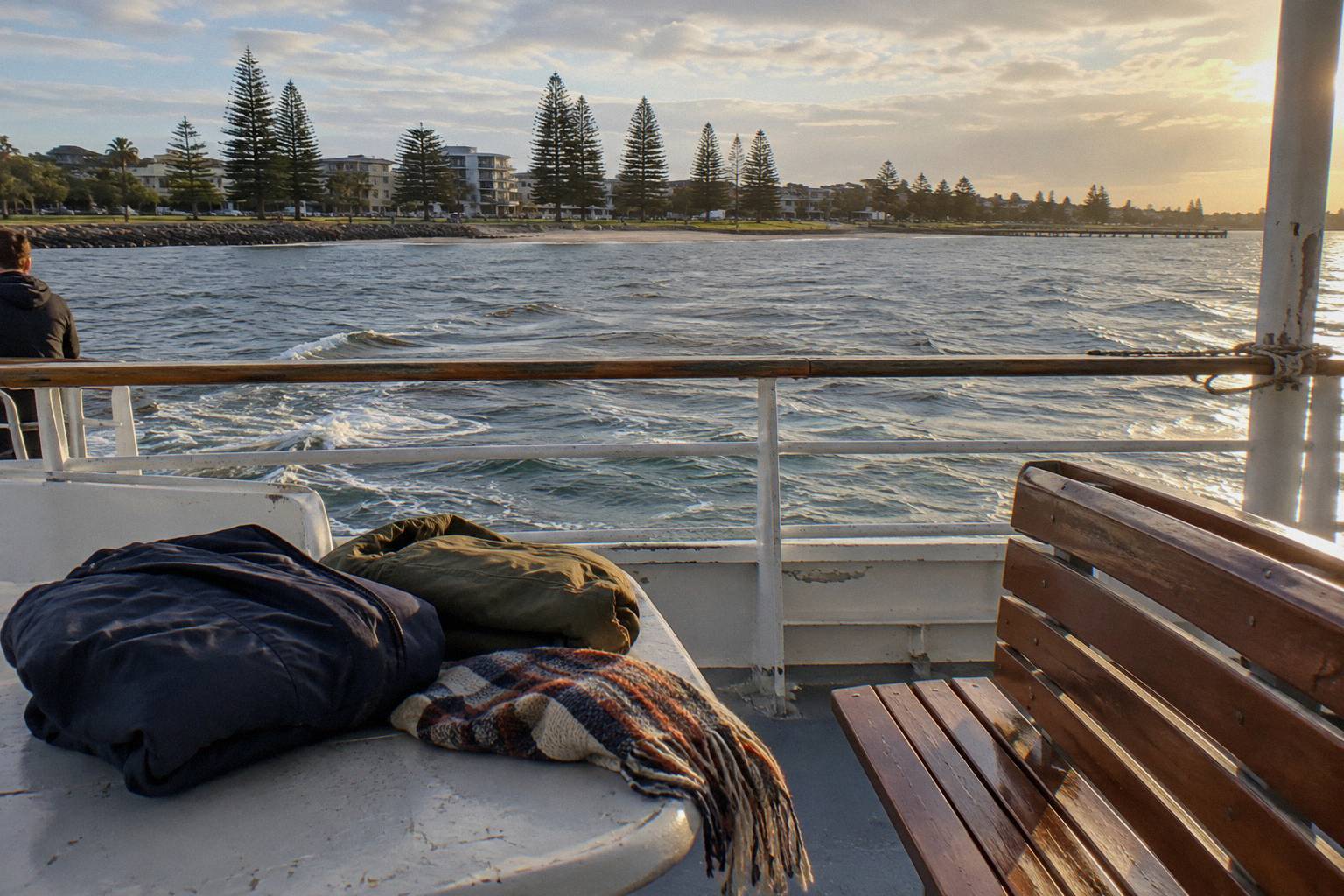
The outer layer is about wind, and the Amaroo, the vessel used for both the Boat Club twilight cruise and its half-day whale watch, is described by the operator as a large stable powered vessel with three viewing decks and a covered top deck with 360 degree views. A covered deck gives you somewhere to retreat to, but the 360 degree views are exactly what pulls people back out into the breeze. A windproof outer layer lets you stay out there.
A practical layering plan by season, built only on the climate table and the operator's bring list:
| Season | Base | Mid | Outer | Extras from the operator list |
|---|---|---|---|---|
| Summer, Dec to Feb | Light shirt | Light long sleeves for the breeze | Optional light wind layer | Sunglasses, hat |
| Autumn, Mar to May | Shirt | Warm jumper | Windproof layer | Sunglasses, hat, camera |
| Winter, Jun to Aug | Long sleeves | Warm jumper, doubled if July | Windproof layer, worn | Sunglasses, hat, binoculars |
| Spring, Sep to Nov | Shirt | Warm jumper from April logic, light by Nov | Windproof layer | Sunglasses, hat, camera |
Cash belongs in a pocket rather than a bag, because the Boat Club canteen sells alcoholic and soft drinks and snacks including chips, and the operator says bring cash. Footwear, seasickness remedies and sunscreen are outside what the operator page states; for guidance on the stomach question, the seasickness on an evening cruise piece is the companion read, and for anything the operator page does not name, ask the operator.
If you are leaning toward the whale-watch side of the ledger after planning your layers, the half-day trip on the Amaroo is the one to lock in early.
What Should You Wear On The Whale Watch Boats Themselves?
Wear the same three-layer system you would use on any whale-watch trip, but with one key adjustment: these boats run four hours rather than two, so the layer you thought you could skip becomes the layer you regret skipping. An afternoon departure finishes closer to the evening minimum temperature than a sunset trip boards, so dress for conditions that will drop while you are out on the water.
The Boat Club Half-Day Whale Watching Cruise is from A$120 per person, amounts in Australian dollars, holds a 4.8 rating from 412 reviews, and gives one free child under 14 per paying adult, conditional on a full-fare adult. Dress children by the same layer rules and add a spare, because four hours is long. Free cancellation up to 24 hours before the start applies. The full index of guides sits on Hervey Bay Sunset Cruises.
The other daytime whale-watch options change the boarding point but not the wardrobe. The Tasman Venture 4-Hour Whale Watch, from A$155 per person, 4.9 from 699 reviews, includes hotel pickup and drop-off at select Hervey Bay accommodation and runs twice daily on a catamaran, with morning or afternoon tea and an antipasti platter. The Whalesong Half-Day Whale Watch With Meal, from A$160 per person, 4.8 from 232 reviews, boards at Great Sandy Straits Marina and includes morning or afternoon tea plus lunch or dinner depending on the option chosen, with filtered water, tea, herbal tea, coffee, hot chocolate and a full bar on board. A boat that feeds you dinner still gets cold after it.
Which Months Change Your Outfit Most?
April, May, June, July and October are the months where the gap between the day's maximum and the night's minimum is widest, so the outfit you board in is not the outfit you need at disembarking. June and July also bring the earliest sunsets of the year, about 5:06pm and about 5:15pm on the 15th of each month by approximate calculation, so a late whale-watch return or an evening cruise finishes in the dark.
The overlap is the useful insight: the months people come for whales are the months the bay is at its coldest at dusk. July delivers the year's lowest mean minimum, 10.1 degrees, the year's lowest mean monthly rainfall, 42.1 mm, and its fewest rain days of 1 mm or more at 5.5, which means clear, cold, spectacular evenings on the water, dressed correctly. September is the driest month on the table at 33.4 mm over 4.0 rain days, with a mean minimum of 14.1 degrees and a mean maximum of 25.0.
A month by month dusk guide, using the approximate sunset calculation and the climate averages:
| Month | Approximate sunset (15th) | Mean min C | Dusk dressing call |
|---|---|---|---|
| January | about 6:43pm | 22.0 | Light layers, wind layer for the breeze |
| March | about 6:06pm | 20.8 | Light plus one warm layer |
| May | about 5:12pm | 14.4 | Jumper and windproof, both on |
| July | about 5:15pm | 10.1 | Full winter layers, hat that stays on |
| September | about 5:41pm | 14.1 | Jumper and windproof |
| November | about 6:13pm | 19.2 | Light plus one warm layer |
The months left out of the table sit between their neighbours and the same logic covers them. The evening boats cross the Great Sandy Marine Park, which extends from Baffle Creek in the north to Double Island Point in the south and includes Hervey Bay and the Great Sandy Strait, and both the Boat Club and Milbi trips include marine park fees or a permit. The park's wildlife list from Queensland Parks includes whales, turtles, dugong and grey nurse sharks, a park-wide list rather than a cruise promise, so dress for comfort and keep the binoculars from the operator's bring list handy regardless.
For how the whole evening wardrobe question plays out across the year, the sunset boat trip clothing guide covers it in more depth than a single post can.
What Are The Common Wardrobe Mistakes On Evening Boats?
The recurring mistakes are dressing for the boarding-time temperature instead of the disembarking-time minimum, skipping the windproof layer because the day felt calm, bringing no warm option for children, and leaving behind cash for the canteen. Every one of them is preventable using the climate table and the Boat Club bring list. The mean 3pm wind never drops below 15.6 km/h in any month, so the windproof layer is never optional on an open deck.
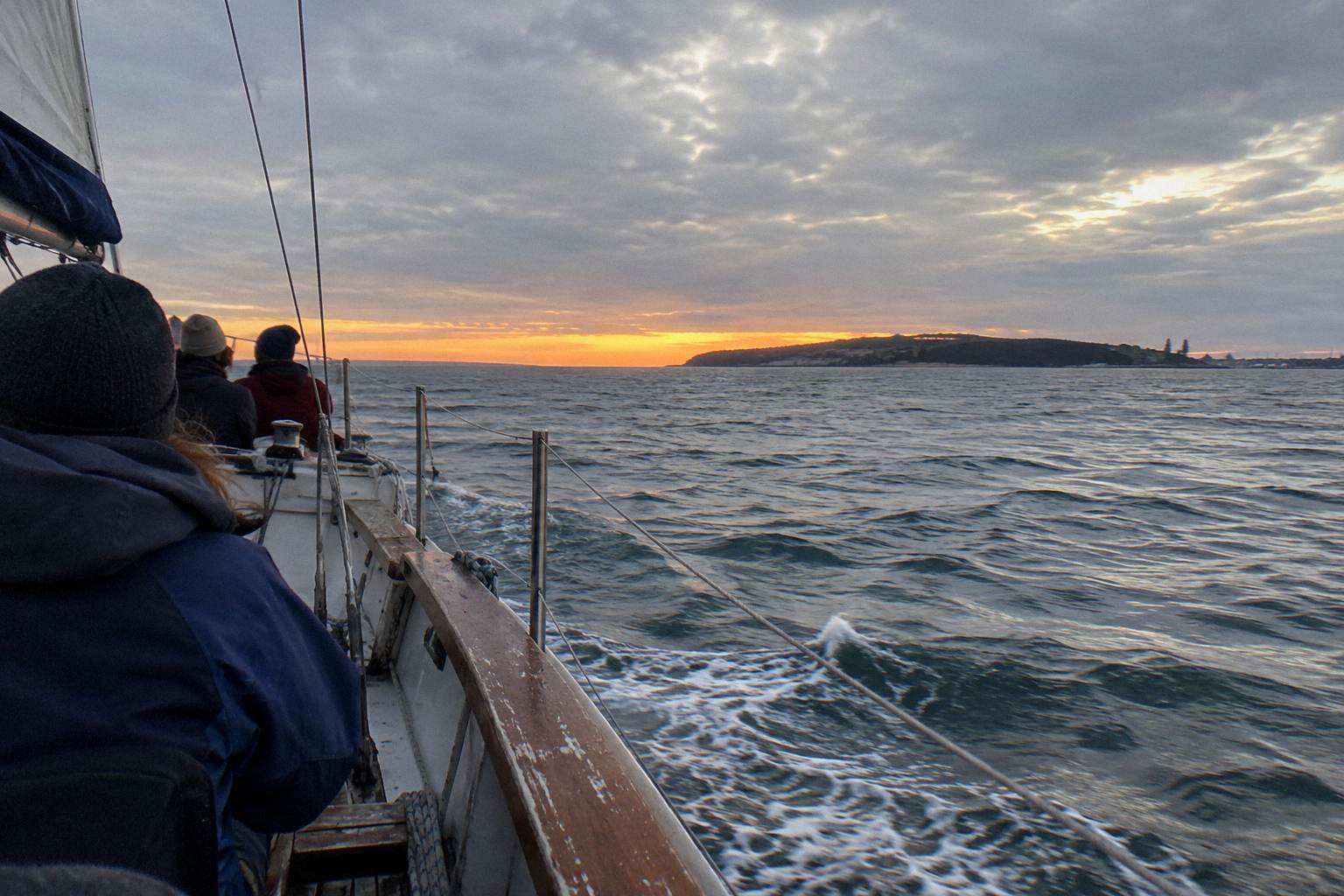
The mistakes in detail, and the fix for each. Hervey Bay Sunset Cruises exists because the bay at dusk is worth dressing properly for, and the fixes cost nothing but foresight.
| Mistake | Why it fails on the bay | The fix |
|---|---|---|
| One warm outfit, no layering | You overheat boarding, freeze disembarking | Three layers, adjust through the trip |
| No windproof outer | Mean 3pm wind runs 15.6 to 22.1 km/h all year | A wind layer packs flat, goes over the jumper |
| Dressing children light | Boat Club gives one free child under 14 per adult, so kids are aboard | Same layer rules, plus a spare |
| No cash | The Boat Club canteen sells drinks and snacks, cash only | Cash in a pocket |
| A hat that blows off | The mean breeze holds all evening | A hat that fits, or a cord |
| Skipping sunglasses at dusk | The low western sun is harsh on the water | Sunglasses, named on the operator list |
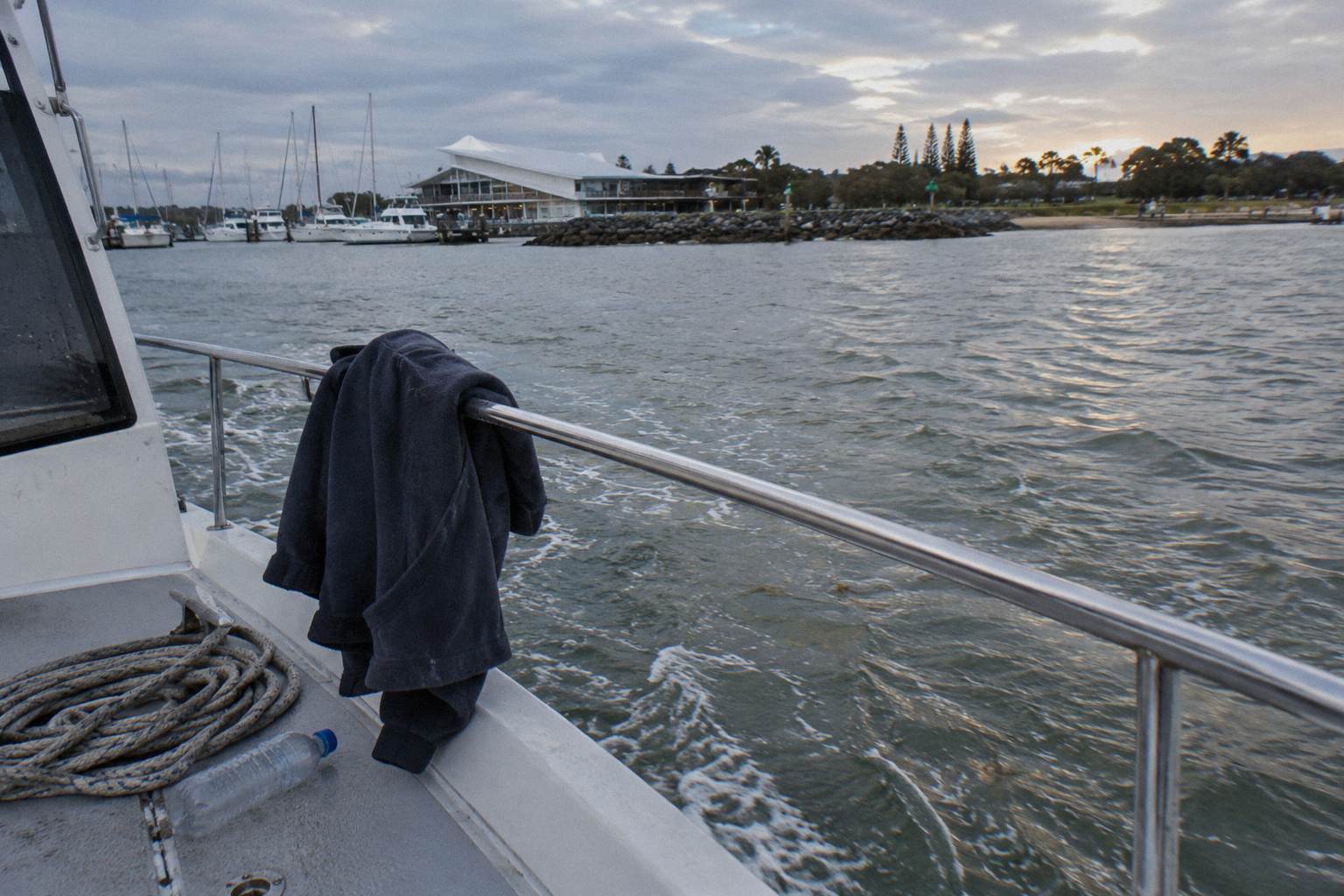
Two operator behaviours are worth knowing when you plan. Boat Club says the route and destination are subject to change without notice because of tides and weather, and Milbi tours vary with weather, group size and the guide's judgement. Ask the operator how weather calls are made if a stormy evening is forecast. The booking pages for all trips offer free cancellation up to 24 hours before the start for a full refund, which covers the forecast that turns bad the day before, not the outfit that turns out wrong on the night.
The Queensland approach rules for whales also shape behaviour, if not clothing: a caution zone sits 300 m from a whale where boats go no faster than 6 knots, the no-approach zone is 100 m around a whale and 300 m ahead and behind, there is a three-boat limit, no person may be in the water within 100 m of a whale, and no drones within 100 m, with penalties applying, per the Queensland Government rules for watching marine mammals. Leave the drone at the hotel and bring the binoculars instead.
If the evening option appeals more than the daytime whale watch, the Boat Club Twilight Bay Cruise runs about 2 hours from the Hervey Bay Boat Club, from A$55 per person with one complimentary glass of bubbles on boarding and a small plate of nibbles, 4.6 from 357 reviews. It departs between 3:30pm and 4:30pm depending on the time of year, so the same layer logic applies an hour earlier.
And if a smaller boat sounds better, the Blue Dolphin Champagne Sunset Sail is a 1.5 hour sailing trip from Great Sandy Straits Marina, from A$100 per person, 4.9 from 168 reviews, with a maximum of 24 guests, sparkling wine, complimentary beer, wine or soft drink and finger food included, plus a courtesy bus as part of the booking. On a vessel that small the wind is closer and the warm jumper earns its keep, and the boat needs at least 4 guests to run, with a full refund or a move to another vessel if the minimum is not met.
Common Questions About Dressing For The Bay At Dusk
How Should You Dress For A Whale Watching Cruise At Dusk?
In layers, anchored by a warm jumper, with sunglasses, a hat and a windproof outer layer. The Boat Club operator list names sunglasses, a hat, a warm jumper, a camera and binoculars, plus cash for the canteen. The whale-watch cruises run in the daytime and the evening cruises are separate, but a late afternoon return faces the same cooling bay.
Do I Need A Jumper In Summer?
Usually yes on the water. Summer mean minimums are 21.1 to 22.0 degrees and the mean 3pm wind runs 21.1 to 22.1 km/h, so a light warm layer or wind layer is worth packing even in January and February.
Should I Bring Sunglasses For An Evening Trip?
Yes. Sunglasses are on the Boat Club bring list for its twilight cruise, and the low western sun over the water is harsh on the eyes in any month.
What About Children's Clothing?
Dress children by the same layer rules as adults, plus a spare. The Boat Club twilight cruise gives one free child under 14 per paying adult, conditional on a full-fare adult, and persons under 18 must be accompanied by a legal guardian over 18. Milbi children are 4 to 12 on the fare structure.
Is There Anywhere Sheltered On The Boats?
On the Amaroo, yes: the operator describes a covered top deck with 360 degree views, plus toilets and a bar on board. The wind on the open rails is still part of the trip, so keep the windproof layer with you.
Can I Cancel If The Weather Looks Wrong For My Outfit?
The booking pages for all trips offer free cancellation up to 24 hours before the start for a full refund. Inside 24 hours, ask the operator how weather calls are made.